
New flood insurance policies through FEMA’s National Flood Insurance Program usually take 30 days to kick in. If you’ve been thinking about flood coverage, especially if you live near San Francisquito Creek, now is the time to ask your agent.
The same goes for a photo record of your home. After a storm, one of the first questions you may hear is what the house looked like before. A dated, organized set of photos answers that. It costs nothing and takes about half an hour.
One important note. Good photos make a conversation with your insurance company clearer and easier. They don’t decide the outcome. Your policy and your insurer do. Read your policy and ask your agent about anything you’re unsure of, especially flood, which standard homeowner policies usually don’t cover.
What to photograph
- Every outside wall, straight on and from an angle, standing far enough back to see the whole wall
- Your roofline, gutters and downspouts, from the ground or a window. Please don’t climb on the roof.
- Windows and doors, including sills and thresholds
- Decks, stairs, fences and sheds
- Upstairs ceilings and walls, especially below spots where a roof meets a wall
- Any damage that’s already there, with close ups, so no one confuses it with new damage later
- Recent work, including receipts, invoices, paint colors and product names


How to keep it
- Keep the original files. Your phone saves the date each photo was taken. Screenshots and edited copies can lose it.
- Sort by area. Make one folder per side of the house or room, and use the same names each year.
- Keep a copy outside the house, in the cloud or on a drive stored somewhere else.
- Do it again each season. Before and after photos are far more useful than a single set.
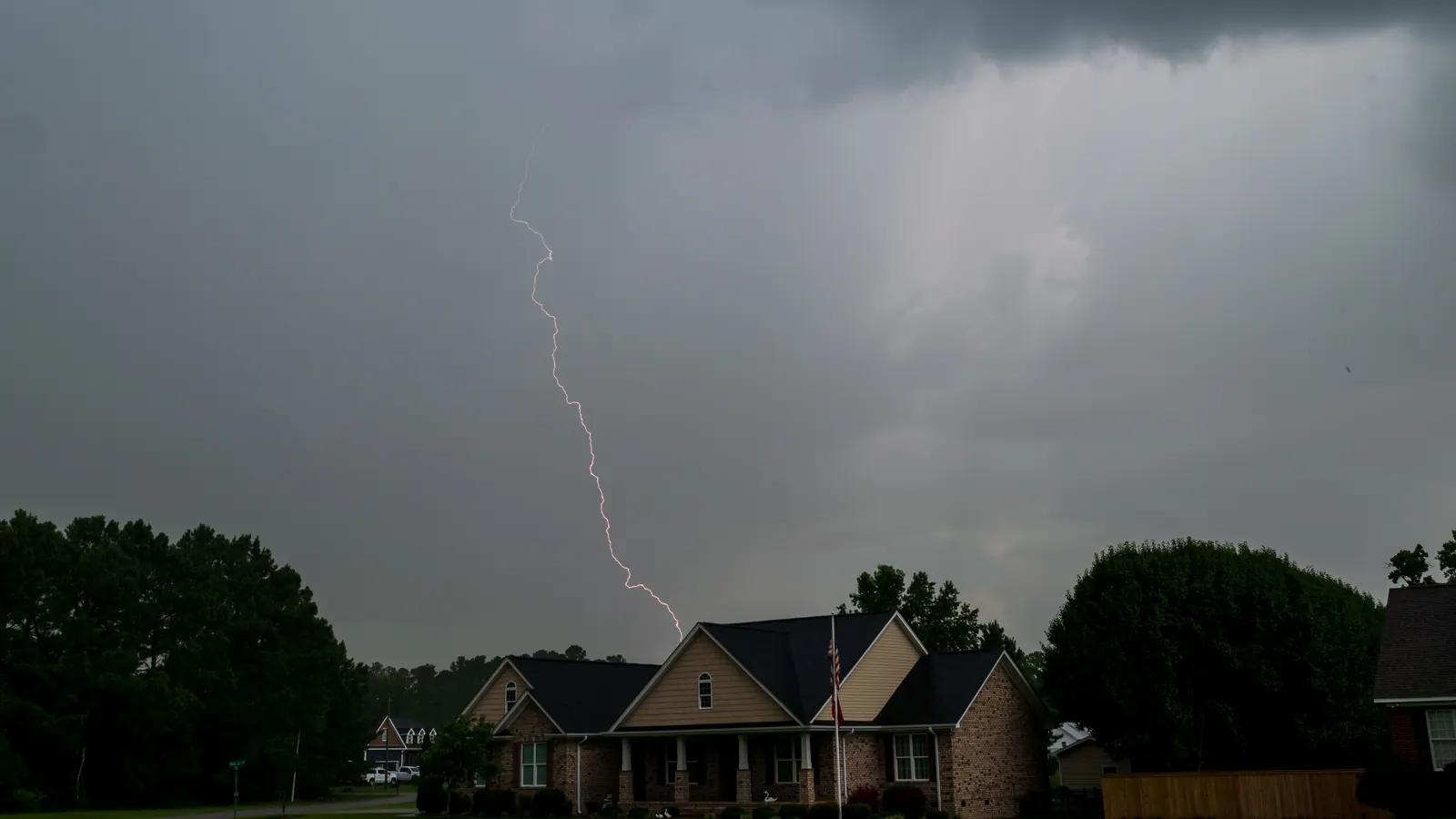
Before the next storm
Water gets into a house where two materials meet, so that’s where the close ups matter. A contractor looking at your photos after a storm wants the same spots, shot the same way, before and after.
- Start at the front door and walk the house in one direction, so every year’s photos come out in the same order.
- Take one wide shot of each wall, then close ups of every joint: window and door trim, the bottom of the siding, and the wall under each roof edge.
- Photograph each ceiling stain with a tape measure or a coin in the frame. Trace its edge lightly in pencil and write the date beside it, so a stain that grows is plain to see.
- Open the crawl space hatch and photograph from the opening without going in. Get the sump pit and any standing water.
- Photograph the label on the sump pump, and keep the date it was last tested.
- Finish with a slow video walk around the outside, saying out loud what you see. It catches what single photos miss.
All of this is a homeowner job, from the ground and the doorways. A stain with no before photo is a stain nobody can date.

How we can help
We photograph conditions on every project we do. Our post on how we document your home for insurance covers what we record and why. Clients on our maintenance program get regular inspections, so the record builds up year after year.
To be clear, we’re a contractor, not an insurance adjuster. We document what we see and what we did. Your insurer decides what’s covered.
Do I need a professional for this?
No. A careful homeowner with a phone can make a great record. A professional report adds consistency and a contractor’s eye.
What about the inside of my home?
Photograph your rooms and valuables too. Your agent can tell you what they’d want to see.
Ready to get started? Request an estimate or call us at (650) 961-7415.