
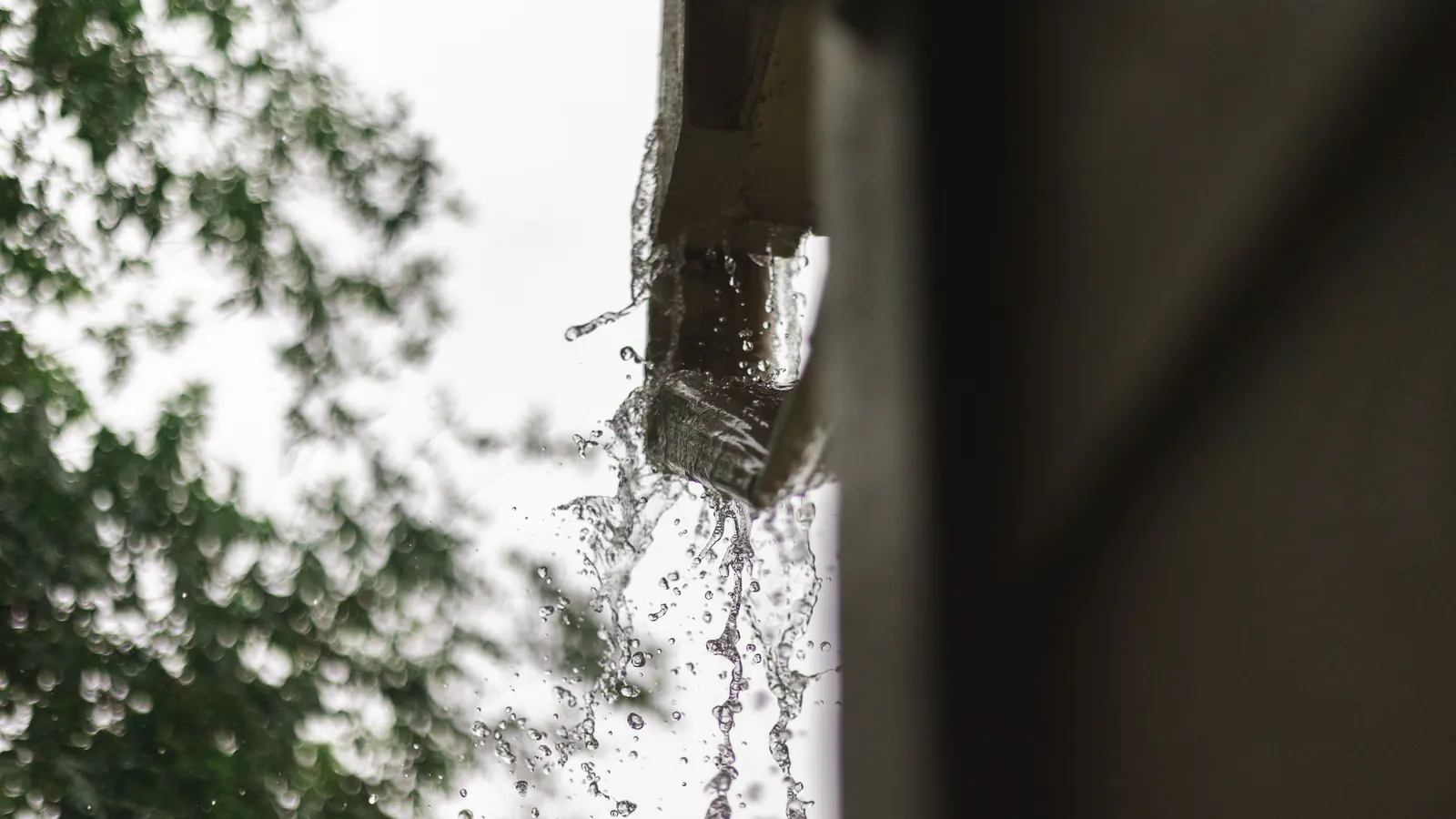
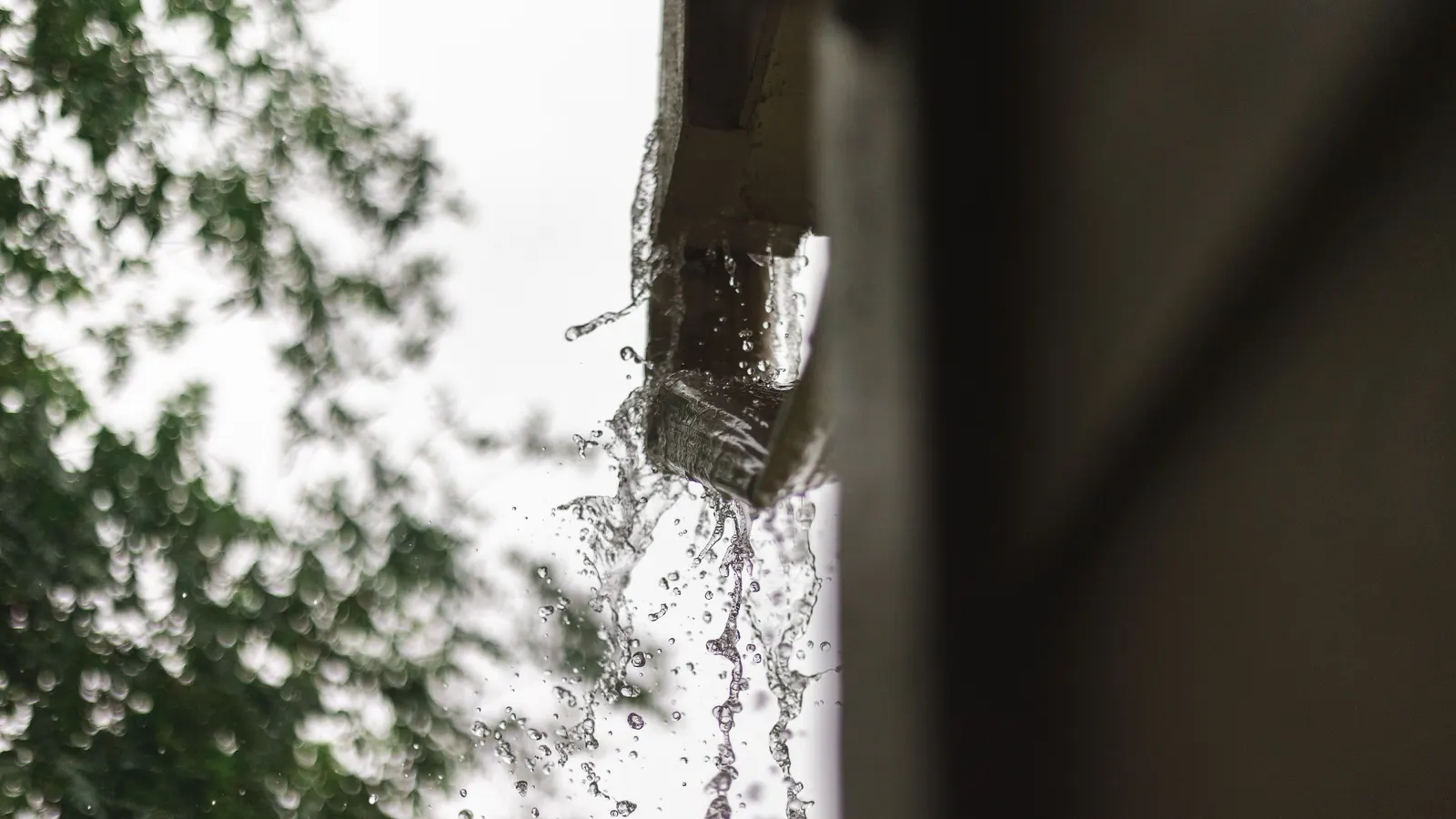
Gutters overflow on downpour days, not drizzly ones. In a normal winter, our area sees about four days with an inch of rain or more. In a winter like the three biggest El Niños, that number jumps to about nine. The full comparison is at the end of this article.
So, are gutter guards worth it? For homes under trees, often yes. Just know what you’re getting. Guards mean fewer, easier cleanings, not zero cleanings. They need to go on sound gutters before the first big storm, and your downspouts still need regular checks.
What clogged gutters do in a downpour
A gutter is there to catch roof water and hand it off to a downspout. When it’s packed with leaves, the water goes somewhere else:
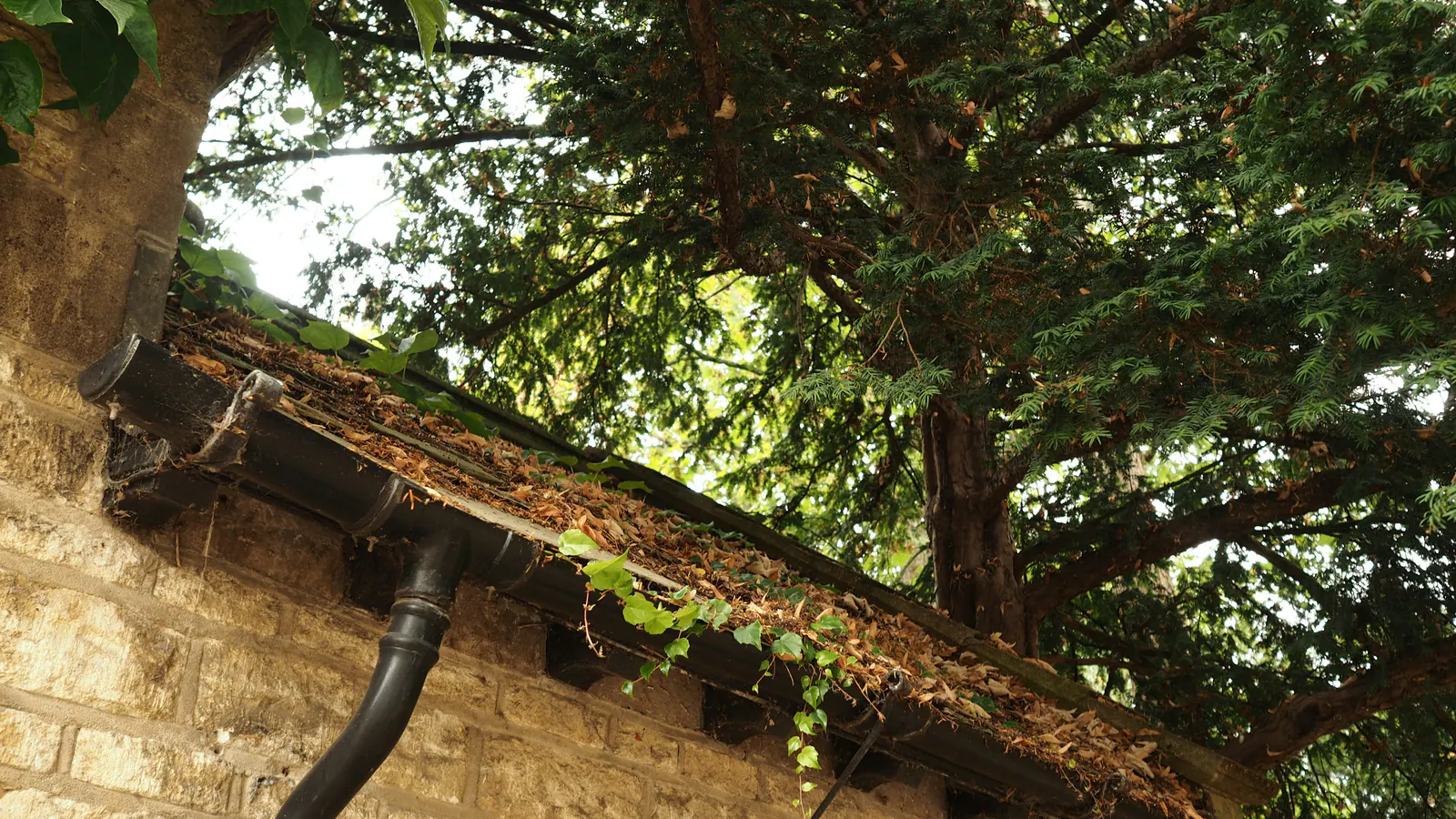
- Over the back edge, soaking the wood behind the gutter. Over time, that means peeling paint and rot.
- Straight down along your foundation, which can lead to a damp crawl space.
- Nowhere at all, sitting in the gutter and adding weight that pulls it away from the house.
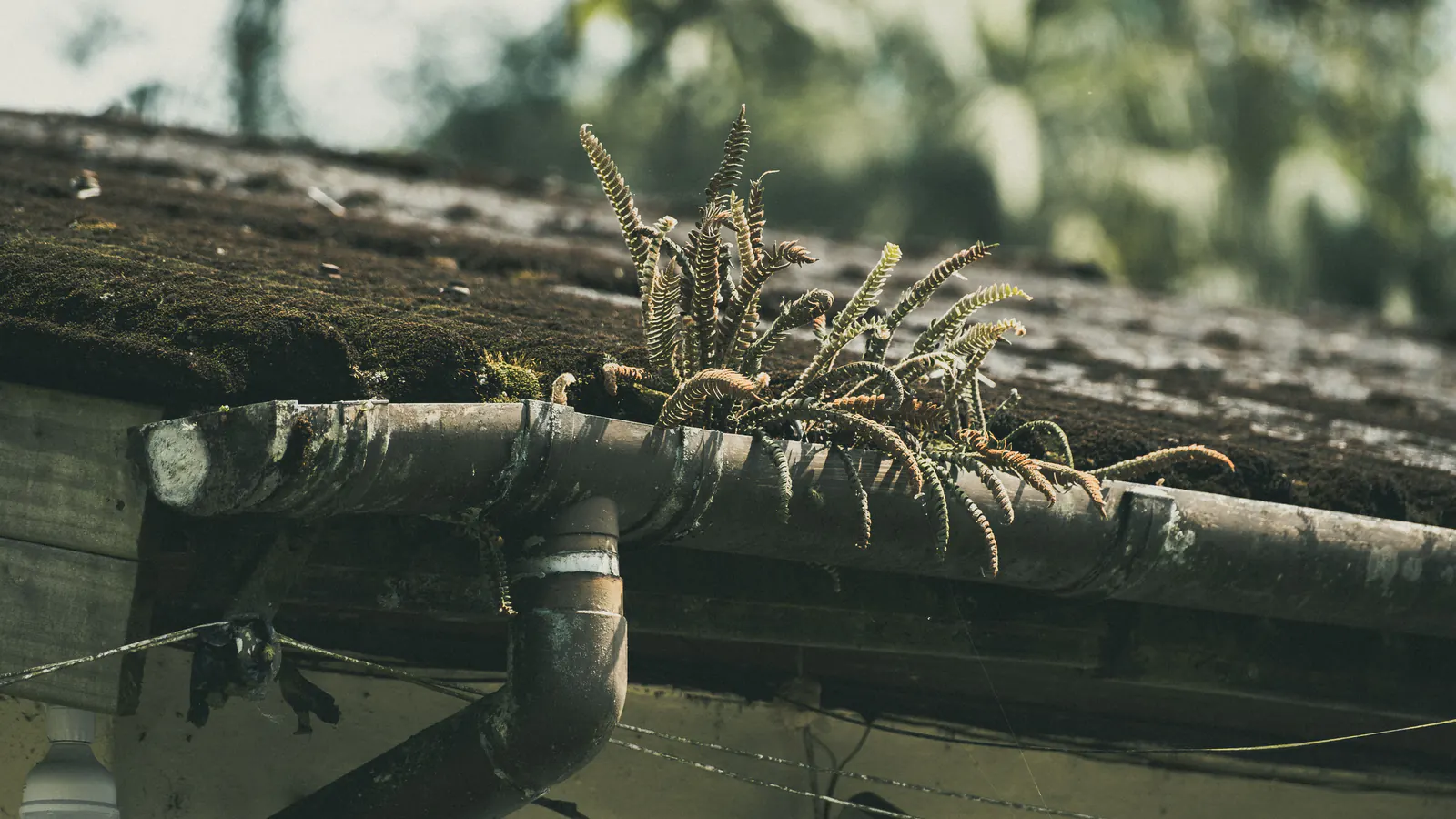
Pine needles are their own headache. They mat together around the downspout opening and form a surprisingly tight dam.

Comparing the main types
| Type | What it does well | Where it falls short |
|---|---|---|
| Metal screens | Keeps out leaves at a lower cost | Needles and seed pods slip through or get stuck |
| Micro mesh | Blocks even small debris | Collects a film of pollen and grit on top that needs brushing |
| Solid hood covers | Sheds leaves well | In a heavy downpour, fast water can shoot right past the gutter |
| Foam or brush inserts | Easy to install | Can trap debris and moisture inside the gutter |
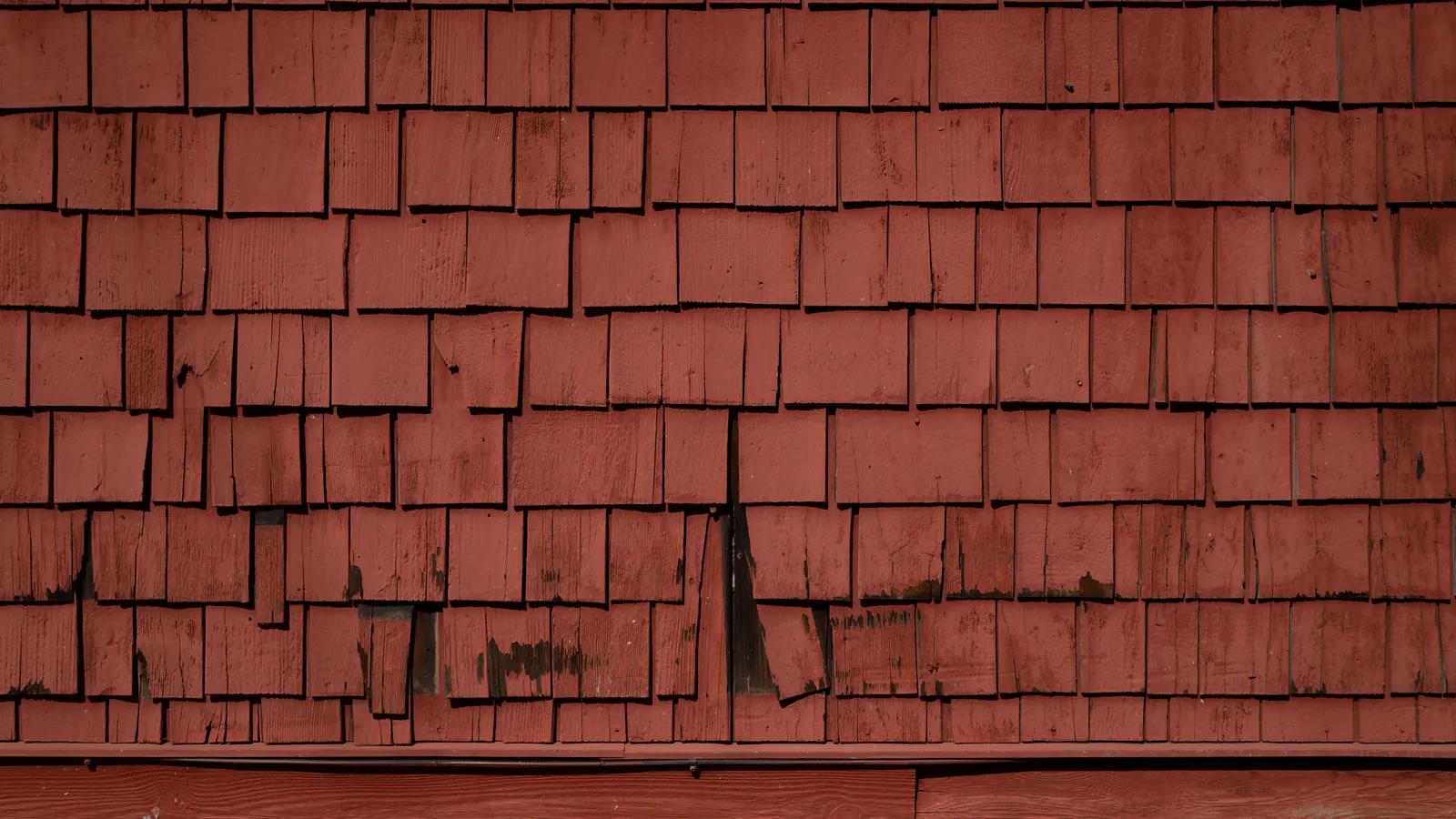
Your roof type matters too. Shingles, wood shakes, tile and slate each meet the gutter differently, and a guard has to fit without lifting or cracking the roof edge. On slate roofs, we take extra care never to pry or step on the slates.
The tree over the gutter should pick the guard. Broad leaves sit on top of almost any guard and blow off once they dry, and a sturdy metal screen handles them. Pine, cedar and redwood needles slip through a screen and stand up in its holes, which is where micro mesh earns its price. Whatever the tree, pick aluminum or stainless steel. Plastic screens and foam inserts break down in the sun and hold on to debris.

Less cleaning, not no cleaning
Guards change where the leaves end up. Instead of filling the gutter, they sit on top of the guard. Most blow or wash away. Some stay put.
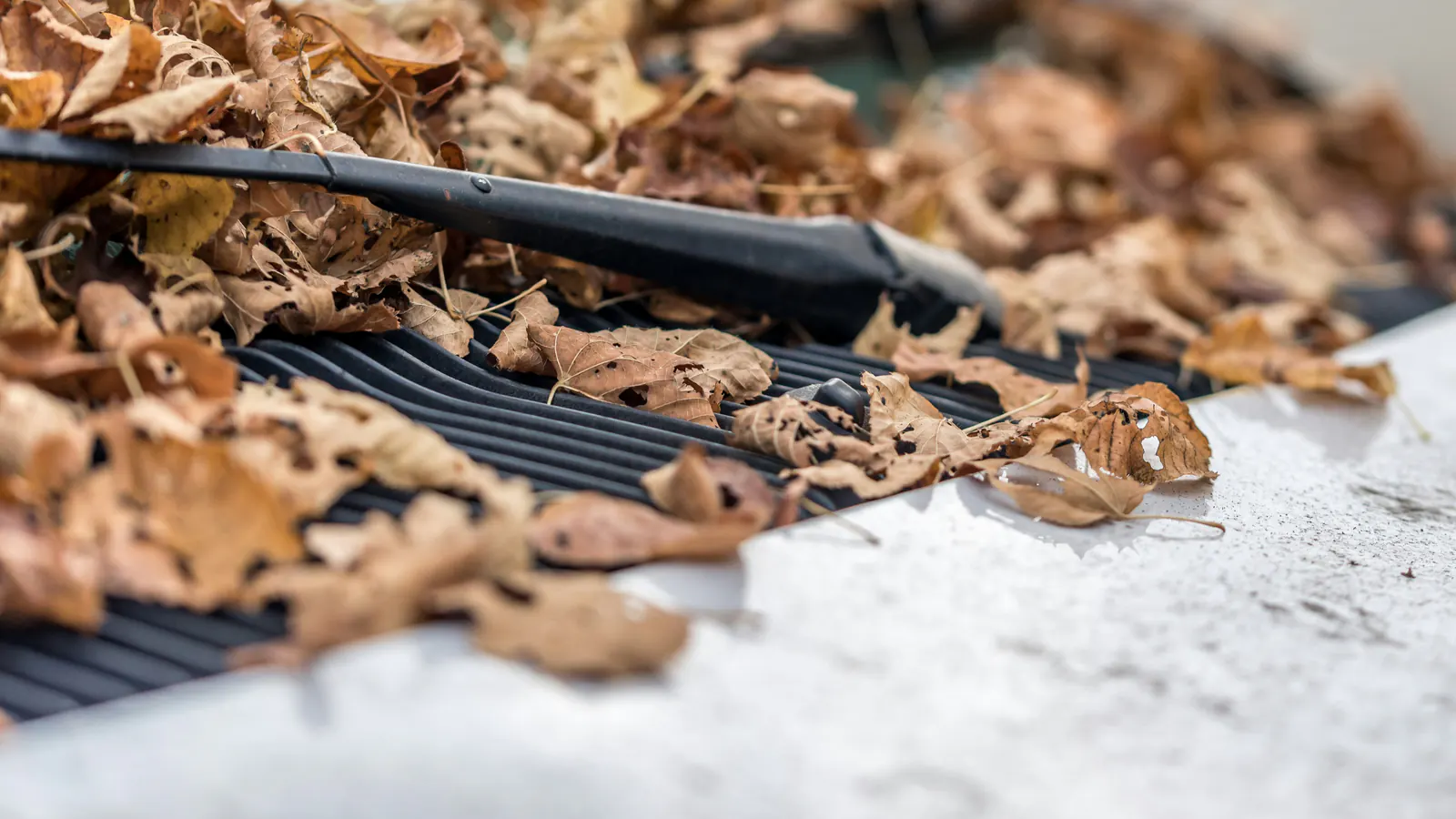
We still recommend checking your gutters and downspouts once a year and after big windstorms. Our maintenance visits can include this.
Install before the season, on sound gutters
Guards make sense on clean, solid gutters. They don’t make sense on gutters that sag, leak or have rusted through. Before we install any guard, we make sure the gutter slopes toward its downspouts, the brackets and seams are tight, the wood behind it is solid, and the downspouts are clear.
A guard does no good unless the water it catches actually leaves your property. Extend downspouts at least four feet from the foundation, and farther if the ground slopes back toward the house. See Part 4.
What do gutter guards cost?
It depends on the type of guard, how many feet of gutter you have, whether your home is one or two stories, your roof material, and whether the gutters need repair first. We’d rather give you a written estimate for your home than a ballpark guess.
Stay safe on the ladder
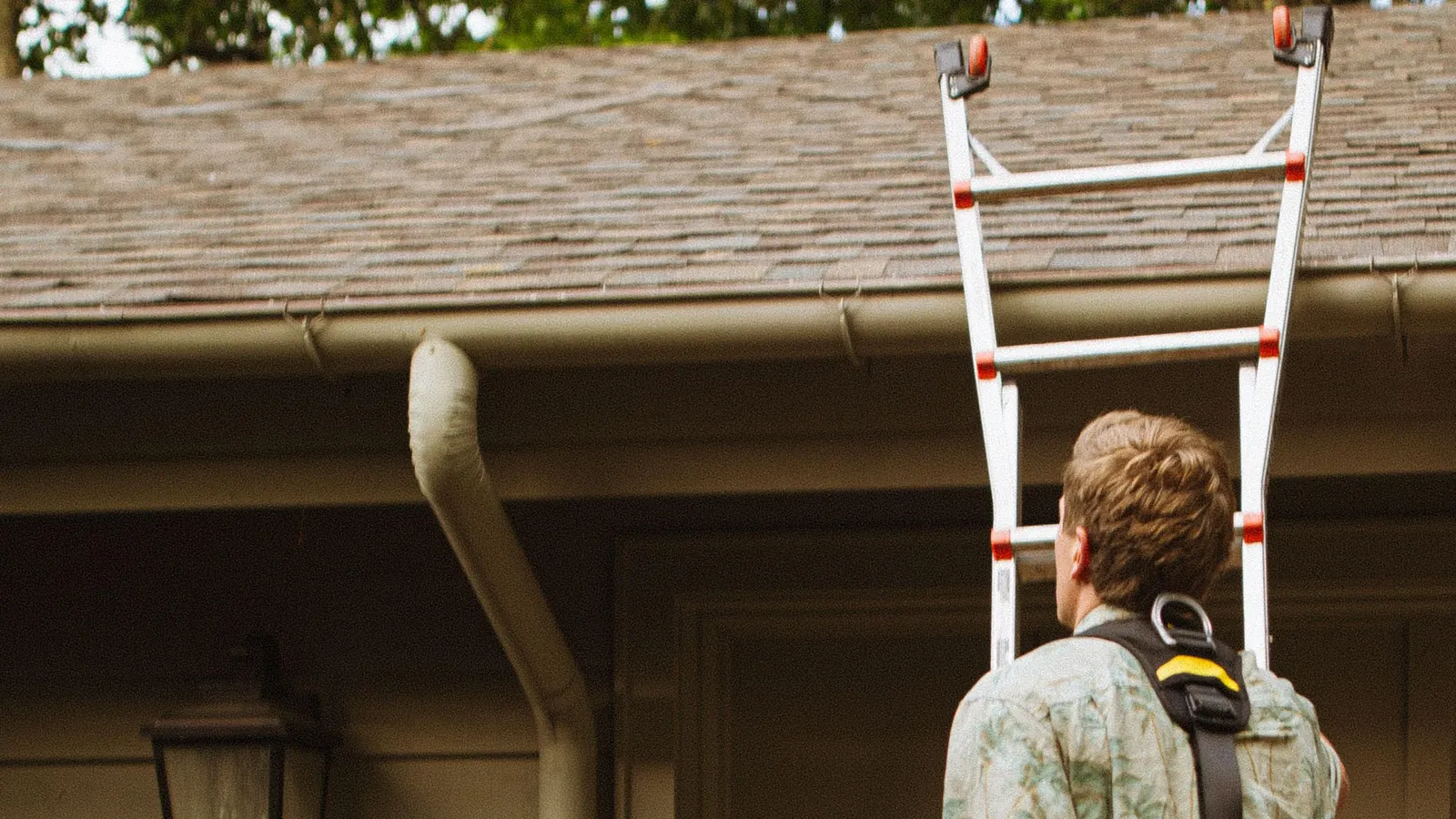
Ladders and step stools sent about 273,000 people to U.S. emergency rooms in 2024, according to the Consumer Product Safety Commission. If you clean your own gutters, set the ladder on firm, level ground, keep three points of contact, and don’t lean out past the rails. Skip wet or windy days, and have someone nearby. Second story gutters and tile or slate roofs are a good time to call a professional.
Before the next storm
- During a hard rain, watch the gutters from inside, through a window. Water sheeting over the front edge means a clogged outlet or a gutter too small for that stretch of roof.
- On a dry day, look along any guards you already have, from the ground, for leaves piled on top and sections that have come loose.
- Tap each downspout as high as you can reach from the ground. A packed section sounds dull instead of hollow.
- Check the fascia board behind the gutter for peeling paint or dark streaks. Water is going over the back.
Cleaning a one story gutter on a dry, calm day is yours if you’re steady on a ladder. Installing guards, and any gutter on a second story or under a tile or slate roof, is work for us. Putting it off costs the paint on the fascia first, then the wood behind it, then the crawl space below.
Will gutter guards stop overflow in a big storm?
They help by keeping the gutter and downspout openings clear, which is the most common cause of overflow. They can’t increase how much water your gutters can carry, and some styles can be overshot in a true downpour.
Can guards be added to my existing gutters?
Usually, yes, as long as your gutters are in good shape and properly sloped. Damaged sections should be repaired or replaced first.
Is it too late to install them this year?
Not necessarily. The earlier in fall, the better. If the storms arrive first, a thorough cleaning and downspout check is still well worth doing.
Want us to take a look at your gutters? Request an estimate or call (650) 961-7415. We’ll tell you honestly whether guards make sense for your home.
The data behind this article
For readers who want the numbers.
| Winter | Heavy-rain days (days, about) | Projected expected (days, about) |
|---|---|---|
| Normal winter | 4 | |
| The 2016 El Niño | 5 | |
| The 1998 El Niño | 10 | |
| The 1983 El Niño | 11 | |
| This winter, our estimate | Not yet measured | 9 |
Source
Source: NOAA, Redwood City station. Our estimate, not an official forecast.
In the source list: 2
Sources (2)
- Consumer Product Safety Commission cpsc.gov (https://www.cpsc.gov/s3fs-public/Death_and_Injury_Report_2024.pdf) Back
- NOAA, Redwood City station Back