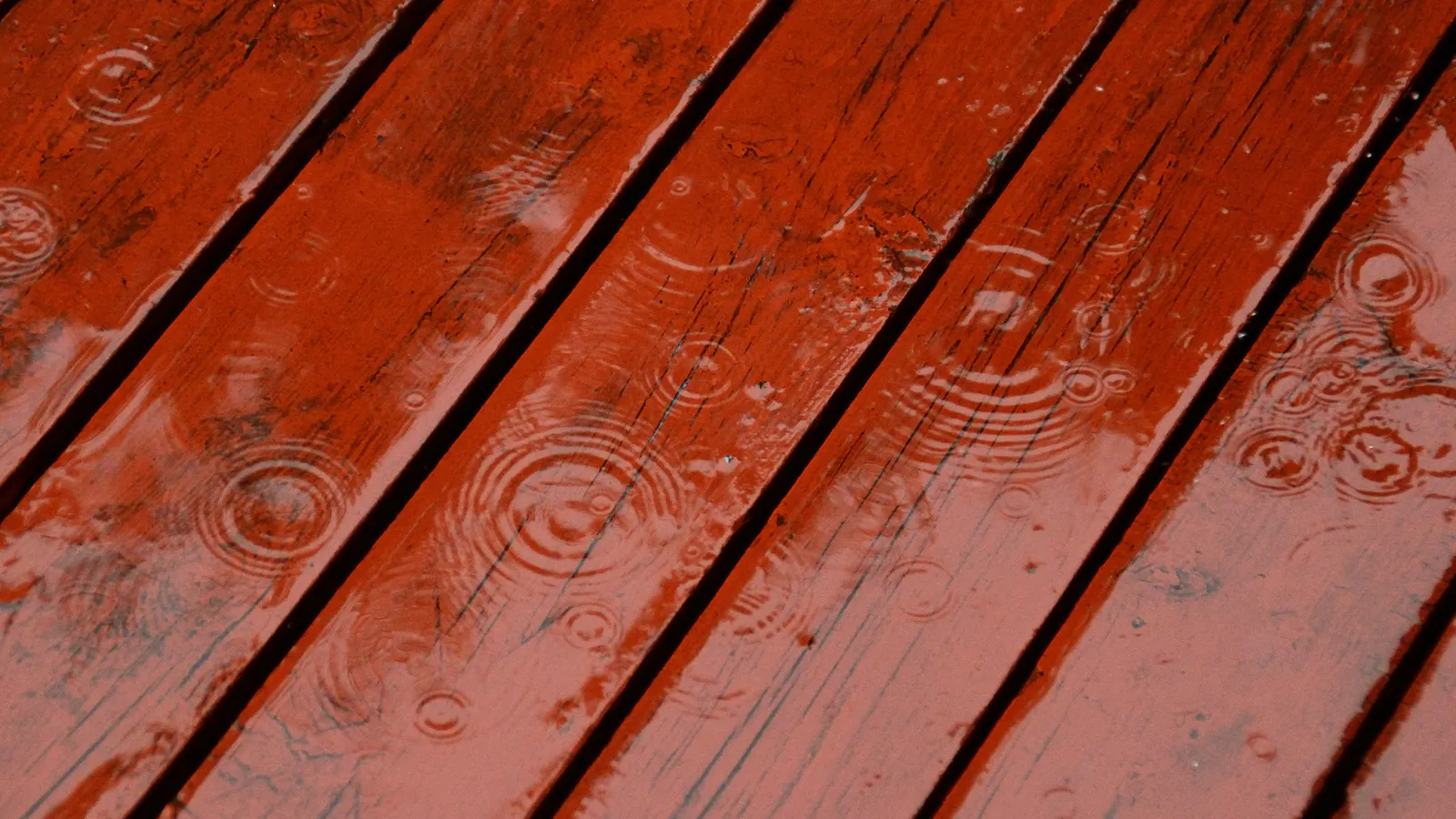
Your deck takes every storm head on, with nothing overhead to protect it. In a winter that could bring up to three quarters more rain than usual (see Part 1), any existing problem gets worse faster: rot where the deck meets the house, rusty hardware, loose railings and slick steps.
It’s worth a careful look now, rather than after someone slips.
A quick deck checklist
- Where the deck meets the house. This connection, called the ledger, matters most. Look for rot, rust streaks, gaps and missing flashing above it.
- Posts. Poke the bottoms with a screwdriver. Check the metal bases for heavy rust or wood sitting in water.
- Underneath. If you can see the beams and joists, look for soft spots, sagging and splits.
- Boards. Watch for cupping, soft or split boards, and nails or screws working loose.
- Railings. Push firmly on every post and section. Any wobble deserves attention.
- Stairs. Check the supports, how the steps are attached, the handrail, and any worn or slippery steps.
- Finish. Sprinkle some water on the boards. If it soaks in instead of beading up, the sealer has worn off.
What we do before winter
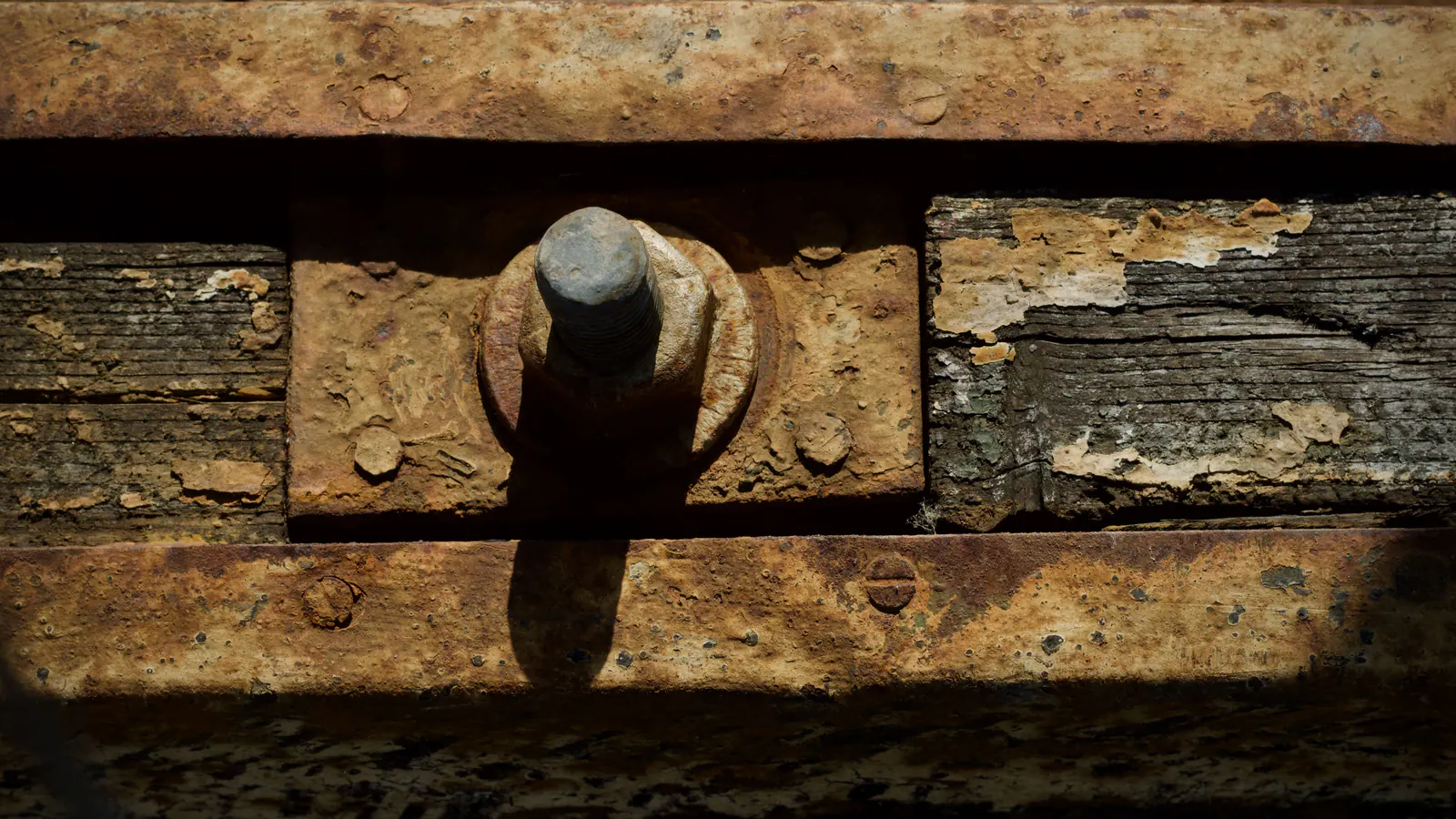
We repair or replace rotted boards, railings and trim with matching materials. We tighten loose railings and handrails and replace rusty hardware. We clean and reseal or restain during a dry spell so the finish has time to cure. If anything structural needs attention, such as the ledger, a beam or a footing, we’ll tell you and help bring in the right licensed professional.
If you live near the hills and are planning bigger deck work anyway, it’s a good time to think about fire resistant materials. Our fire resistant decking page covers your options.
What a cheap deck job leaves behind
Deck trouble tends to start with a shortcut taken years earlier, and it shows up in the order the water reaches it.
First is the finish. A solid, paint-like stain or a film-forming sealer on the walking boards looks good for a year, then wears through in the traffic paths and peels at the edges. Water gets under the film, and the boards stay wet longer than they would bare. On boards you walk on, a penetrating oil stain that soaks in and wears away slowly is easier to keep up, because the next coat goes on without stripping the last one.
Second is the hardware. Pressure-treated lumber today is made with copper-based preservatives that corrode plain steel. Joist hangers, post bases and screws on a deck should be heavy hot-dip galvanized or stainless steel. Orange streaks running down from a hanger or a post base mean the metal is rusting where it meets the wood, and you can’t see how much is left.
Third is the ledger. It needs metal flashing over its top edge, tucked up under the siding, so water running down the wall can’t sit between the ledger and the house. Without it, the house framing behind the ledger rots out of sight. Rot or rust at the ledger isn’t a sealing job. It goes to a licensed professional, and we’ll help you bring one in.
About slippery steps
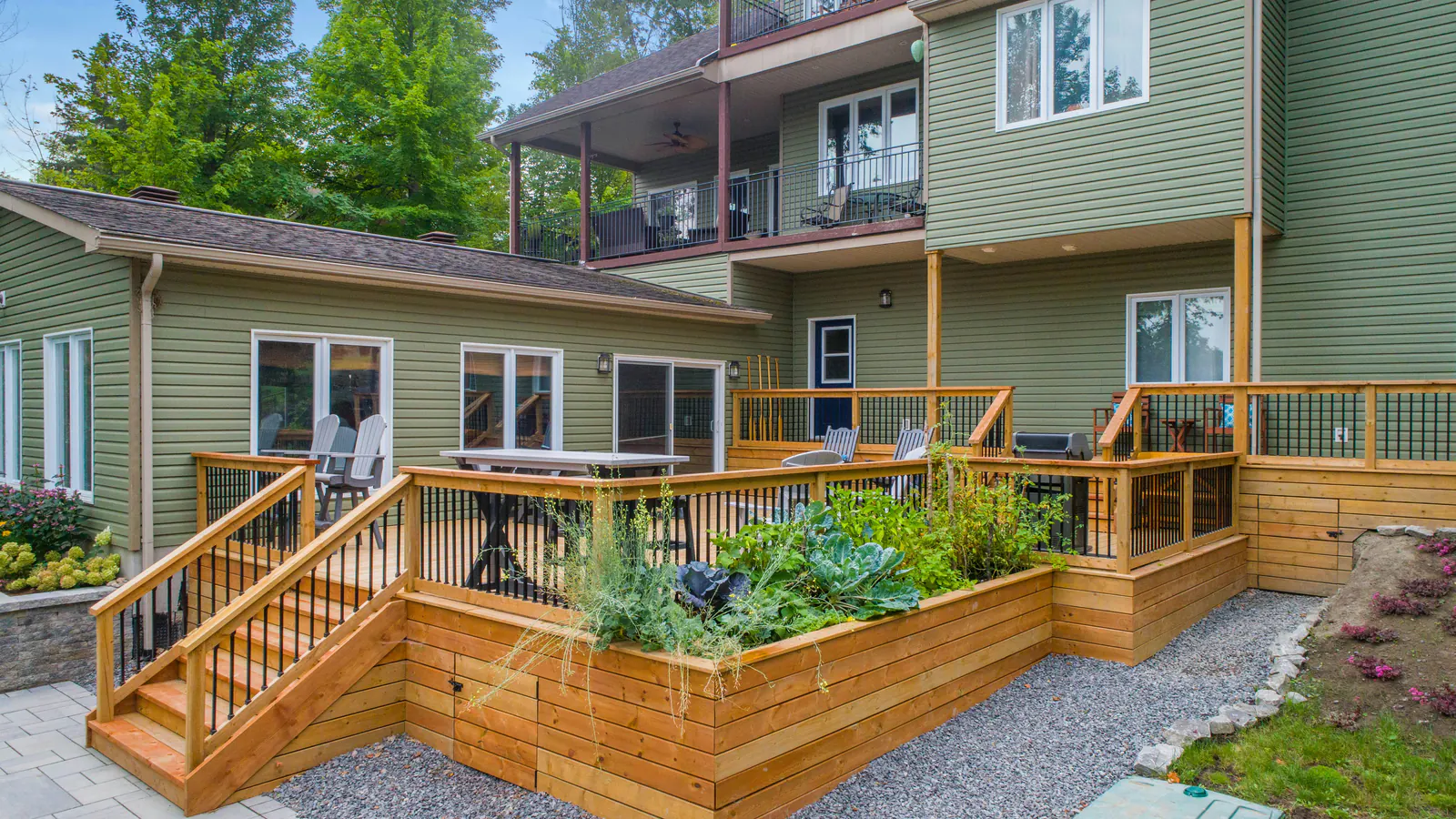
Algae and moss grow quickly on shaded, damp decks and steps. A good cleaning before the season helps, along with making sure water drains off. On stairs, solid steps and a sturdy handrail matter more than any coating. If a step feels uncertain when it’s dry, it will feel worse in the rain.
Before the next storm
- On a dry day, push hard on every railing post and on the handrail at the top and bottom of the stairs. Anything that moves goes first on the list.
- Look under the deck where it meets the house. Rust streaks, a dark wet band along the ledger, or no metal flashing above it are reasons to call before winter.
- Poke the bottom of each post and each stair stringer (the angled boards that carry the steps) with a screwdriver where they touch the ground or concrete.
- Clear leaves and needles out of the gaps between the boards. Packed gaps hold water on the joists below.
- Scrub green, slick steps with an oxygen bleach deck cleaner and a stiff brush. Chlorine bleach attacks the wood fibers and the plants below, and a pressure washer turned up too high leaves the surface fuzzy and rough.
Clearing the gaps, scrubbing the steps and tightening a loose screw in a handrail bracket are homeowner jobs. Replacing boards, railings and stair treads is crew work. Ledgers, beams, footings and the hangers that hold the joists go to a licensed professional. A railing or a step that gives way in the rain hurts someone, and that’s the real cost of waiting on a deck.
Should I reseal my deck right before the rain starts?
Yes, if there are enough dry days for it to cure. Sealer on damp wood, or sealer that gets rained on too soon, can fail early. We schedule it around the forecast.
Is a wobbly railing really urgent?
We treat it that way. Railings are there to prevent falls, and a wet winter won’t tighten anything.
See our carpentry services, or request an estimate for a deck check before winter.