Settings
Focus mode
Focus keeps the section you are reading bright and greys out the rest of the page. Super focus adds a second, brighter spot on the part of the section you are reading. In either, ↓ and ↑ move to the next or previous section (or part, in Super focus).
How grey and dim Focus makes the sections outside the bright one. Moving it turns Focus on.
Color vision
For red-green color blindness: deutan (green-weak) is the most common kind, protan (red-weak) the next. Charts, highlights and warnings move to blues, oranges and purples that stay apart, with a cue beyond color. Photos never change. Applies to the blog and the service pages.
Your choices are saved in this browser, on this device.
Fire Resistance
Fire-Retardant Coatings
FlameStop and intumescent coatings for interior wood, framing and sheathing. Both reduce flame spread, and the products we use are tested to ASTM E84 Class A per the manufacturer.
01Fire Resistance
What the coating does when it gets hot
Fire-retardant coatings slow flame on wood that would otherwise burn. When they get hot they form a char layer, and the char insulates the wood beneath. On exposed framing, sheathing and structural elements, they reduce interior flame spread and can improve the fire resistance of the existing wood.
FlameStop Systems
FlameStop soaks into the wood fibers. When flame reaches the treated wood it self-extinguishes, which slows the spread of flame and cuts down the smoke. It’s rated for interior flame spread reduction (manufacturer data). The manufacturer says it isn’t designed for wildfire use, so we don’t offer it as a wildfire measure.
Intumescent Coatings
Intumescent paints swell in heat into an insulating foam or char. They suit structural members. Any fire rating belongs to the tested product at the thickness its manufacturer specifies, and we build the coating to that thickness.
Illustrative cutaway, not to scale
-
Clean the wood and prepare it so the coating bonds.
-
Apply fire-retardant primer to seal the wood.
-
Apply the coating to the thickness the product specifies for its rating.
Why it’s called intumescent
The word comes from the Latin “intumescere”, to swell up. Above roughly 200°C, intumescent coatings expand up to 100 times their original thickness (per manufacturer test data) into an insulating foam char between the flame and the surface underneath.
Where it goes
We coat exposed wood framing, roof sheathing, subflooring and structural members. At eaves and soffits, where embers can collect, a coating can improve the fire resistance of the existing wood. It doesn’t replace the noncombustible or ignition-resistant materials the WUI code calls for.
Codes and your permit
We apply products tested to ASTM E84 Class A at the thickness the manufacturer specifies, and we give you the product data and application records for your permit. Your building department decides whether the work meets the code. Surface coatings are not an approved compliance method under the California Wildland-Urban Interface Code (CWUIC), Title 24, Part 7. For exterior walls the WUI code calls for noncombustible materials, ignition-resistant materials labeled for exterior use, or fire-retardant-treated wood labeled for exterior use.
Quick Facts
- Products
- FlameStop, intumescent coatings
- How It Works
- FlameStop self-extinguishes. Intumescent coatings char.
- Tested To
- ASTM E84 Class A (manufacturer data)
- Application Areas
- Framing, sheathing, eaves, soffits
- Documentation
- Written product and application records
02Compare Products
Intumescent vs. Fire-Retardant Coatings
| Feature | Intumescent Coatings | Fire-Retardant (FlameStop) |
|---|---|---|
| How It Works | Expands under heat to form insulating foam char layer | Penetrates wood fibers, creates self-extinguishing reaction |
| Temperature Activation | ~200°C (392°F) | Direct flame contact |
| Expansion | Up to 100x original thickness, per the manufacturer’s testing | No expansion: chemical reaction in wood fibers |
| Best For | Structural elements, steel, exposed framing | Wood framing, sheathing, interior surfaces |
| Fire Rating | Ratings belong to the tested product at its specified thickness | Flame spread reduction |
| Appearance | Paint-like finish, can be topcoated | Clear or tinted, maintains wood appearance |
| Reapplication Needed | Not usually while the coating stays intact, per the manufacturer | May require periodic reapplication |
| WUI Exterior Use | Not approved for WUI exterior use | Interior use, not for WUI |
| Interior Tests (Manufacturer Data) | ASTM E119, E84 Class A | ASTM E84 Class A |
03Our Process
How we apply it
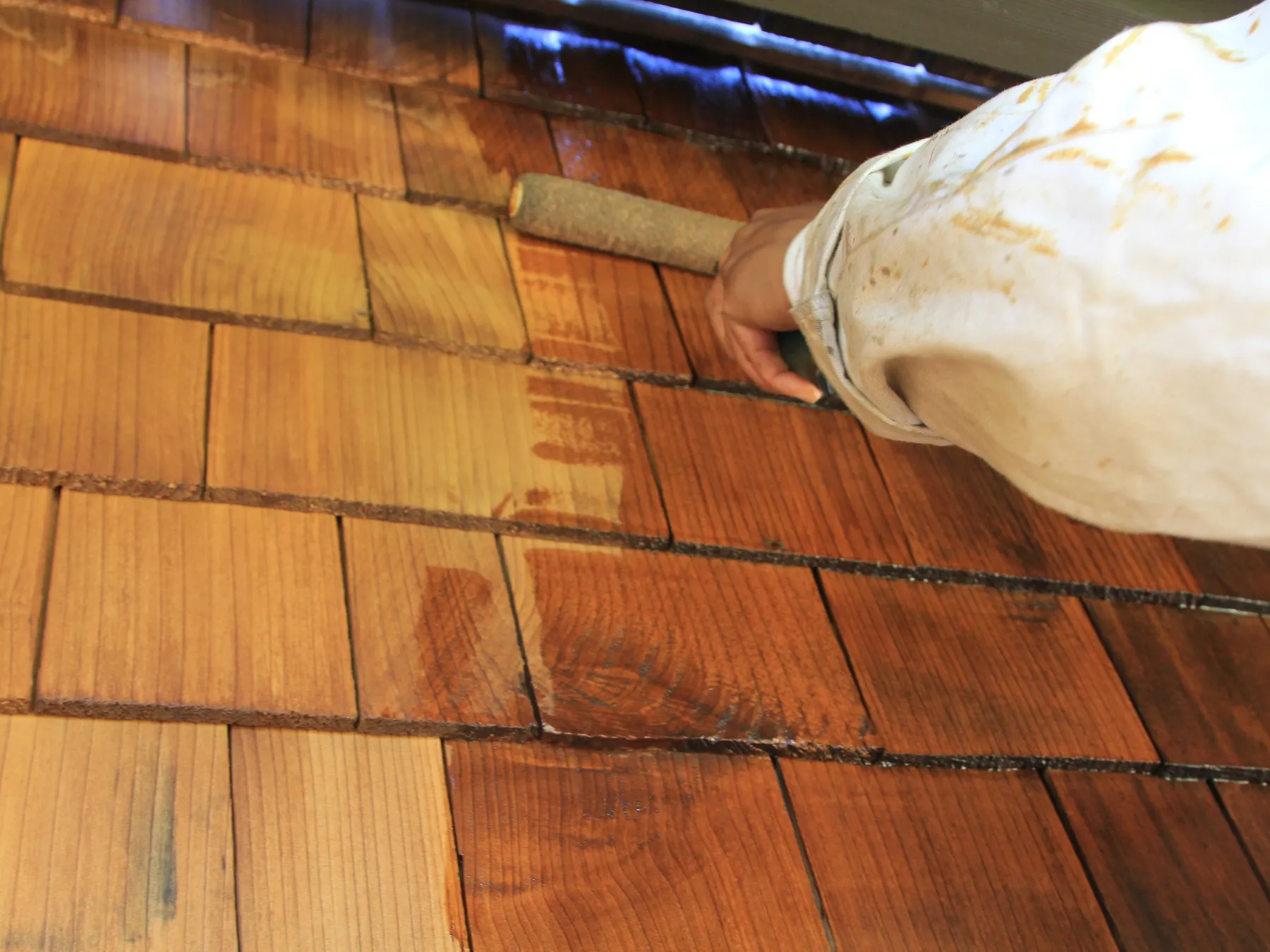


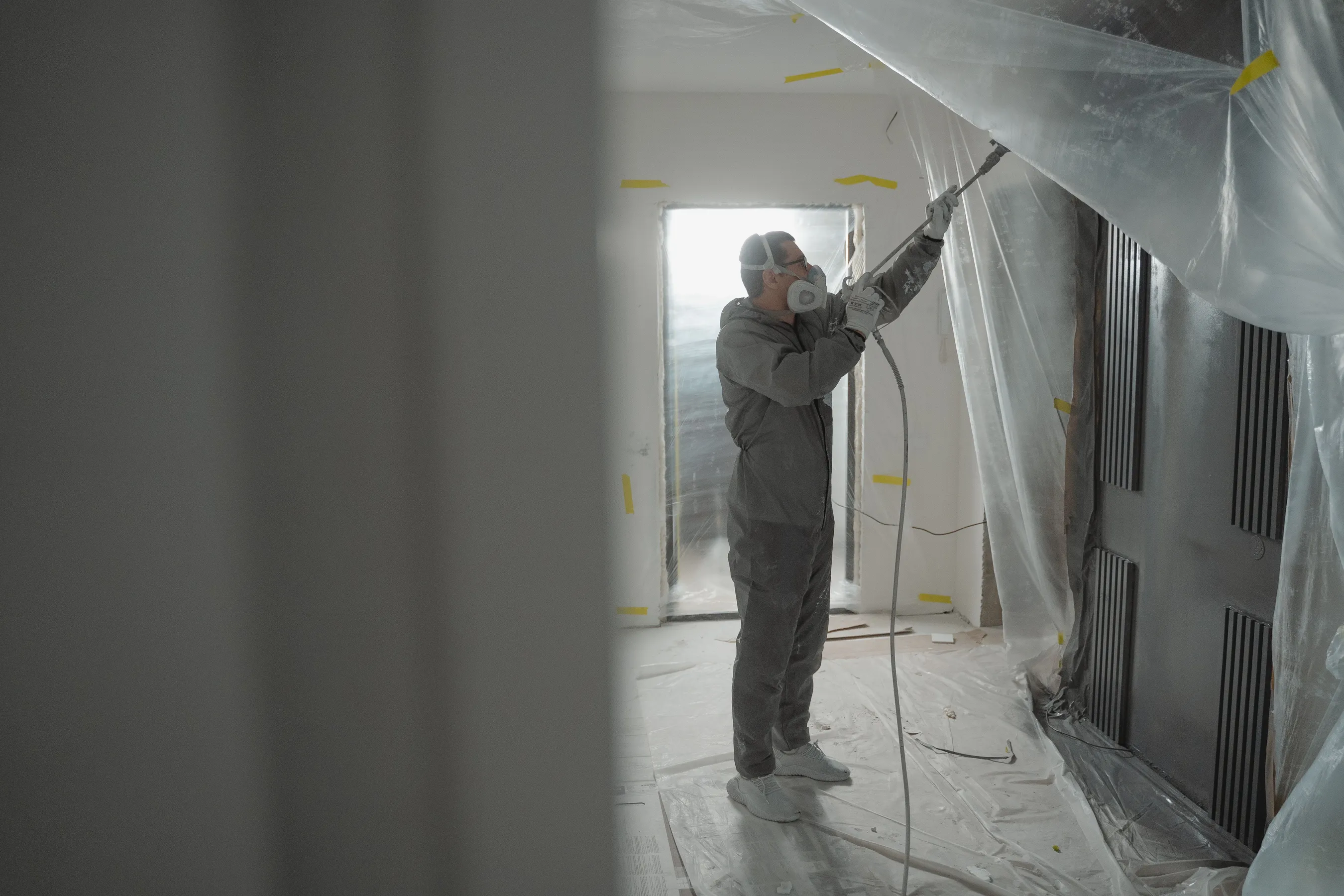

Step 1 of 4: Surface Prep
-
Clean the wood and prepare it so the coating bonds.
-
Apply fire-retardant primer to seal the wood.
-
Apply the coating to the thickness the product specifies for its rating.
-
Hand over the product data and application records for your permit file.
Explore by Topic
Talk to us about coatings.
We’ll look at the wood you want coated, tell you which product fits it, and tell you where a coating won’t help.