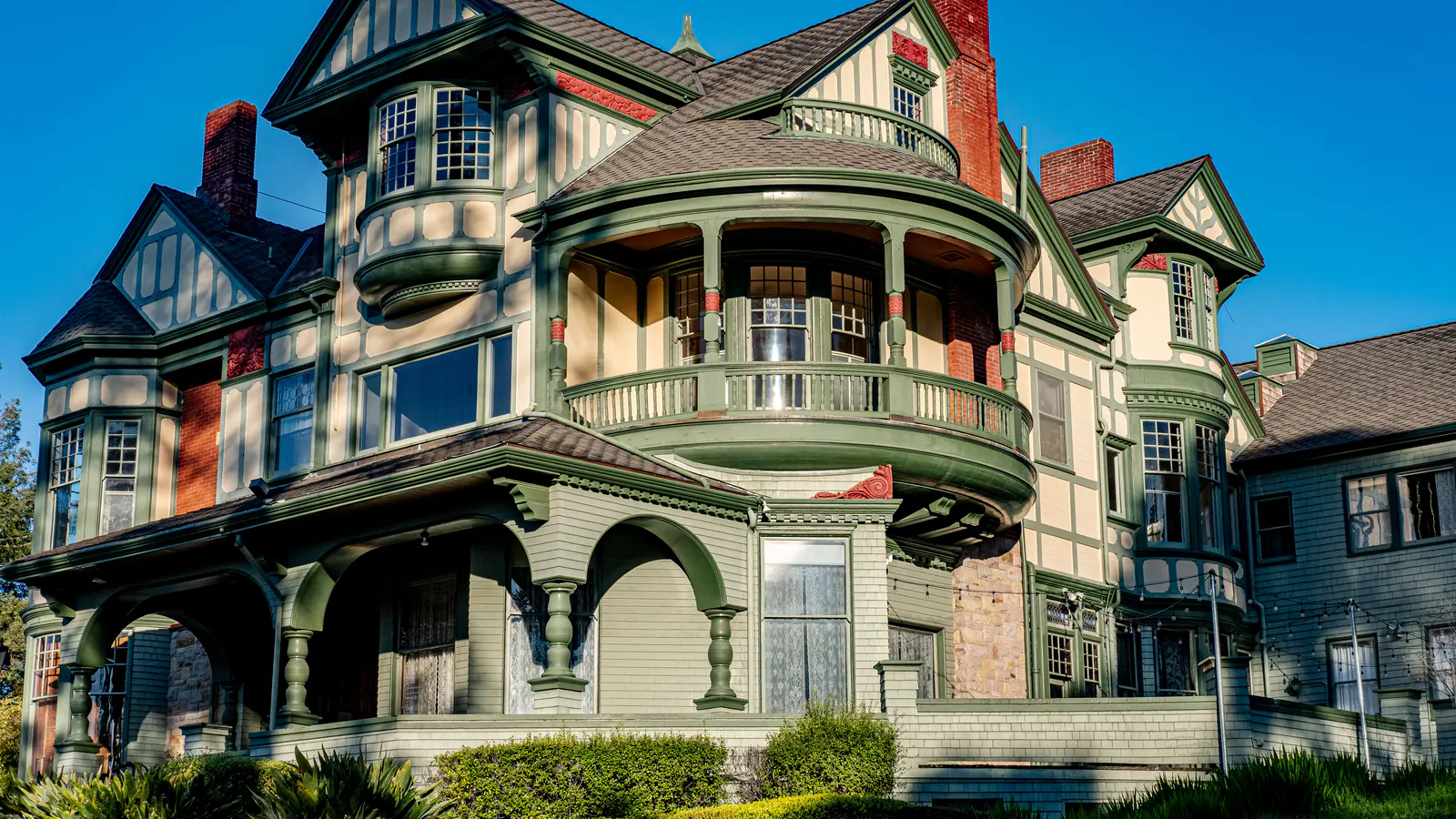
The short version: on a Victorian, a repaint is a restoration: scrape what is loose, contain old paint (it may contain lead), replace only failed shingles, and prime before color.
Fish-scale and diamond shingles, layered trim, deep eaves and tall, narrow windows are why owners love Victorians, and why every shingle and trim board carries its own history of paint, weather and repairs. This Home Preservation series post follows one such job in photos.
The Numbers Behind an Older Home
| Figure | What it means for you | Source |
|---|---|---|
| 87% of homes built before 1940 are likely to have lead-based paint | On a Victorian, assume the older coats contain lead until a test says otherwise. | U.S. EPA |
| About 72% of Palo Alto homes were built before 1980 | Most homes in town are old enough that lead-safe practices may apply. Our math from the Census estimate. | U.S. Census Bureau, ACS 2024 1-year, table B25034 |
| More than 20 square feet of exterior paint disturbed brings in federal lead-safe rules | A full exterior prep on a pre-1978 home is well over that line. Ask any painter for their lead certification. | U.S. EPA Renovation, Repair and Painting Program |
| About 1/4 inch of bare wood weathers away per century | Old shingles under failed paint are often still thick and sound enough to save. | USDA Forest Products Laboratory, Wood Handbook, 2021 |
| Built | Homes (count) |
|---|---|
| 1939 or earlier | 3,841 |
| 1940s | 2,851 |
| 1950s | 7,144 |
| 1960s | 3,542 |
| 1970s | 3,786 |
| 1980s | 2,442 |
| 1990s | 998 |
| 2000s | 1,998 |
| 2010s | 1,813 |
| 2020 or later | 1,135 |
Source
Source: U.S. Census Bureau, American Community Survey 2024 1-year, table B25034, Palo Alto city. These are survey estimates of 29,550 homes with wide margins of error, so read them as “about.”
In the source list: 2
| Year built | Homes likely to have lead-based paint |
|---|---|
| Before 1940 | 87% |
| 1940 to 1959 | 69% |
| 1960 to 1977 | 24% |
Source
Source: U.S. EPA. The federal government banned lead-based paint for homes in 1978.
In the source list: 1
Did you know?
- About 3,800 Palo Alto homes, roughly 1 in 8, were built in 1939 or earlier (our math from the Census estimate). U.S. Census Bureau
- Palo Alto’s Professorville neighborhood was listed on the National Register of Historic Places in 1980. California Office of Historic Preservation
- The city’s draft guidelines count 105 contributing homes in Professorville, built from the 1890s to 1929. City of Palo Alto
- Palo Alto has 16 individually listed National Register properties and 4 National Register historic districts. City of Palo Alto
The Starting Point
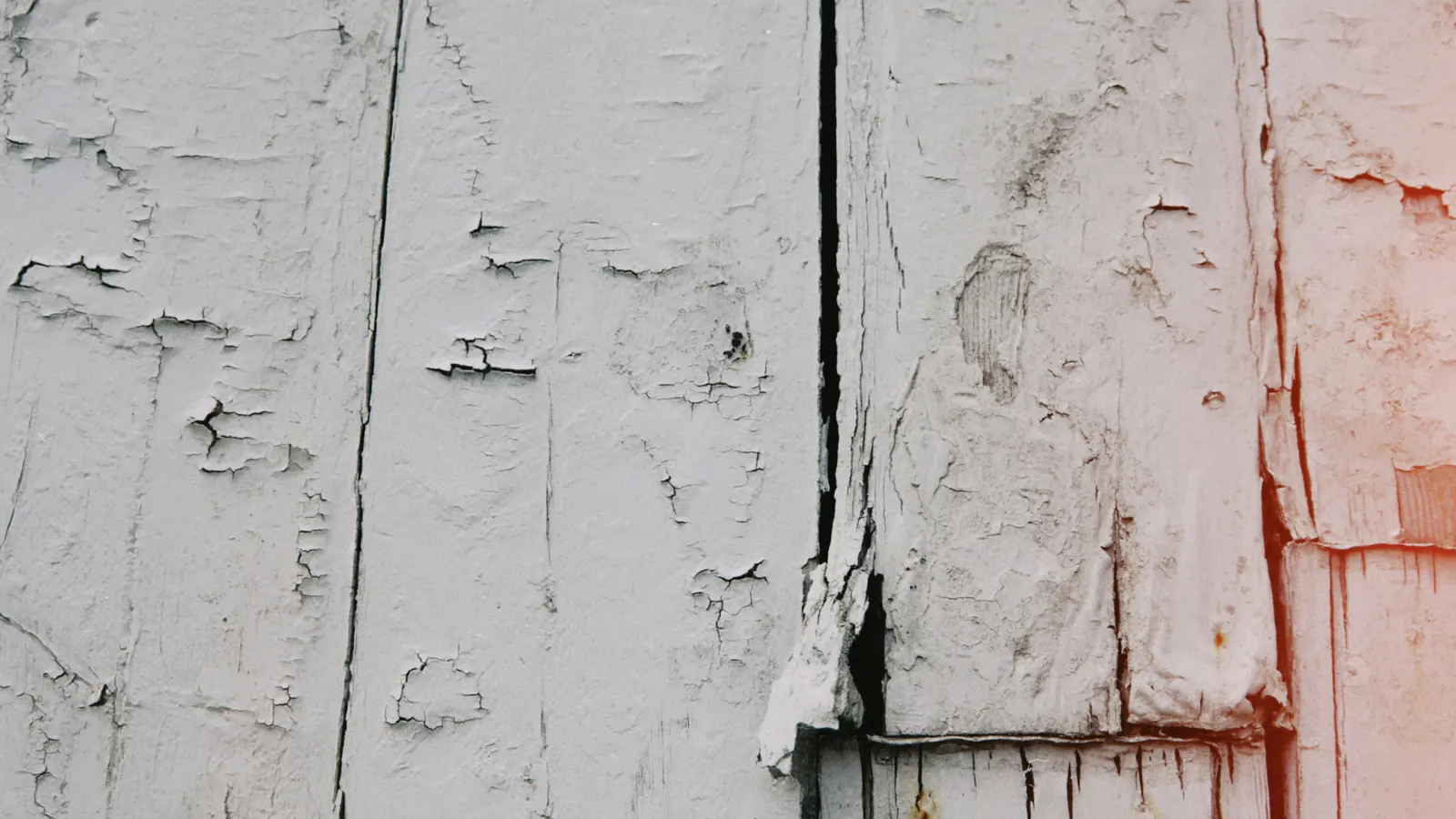
From the street the house looked handsome. Up close, the sunniest sides told a different story: paint lifting in sheets and flakes, bare gray wood on whole rows of shingles, and the oldest coats cracking along the grain.
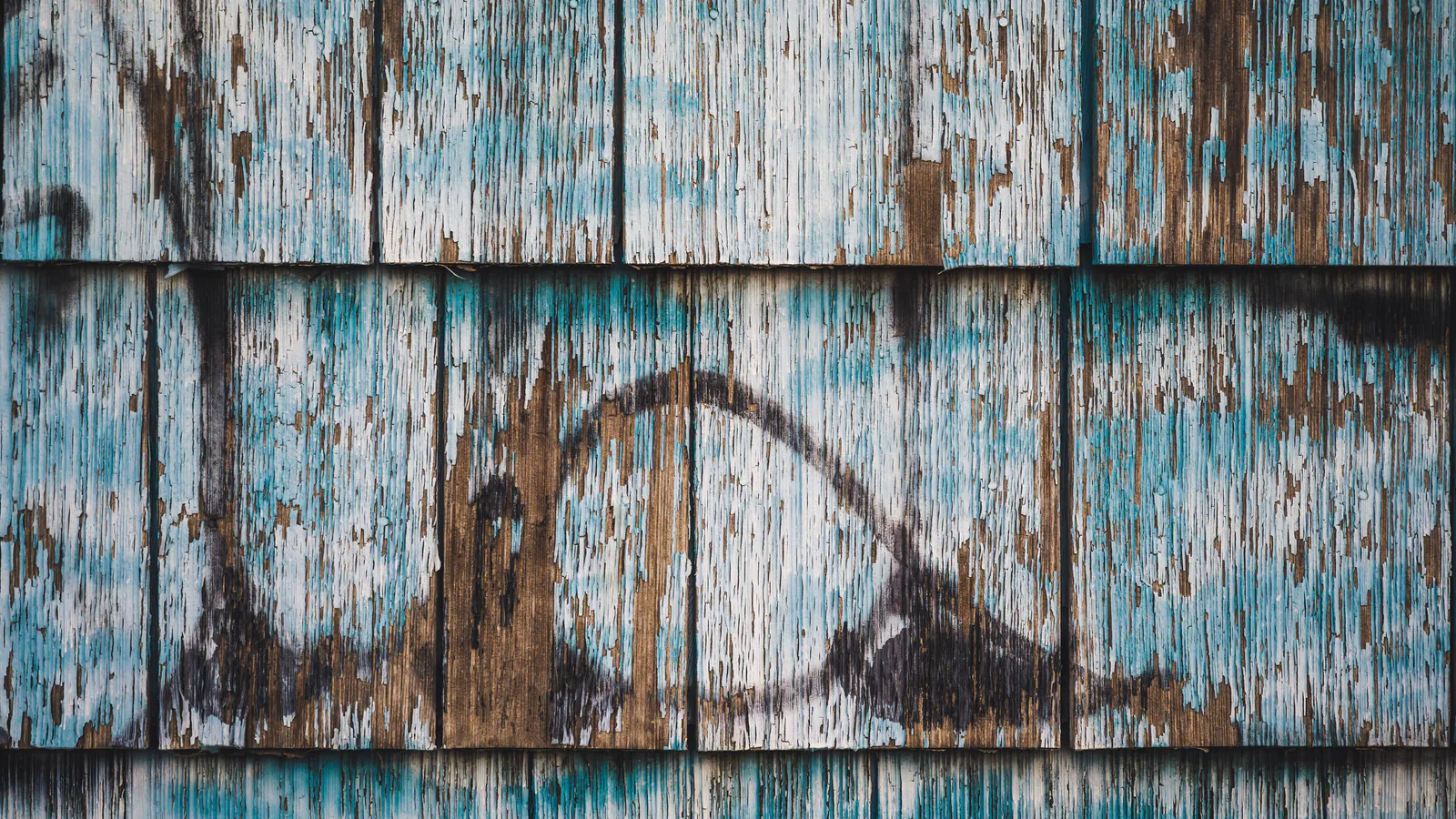
More paint is not the answer here: a new coat over loose layers tends to fail with them. The work starts with getting back to a sound surface.
Access First, Then Containment
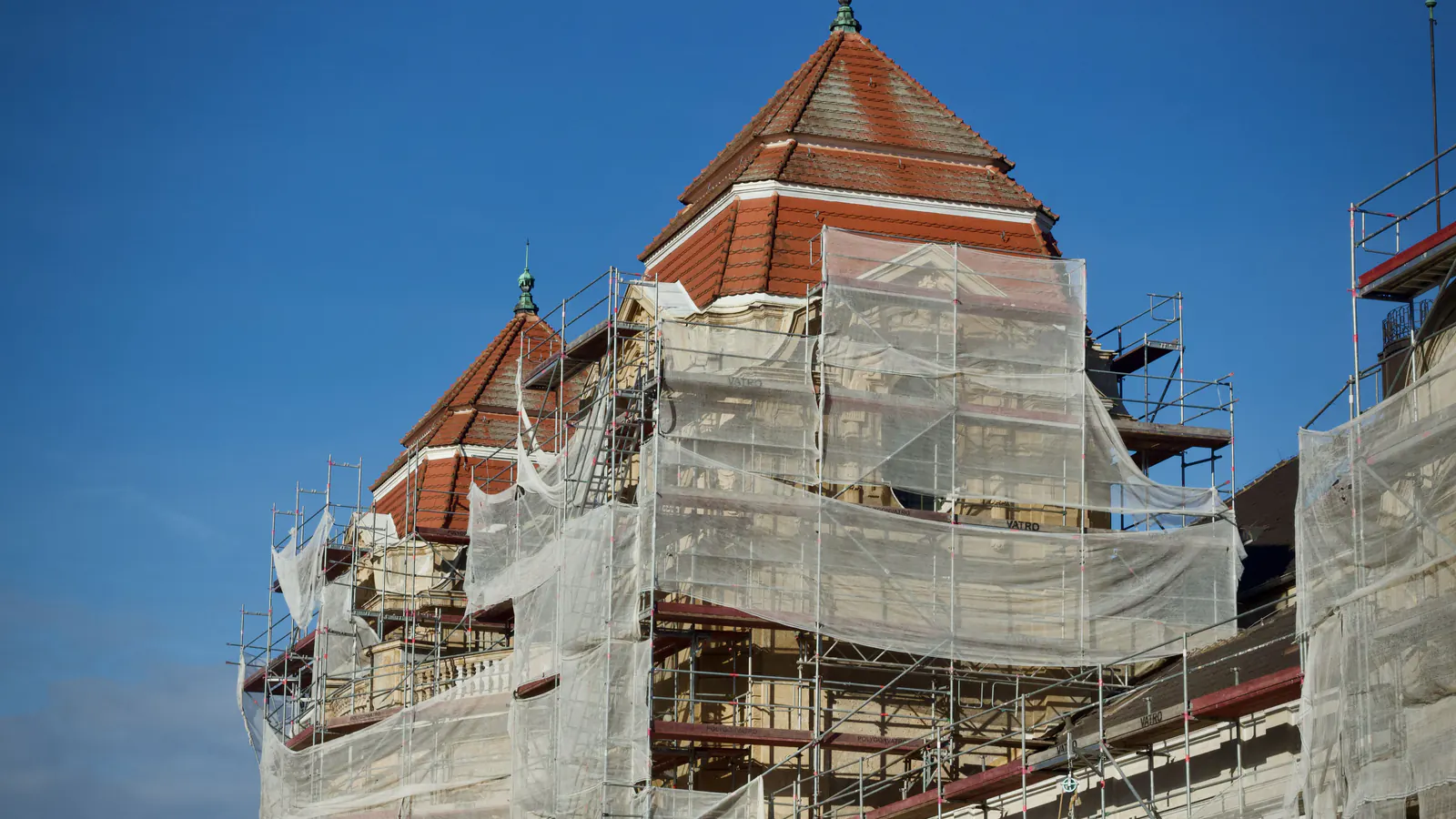
Gables and upper walls need stable platforms, so this job started with scaffolding. It keeps the crew at arm’s length from the surface for days at a time, which makes careful hand prep realistic in a way a ladder does not.
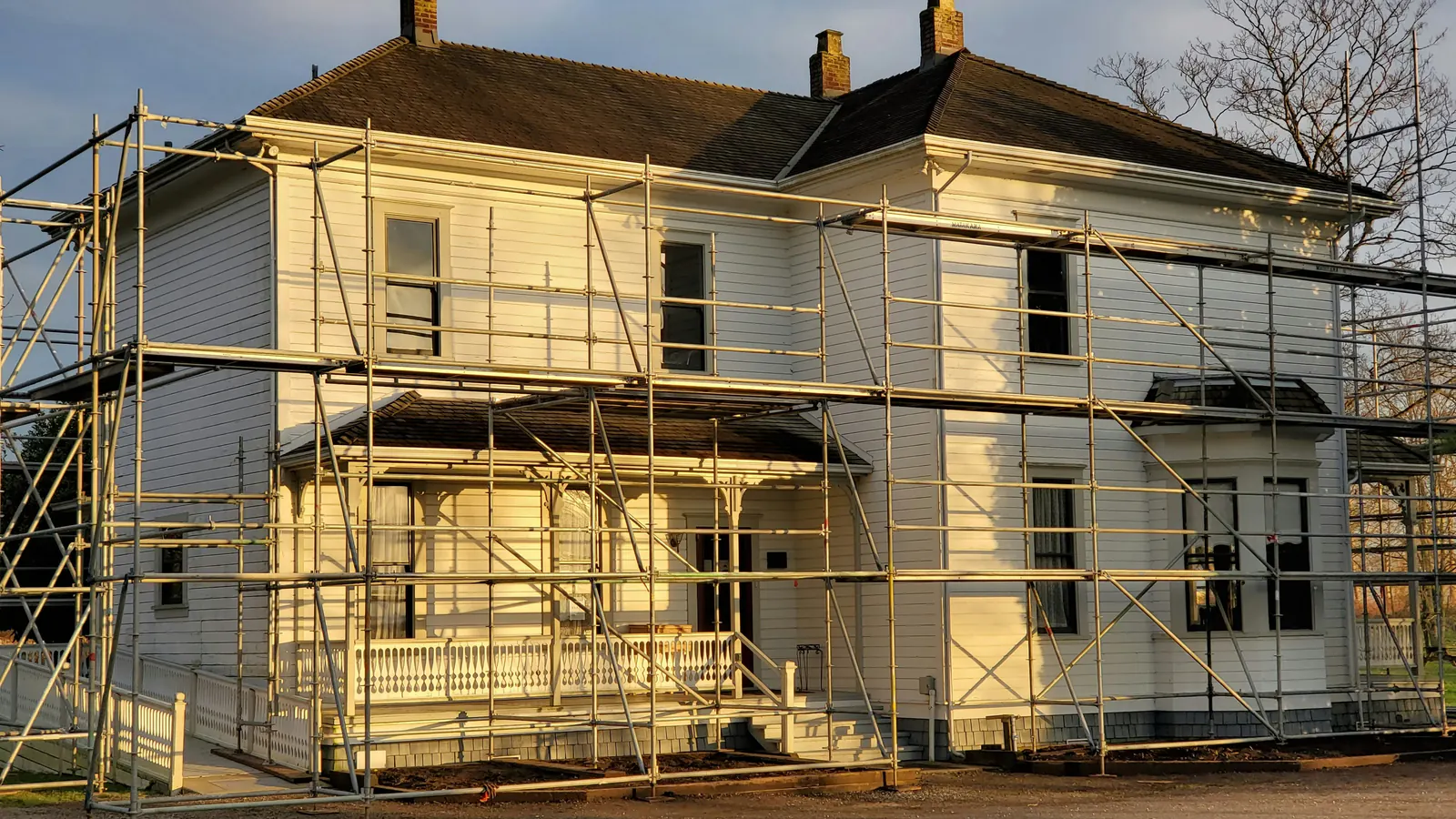
Early coats on a house this age likely contain lead (87% odds before 1940, per the EPA). The EPA’s lead rules for homes built before 1978 call for certified, lead-safe work once a job disturbs more than 20 square feet of exterior paint. Our crew wore disposable coveralls and respirators, and plastic sheeting hung from the scaffold kept chips and dust out of the yard.
Our posts on lead paint in pre-1978 homes and EPA lead paint rules explain what to ask any contractor before work begins.
Scraping by Hand
Decorative shingles and narrow trim do not suit aggressive tools, so most loose paint came off with hand scrapers worked along the grain. Sound, well-bonded paint stays in place.
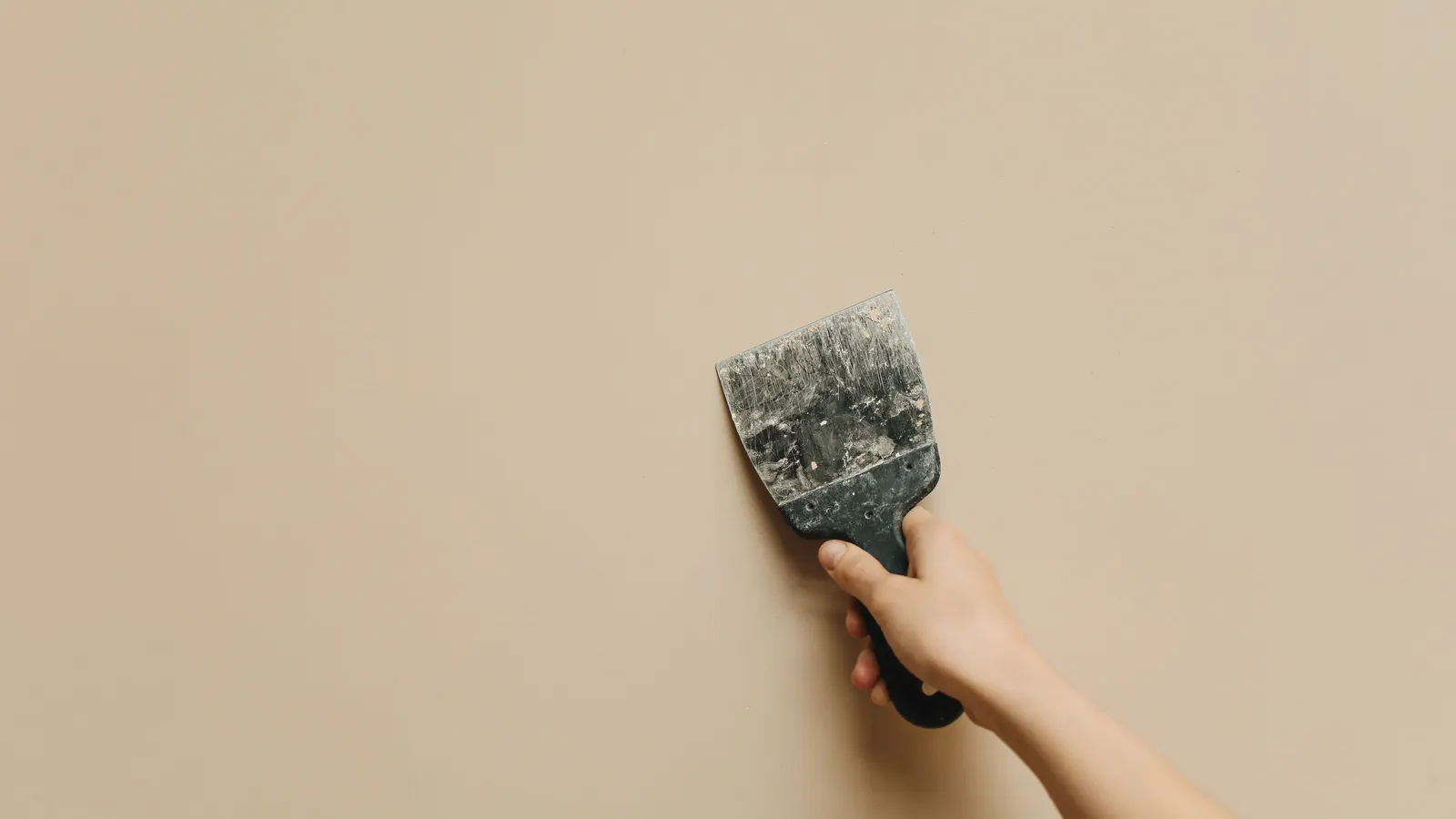
Scraping is also an inspection: it finds the boards and shingles that cannot be saved.
Replace Only What Failed
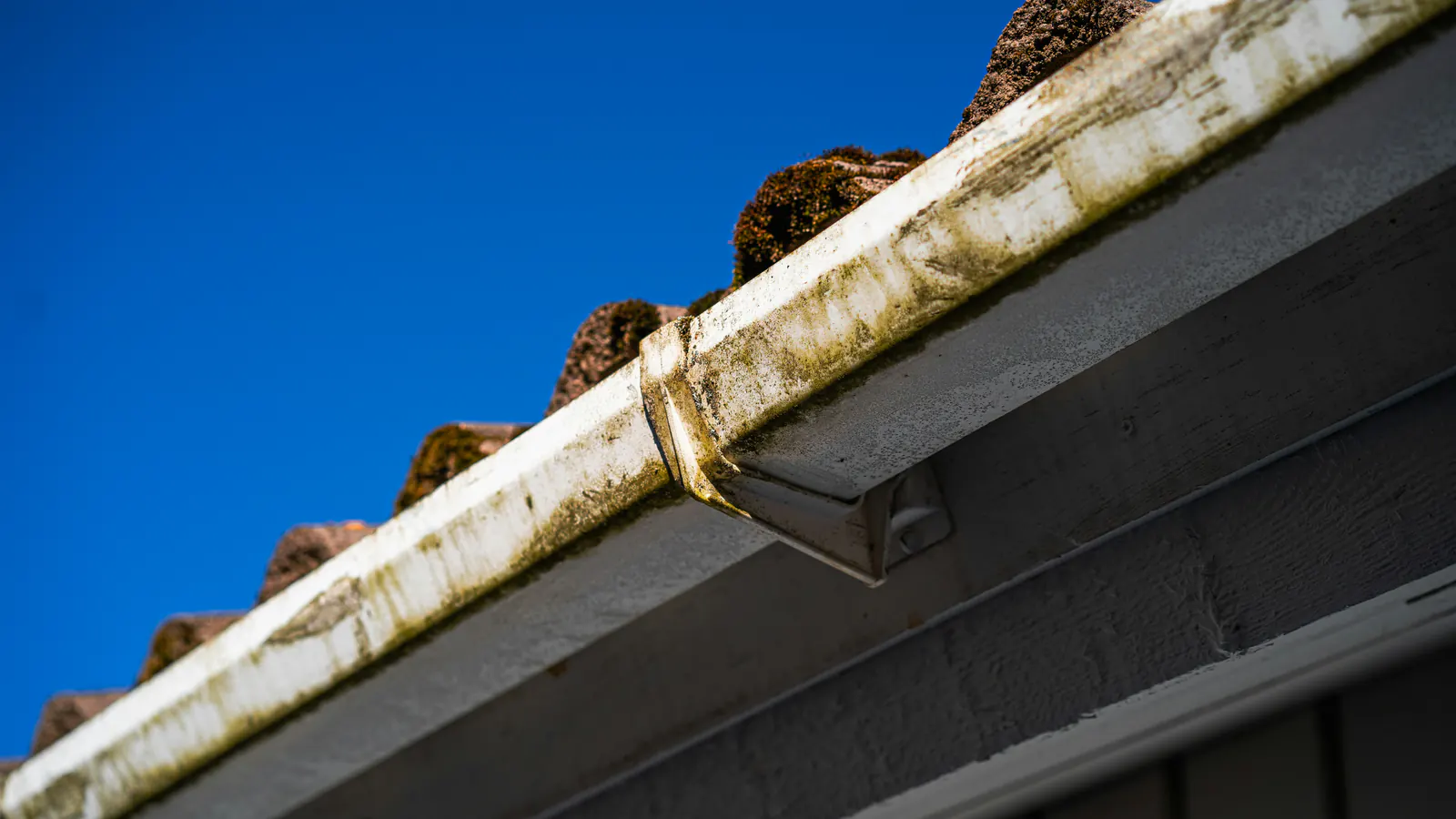
When a shingle has split through or gone soft, we replace that shingle, not the wall. A new cedar shingle, cut to match its neighbors’ shape and exposure, slips into the row, and once primed and painted it blends into the original pattern.
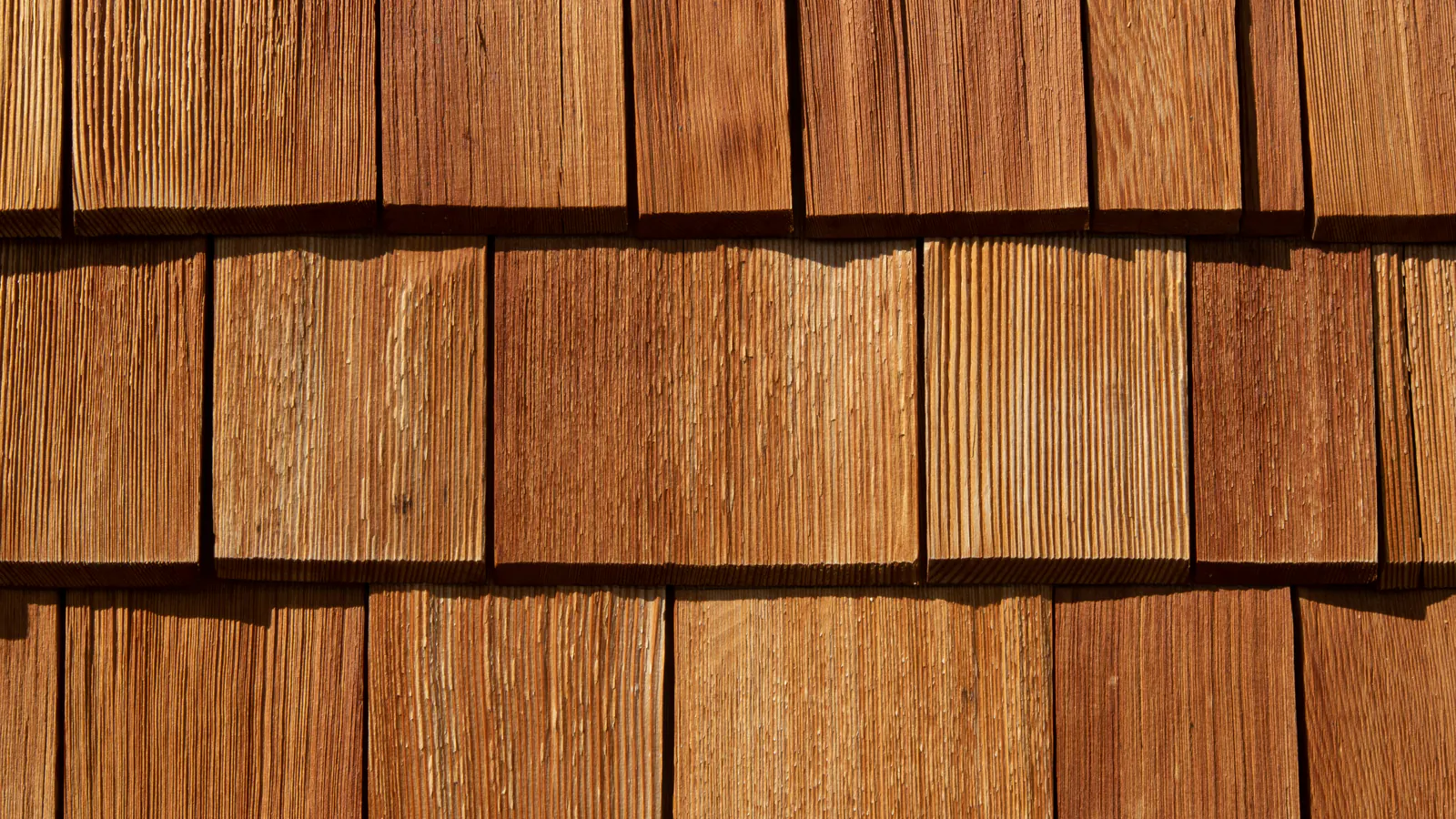
Bare wood weathers only about 1/4 inch per century, so the rest is usually sound, and many owners and local historic review boards prefer careful repair to wholesale replacement. Our post on historic district approval covers what can slow those projects down. Rot in any load-bearing member is a different matter, and that goes to an appropriately licensed contractor.
Then, and Only Then, the Paint
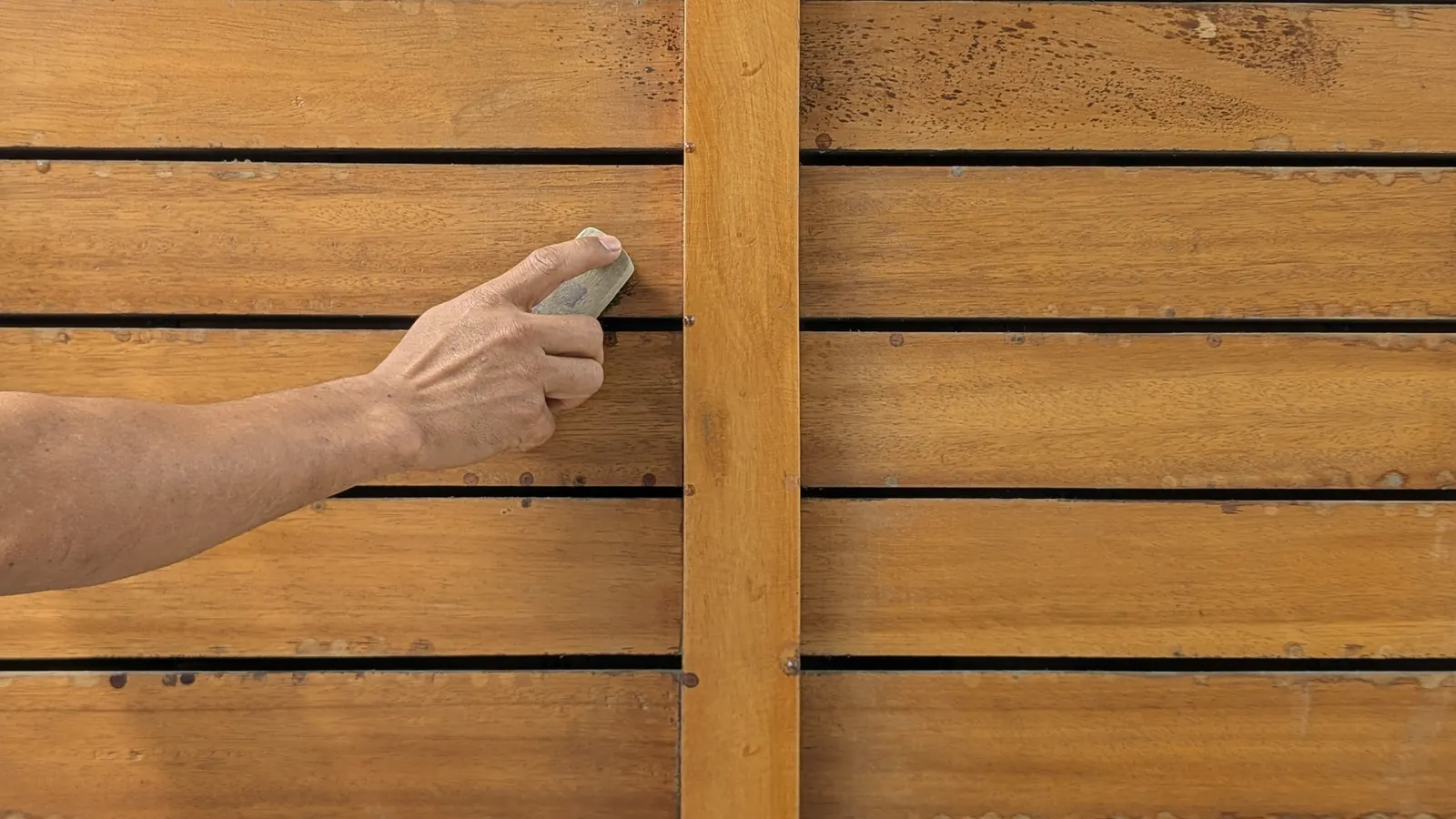
With joints sealed, bare wood was primed so the topcoat had a consistent surface to bond to, and the finish coats went on. The color plan matters as much as the prep: body, trim and accent colors can bring out the shingle patterns or flatten them.
A restoration like this takes longer than a standard repaint, because most of the time goes into steps the finished photos cannot show. Our exterior prep post shows them up close.
Can I just pressure-wash and repaint an old Victorian?
High pressure can drive water into old wood, raise the grain, tear up fragile shingles and trim, and spread old paint chips around the yard. On older homes, gentler cleaning and hand scraping are usually the safer route.
Do all the old shingles have to come off?
Usually not. We replace shingles that are split, missing or soft, and scrape, prime and repaint the rest.
How do I know if my house has lead paint?
If your home was built before 1978, assume it may until testing says otherwise. A certified inspector or risk assessor can test it, and lead-safe practices should be planned before any paint is disturbed.
Older home with tired paint or detail? See our historic home painting and surface restoration pages, then request an estimate or call us at (650) 961-7415.
Sources (7)
- U.S. EPA epa.gov (https://www.epa.gov/lead/protect-your-family-sources-lead) Cited 1, 2
- U.S. Census Bureau, ACS 2024 1-year, table B25034 censusreporter.org (https://censusreporter.org/data/table/?table=B25034&geo_ids=16000US0655282&primary_geo_id=16000US0655282) Cited 1, 2, 3
- U.S. EPA Renovation, Repair and Painting Program epa.gov (https://www.epa.gov/lead/renovation-repair-and-painting-program-contractors) Cited 1, 2
- USDA Forest Products Laboratory, Wood Handbook, 2021 research.fs.usda.gov (https://research.fs.usda.gov/download/treesearch/62269.pdf) Back
- California Office of Historic Preservation ohp.parks.ca.gov (https://ohp.parks.ca.gov/ListedResources/Detail/N906) Back
- City of Palo Alto cityofpaloalto.org (https://www.cityofpaloalto.org/files/assets/public/v/1/planning-amp-development-services/historic-preservation/professorville-design-guidelines_public-review-draft_5-2-2016_reduced.pdf) Back
- City of Palo Alto paloalto.gov (https://www.paloalto.gov/Departments/Planning-Development-Services/Historic-Preservation/Historic-Registers) Back