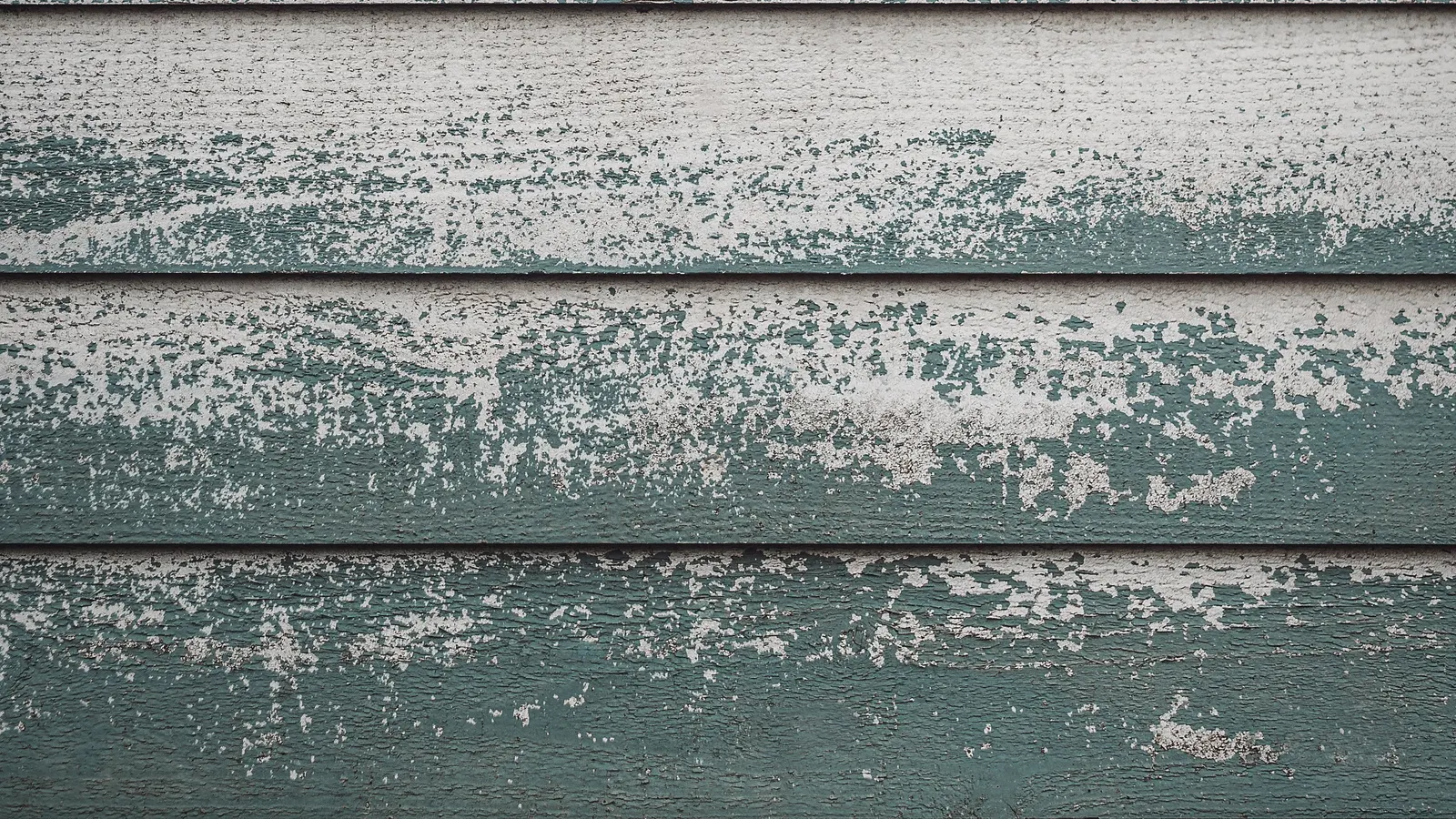
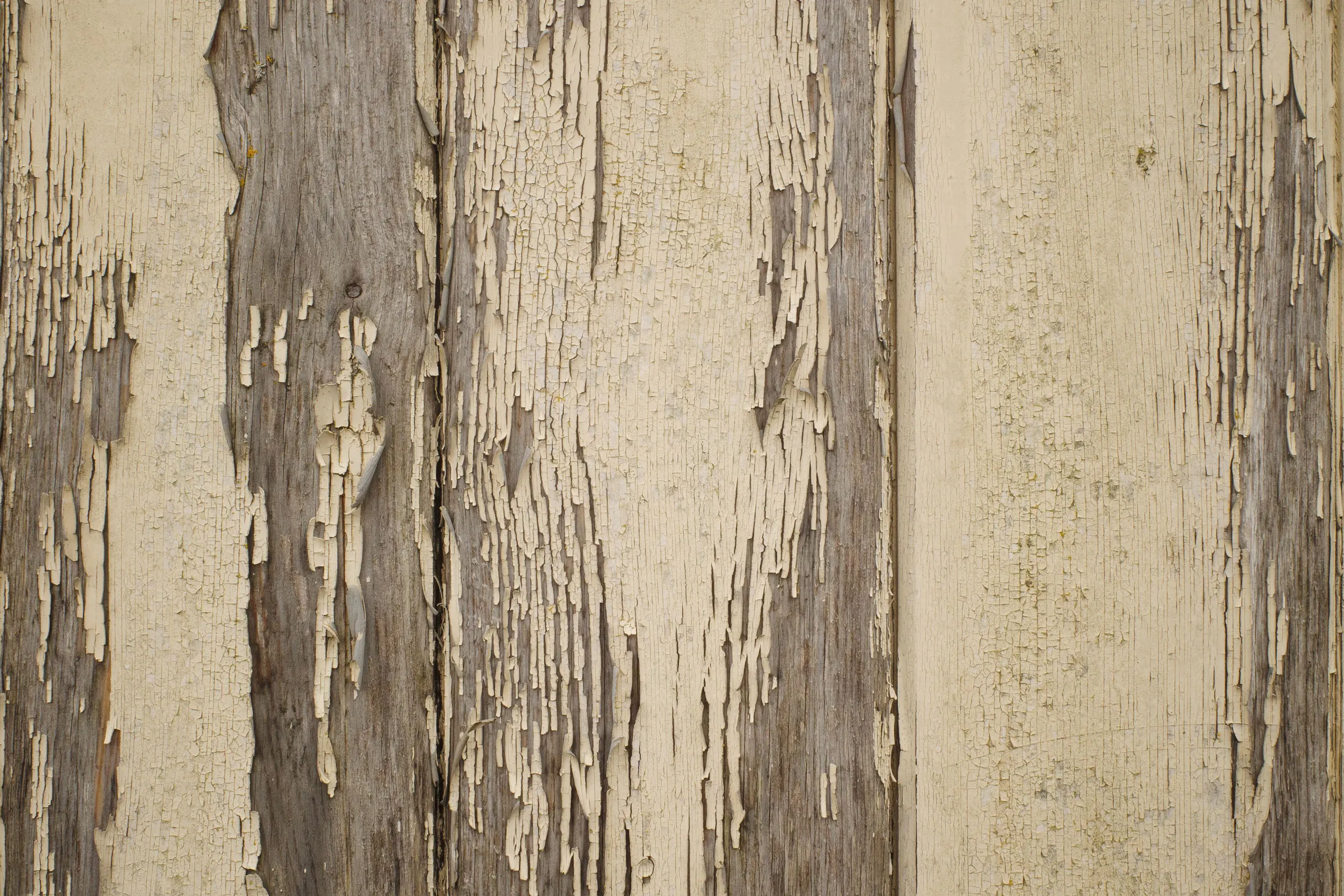
It happens on most streets sooner or later. A house gets a fresh coat of paint, and a couple of summers later the trim is peeling again. Why? The new paint went onto a surface that was already coming apart, and it came off with it.
Wood that has gone gray, or that keeps shedding paint, has worn loose at the face. Our surface restoration work gets the wood, the stucco and the joints back to something paint can hold onto. It comes before any new coat, for two reasons.
The first is sun. It wears bare wood slowly, and the softer earlywood goes faster than the harder latewood. The USDA Forest Products Laboratory measured boards left bare outdoors, facing south, for 16 years.
| Wood | Earlywood lost (mm) | Latewood lost (mm) |
|---|---|---|
| Western redcedar | 1.945 | 1.380 |
| Douglas-fir | 1.405 | 0.500 |
| Redwood | 1.385 | 0.835 |
| Southern pine | 1.355 | 0.525 |
Source
Source: USDA Forest Products Laboratory, Wood Handbook, chapter 16 (Finishing Wood), Table 16-1, 2021.
In the source list: 1
That’s under 2 millimeters in 16 years, or about 6 mm (1/4 inch) a century. Slow. The damage that matters for paint comes much sooner. Uneven wear leaves a ridged face, small cracks open along the grain, and the outer cells come loose. A new coat bonds to that loose layer and lets go when it does.
The second reason is water
Sun wears the surface. Wet wood is what rots, and decay can start once wood passes about 20% moisture.
| Condition | Moisture low (%) | Moisture high (%) |
|---|---|---|
| Indoors | 6 | 12 |
| Dry Southwest | 6 | 9 |
| Outdoors, under cover | 12 | 14 |
| Pacific Northwest | 16 | 16 |
| Decay can start | 20 | 30 |
Source
Source: USDA Forest Products Laboratory, Wood Handbook, chapter 16, 2021. Decay starts above about 20%; most wood holds about 30% of its dry weight as water inside its cell walls before liquid water fills the cells.
In the source list: 1
Humid air alone rarely pushes wood past 20%. Liquid water does, and it gets in through a failed caulk joint, a cracked sill or open end grain. End grain takes in water 10 to 100 times faster than the face of a board. Paint over wet wood is more likely to blister and peel, and the wood keeps rotting underneath it. We dry the wood out and seal it before anything gets coated.
The work, in the order we do it
- We inspect the surfaces, the old coatings and the materials, inside and out, and write the plan from what we find.
- On a pre-1978 home or a historic property, we test the old coats for lead before anyone scrapes or sands, and work lead-safe from there. We’re EPA Lead-Safe Certified.
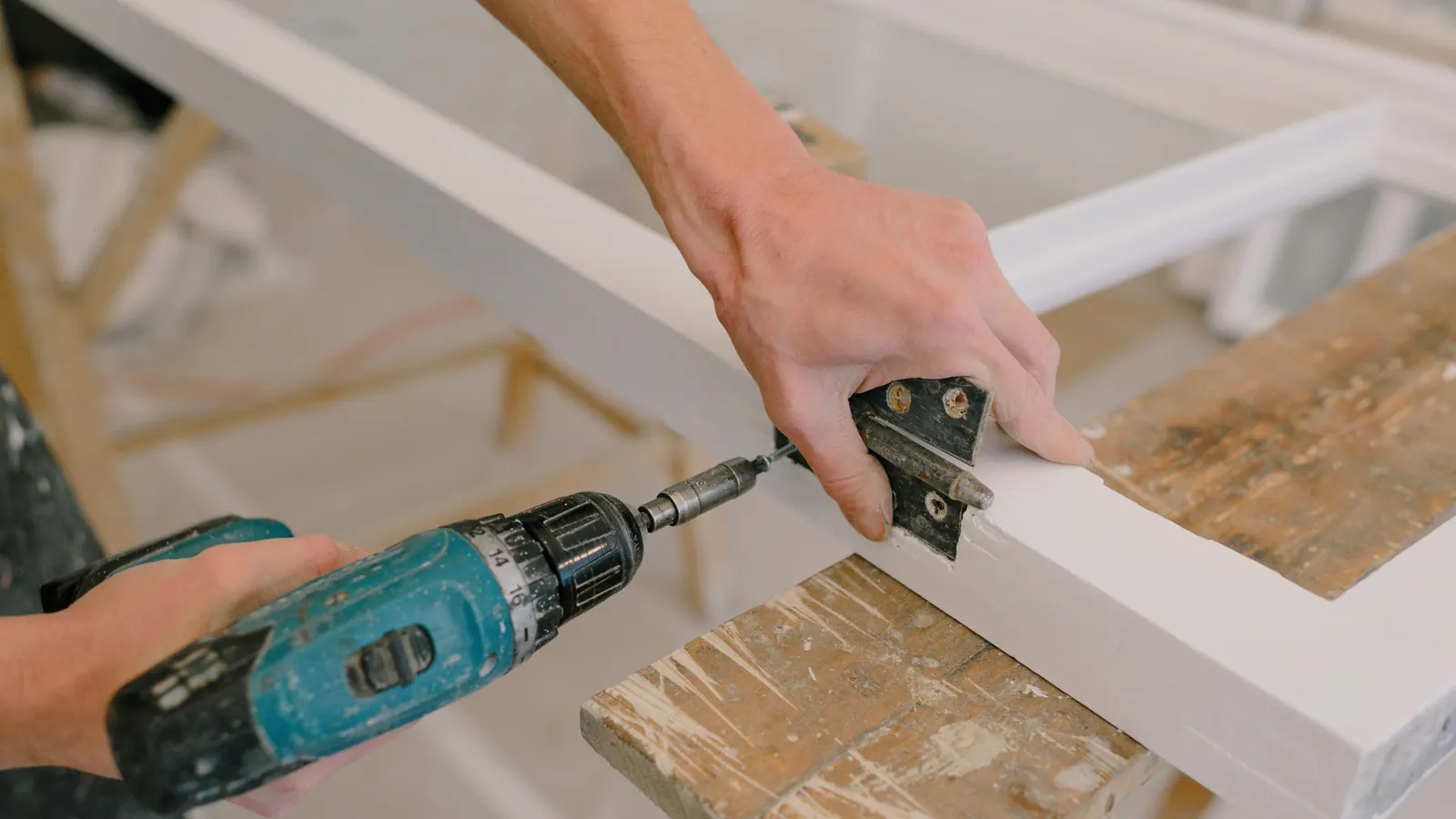
- Our carpenters cut out the damaged wood and rebuild the trim and siding with sound material.
- We repair cracks, dents and wear in the stucco and match the texture.
- Joints, gaps and penetrations get caulked and sealed against moisture.
- Weak spots, like the head of a window, get added moisture control to reduce the risk of future damage.
Then comes the prep, which is final sanding and priming. Our exterior prep article shows that stage on a real job. If you want to find the soft wood on your own house first, our wood rot guide shows how.
Restoring a weathered board, in section
Illustrative section, not to scale
-
The surface turns gray, the soft earlywood wears away faster than the hard latewood, and the top layer of cells loses its grip on the wood beneath. Paint applied over that layer peels with it.
-
Gray, weathered wood needs sanding back to sound fibers before a paint film will stay put. Sand off about 0.004 inch of sunburned wood, then test again.
-
Sanded back to sound wood first, then primed before the fresh surface weathers again.
-
Surface restoration comes before any paint. It gets the wood back to a sound surface a coating can hold onto.
-
Water enters end grain 10 to 100 times faster than the face of a board, so we dry out and seal the wood before we coat it. We caulk and seal joints, gaps and penetrations against moisture.
On an older house, plan for lead
Weathered wood on the Peninsula usually sits under decades of paint, and some of those coats are likely to contain lead.
| Figure | What it means for you | Source |
|---|---|---|
| About 72% of Palo Alto homes were built before 1980 | Many homes here were built before the 1978 federal ban on lead-based paint in homes, so older coats may contain lead. | US Census Bureau, ACS 2024 1-year, table B25034 (our math) |
| About three quarters of US homes built before 1978 still contain some lead-based paint | On an older house, assume lead until a test says otherwise. Scraping and sanding are where the dust comes from. | US EPA, Protect Your Family from Sources of Lead |
| Sand off about 0.004 inch of sunburned wood, then test again | Gray, weathered wood needs sanding back to sound fibers before a paint film will stay put. | USDA Forest Products Laboratory, Wood Handbook, 2021 |
Lead doesn’t change what the surface needs. It changes how we do it, with containment, lead-safe work practices and a careful cleanup. Our article on EPA lead paint requirements in California covers the rules.
Where our part stops
Our CSLB license #803672 carries C-33 Painting and B-2 Residential Remodeling. Under it we repair rot in trim and siding, patch stucco and drywall, and fix other wood that carries no load. Rot in a load-bearing member goes to an appropriately licensed contractor, and so do the roofing or plumbing problems that sometimes sit behind the damage. When we find one, we tell you.
Can gray, weathered wood still be painted?
Usually, once it’s sanded back to sound wood and primed before it weathers again. The Forest Products Lab notes that a penetrating stain tends to last longer than paint on sun-damaged wood.
Do you test for lead on every house?
We test pre-1978 homes and historic properties before any scraping or sanding, and we work lead-safe on them. Newer homes don’t carry the same risk.
What if the rot goes deeper than the trim?
If it reaches a load-bearing member, that part of the work goes to an appropriately licensed contractor. We coordinate with them and do the rest.
If your siding has gone gray or your paint is letting go, request an estimate or call us at (650) 961-7415.
Sources (3)
- USDA Forest Products Laboratory, Wood Handbook, chapter 16 (Finishing Wood), Table 16-1, 2021 research.fs.usda.gov (https://research.fs.usda.gov/download/treesearch/62269.pdf) Cited 1, 2, 3
- US Census Bureau, ACS 2024 1-year, table B25034 (our math) censusreporter.org (https://censusreporter.org/data/table/?table=B25034&geo_ids=16000US0655282&primary_geo_id=16000US0655282) Back
- US EPA, Protect Your Family from Sources of Lead epa.gov (https://www.epa.gov/lead/protect-your-family-sources-lead) Back