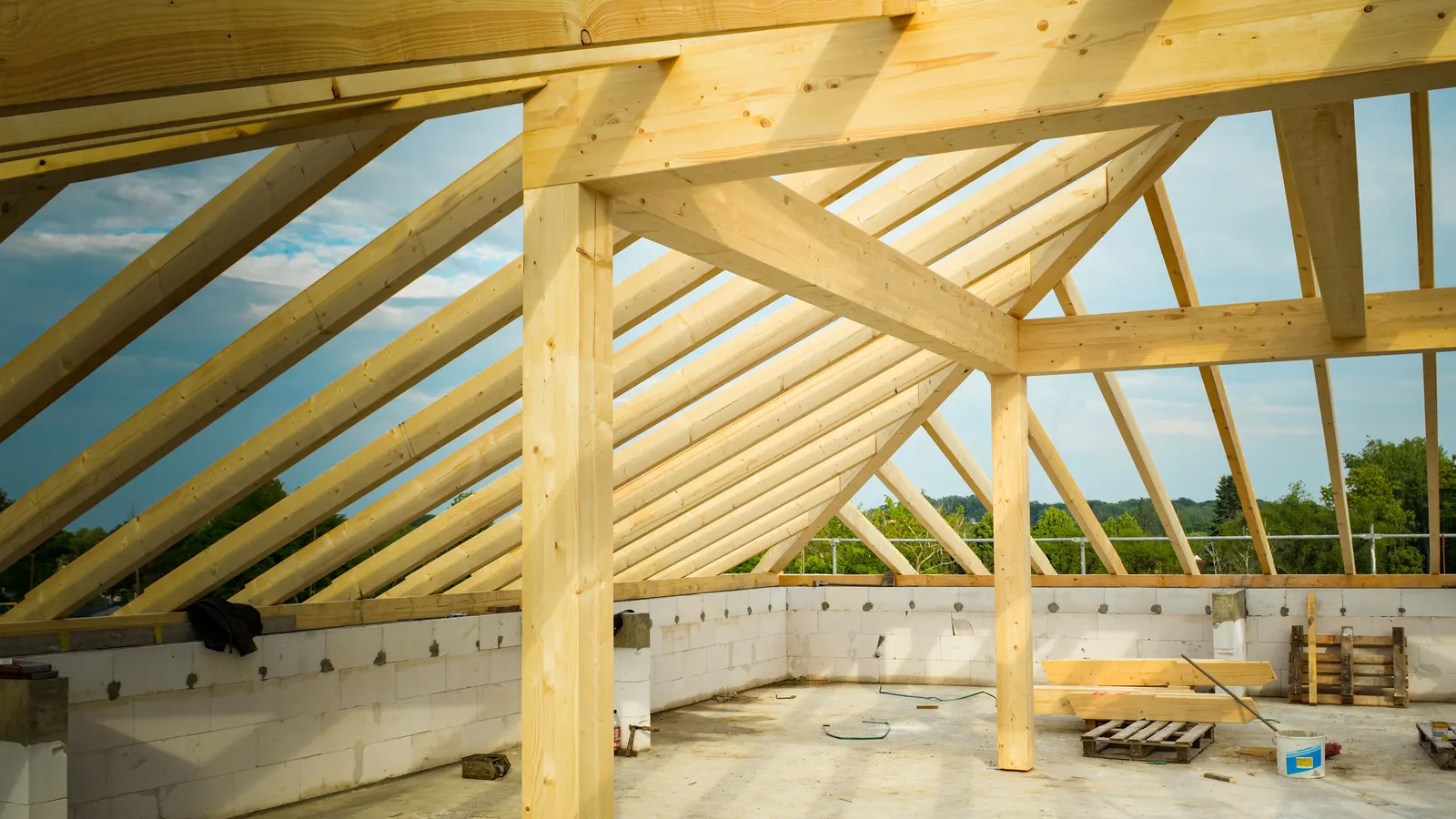
A fire-retardant coating sounds like the easy fix. Roll it onto the eaves and the old deck, and the house is hardened. Why doesn’t that hold up? Coatings do slow flame on wood, but the state’s wildfire building code, the WUI code, doesn’t accept them as a way to meet it. They have a place, and it’s mostly indoors.
Coatings are rated with the same ASTM E84 flame spread test as the siding in Part 2, and again the lower number means slower flame.
| Class | Flame spread index, low (FSI) | Flame spread index, high (FSI) |
|---|---|---|
| Class A | 0 | 25 |
| Class B | 26 | 75 |
| Class C | 76 | 200 |
Untreated lumber usually falls in Class B or C. When a coating brings wood up to Class A, the American Wood Council says the rating belongs to that coating and that wood together.
What a coating can and can’t do
There are two kinds. Penetrating treatments such as FlameStop soak into the wood and self-extinguish when flame hits them, which slows flame spread and cuts smoke. FlameStop is rated for interior flame spread reduction and isn’t designed for wildfire use. Intumescent coatings look like paint until they get hot. Then they swell into an insulating char between the flame and the wood. Their ratings depend on the thickness the product specifies.
We use coatings mostly on exposed interior wood, meaning framing, roof sheathing and subfloors. At eaves and soffits a coating can improve the fire resistance of the existing wood, but it isn’t a WUI measure. We apply products tested to ASTM E84 Class A (manufacturer data) and give you the product records for your permit.
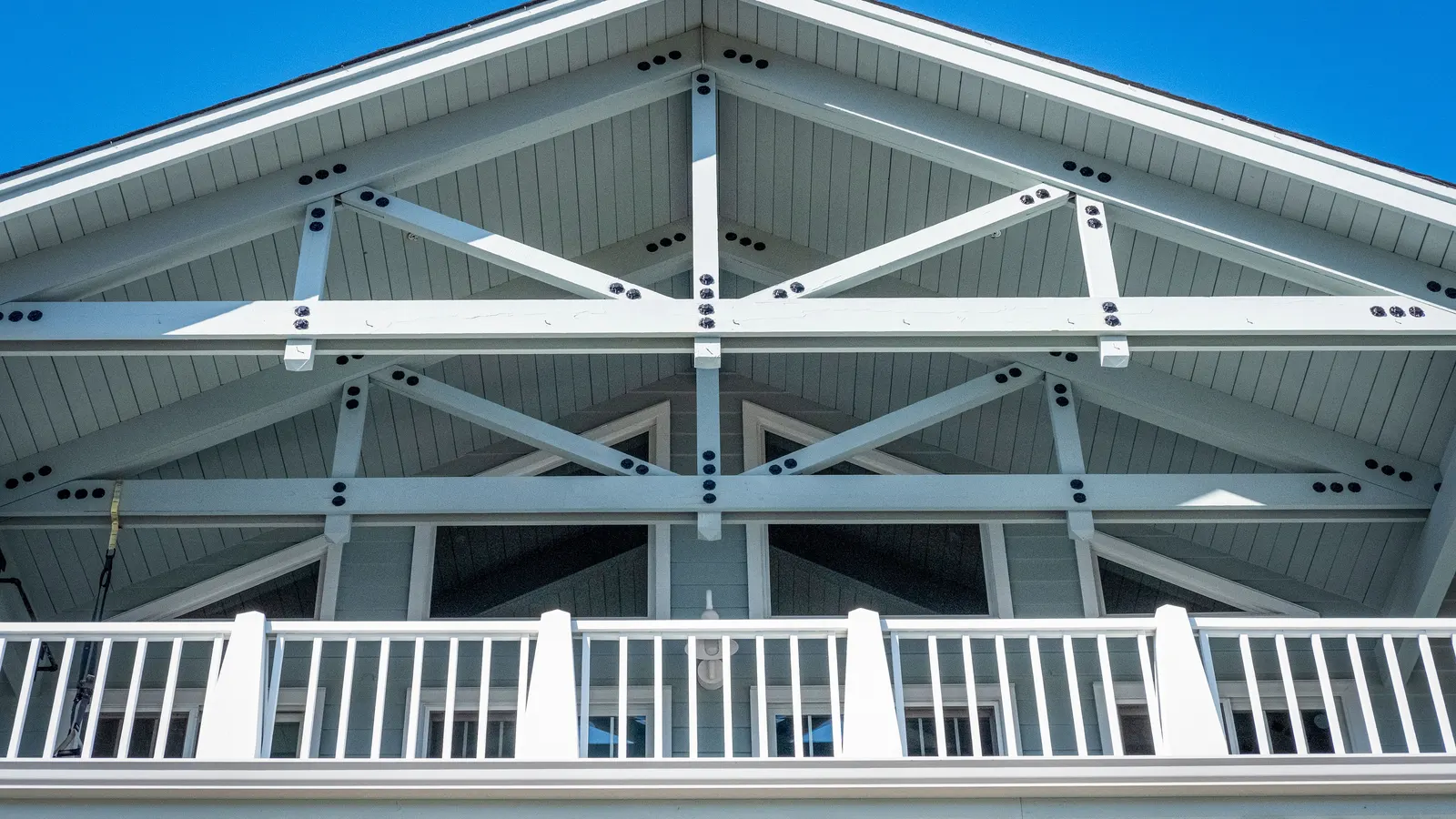
Exterior walls are another matter. There the code looks for the materials in Part 2, and as our fire-resistant coatings page says, surface coatings aren’t an approved compliance method under the California WUI Code. So will a coating bring the house up to the WUI code? No, though it can improve the fire resistance of the wood you already have.
Where coatings go
Illustrative section, not to scale
-
Where embers can collect. A coating can improve the fire resistance of the existing wood here, but it isn’t a WUI measure.
-
We use coatings on exposed framing, applied to the thickness the product specifies.
-
We use coatings on roof sheathing, after cleaning the wood and sealing it with a fire-retardant primer.
-
We apply products tested to ASTM E84 Class A (manufacturer data) and give you the product records for your permit.
-
We don’t coat exterior walls as a WUI measure: surface coatings aren’t an approved compliance method under the California WUI Code. For exterior walls it looks for noncombustible material, ignition-resistant material or fire-retardant-treated wood.
Applying a coating
A coating is rated at a set thickness on prepared wood. Put it on thinner, or over dirt and flaking paint, and the rating no longer describes what’s on your house. We follow the product’s specification and write down what we did.
- The wood gets cleaned and prepared so the coating bonds.
- A fire-retardant primer seals it.
- The coating goes on to the thickness the product specifies.
- You get written product and application records for your permit.
Does it need to be reapplied? Some products do. Penetrating treatments like FlameStop may need periodic reapplication, depending partly on exposure, and the scope says what the product calls for.

Keep a record of the work
Sooner or later someone asks what was done to the house and when. It might be your insurer, the building department or a buyer reading the AB 38 disclosure when you sell. A record with the products and the dates answers all of them. At the end of a wildfire project we hand over completion photos, the materials documentation and records of the Zone 0, 1 and 2 work. These are records of our work. They don’t certify code compliance or insurability, which are up to your building department and your insurer.
The record of a wildfire project
-
01 Assessment photos
We photograph the property at the audit. Photos taken before and after are your record of the work.
-
02 Product and application record
Written product and application records for your permit.
-
03 Completion record
A photographic completion record, the materials documentation and records of the Zone 0, 1 and 2 work.
California’s Safer from Wildfires regulation (10 CCR 2644.9) covers insurers whose rates take wildfire risk into account. Their rating plans have to reflect the lower risk from listed mitigation measures. It doesn’t set a discount, and your insurer decides whether anything applies to your policy.
| Figure | What it means for you | Source |
|---|---|---|
| 5 building-hardening measures named: a Class A roof, enclosed eaves, fire-resistant vents, multipane windows or full shutters, and noncombustible clearance at the base of the walls | Coatings, siding and decking aren’t on the list. Records of the listed items are the ones worth having ready for your agent. | 10 CCR 2644.9(d) |
| 6 inches of noncombustible vertical clearance at the bottom of the exterior walls | This is the same band Part 2 described in the WUI code. Gravel or concrete at the base of the wall is a common way to get there. | 10 CCR 2644.9(d) |
| 5 measures around the building, such as clearing vegetation and debris from under decks and removing combustible sheds | Much of this is the Zone 0 and deck work from Parts 1 and 2. Photos taken before and after are your record of it. | 10 CCR 2644.9(d) |
| In effect since October 14, 2022 | Your agent can tell you how your carrier applies it. | 10 CCR 2644.9, history note |
Will the records bring your premium down? That’s up to your insurer, and savings vary by insurer and policy, so ask your agent. Our fire insurance documentation checklist lists the photos and paperwork worth keeping. On one of our maintenance programs, the annual defensible-space check adds to that file every year. It’s based on CAL FIRE guidelines, it isn’t a CAL FIRE inspection, and it comes to you in writing.
That’s the last part of the series. Part 1 covers embers and the first five feet, Part 2 the siding and the deck, and our wildfire mitigation guide the rest of the 100 feet. To plan coatings or a full wildfire audit, request an estimate or call us at (650) 961-7415.
Sources (2)
- 2025 California Building Code, section 803.1.2 up.codes (https://up.codes/viewer/california/ca-building-code-2025/chapter/8/interior-finishes) Back
- 10 CCR 2644.9(d) law.cornell.edu (https://www.law.cornell.edu/regulations/california/10-CCR-2644.9) Cited 1, 2, 3, 4