Part 3 of 3 in our Exterior Repaint series. Before this was Part 2, on prep, wood repair and lead-safe work, and the series starts with Part 1, on inspection and the written scope.
By the time we’re putting color on, most of the job is behind us. The house has been washed, repaired, caulked and spot primed, and it’s dry. This last part covers the paint itself, the weather it needs, how the coats go on and how we close the job out.
Picking the Paint System
The primer and the finish coats are picked to work together and to suit what they’re going over. We match the system to the architecture, the surface and what you want out of it, from weather-resistant systems for wood siding up to the full Fine Paints of Europe Hollandlac line.
- Wood siding and trim gets a primer picked for adhesion and porosity (and on redwood and cedar, for blocking tannin), with finish coats made for exterior wood on top.
- Stucco needs a coating that lets water vapor through. Paint that doesn’t breathe traps moisture in the wall, and you end up with blistering and white mineral deposits called efflorescence.
- Doors, trim and detail work on a heritage home can be brought up to a fine-finish standard. We’re a Fine Paints of Europe Master Certified contractor, and we use FPE Hollandlac where that kind of finish is in the spec.
The products and the number of coats are already in the written proposal from Part 1, so nobody’s guessing on site.
The Weather Paint Needs
Every coating has conditions it can go on in, and on an exterior job you’re working around the weather. Our process page lists what the materials need.
- Temperature between 50 and 95°F. Below 50°F a lot of coatings won’t form a proper film, and above 95°F they skin over before they can level out.
- Humidity under 80 percent. Above that, paint can foam, sag and take a long time to cure. We check relative humidity on site and stop when it goes out of range.
- Time between coats. Latex coats typically need about two hours between them. Oil enamels like FPE Hollandlac take 14 to 21 days to cure before they’re ready for use.
Time of day matters too. Paint put on in hot, direct sun dries before it can level, so crews tend to follow the shade around the house. Paint put on late on a cool afternoon can get hit by evening dew before it sets. Sometimes the right call is to wait out a bad day, which is why an exterior schedule needs a little give in it.
Putting the Coats On
We usually work from the top down, so drips and spatter land on parts we haven’t finished yet, and we do the body before the trim so the trim lines get cut in clean at the end.
- Primer where it’s needed. That’s the bare wood, new wood and patches from Part 2, plus a full prime coat if the system calls for it or the color is changing a lot.
- First finish coat. Brushed, rolled, or sprayed and back-brushed, depending on the surface, and worked into the trim profiles and siding laps.
- Second finish coat. We put at least two finish coats on our exteriors. Fine Paints of Europe Hollandlac can need more, depending on the surface, the sheen and how it needs to perform.
- Trim, doors and details. Window casings, sashes, fascia, doors and railings get finished with straight cut lines and the hardware protected.
How we apply it depends on the surface. On stucco we work a vapor-permeable coating into the texture. On older wood we brush the paint into the grain and the edges, where water would otherwise find its way in.
The Final Walkthrough
The job wraps up with a walkthrough. We walk the house with you and make a punch list of anything that needs fixing, like a missed spot, a rough edge, paint where it shouldn’t be or a window that sticks. We work through that list, photograph the finished work and hand over the written workmanship warranty.
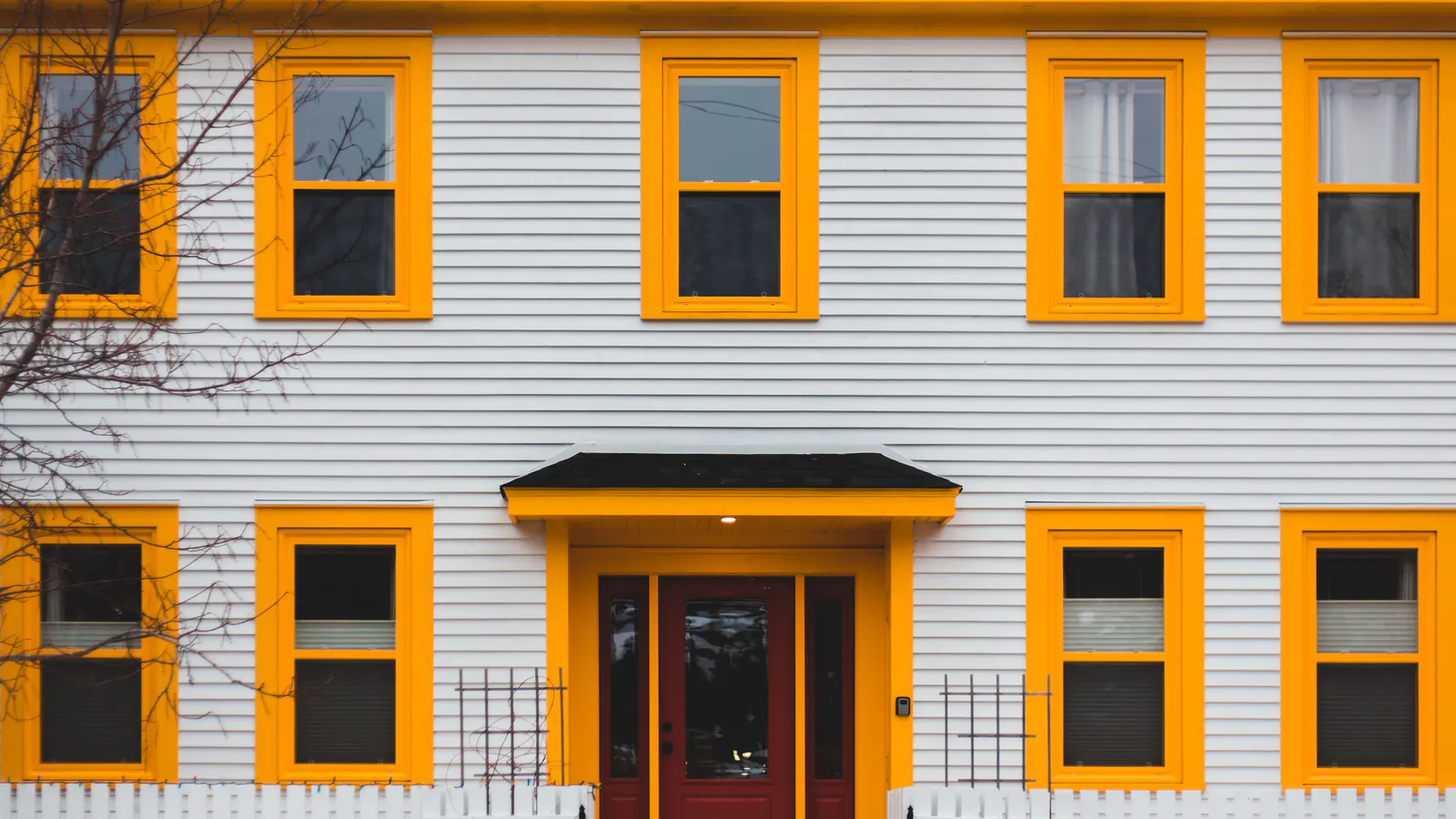
On a pre-1978 house, the lead-safe cleanup and check from Part 2 happen before the containment comes down. Then the masking and covers come off and we clean up the site.
It’s worth keeping a little of each color. If the leftover paint is labeled with the product, the color and where it went, small touch-ups down the road will match.
Looking After It Afterward
How long a paint job holds up depends on how exposed the house is, the prep, the coating and how it’s looked after. That last part is up to you. Our warranty page has the basics. Look the house over once a year for damage or wear, wash painted surfaces once a year with a mild detergent, deal with moisture problems quickly, keep plants trimmed back off the walls and touch up damage when you see it.
If you’d rather not keep track of that yourself, our Annual Maintenance Program takes care of the inspection, cleaning and touch-ups on a schedule, so small problems get caught early. For more on what wears paint out faster, see our post on how long exterior paint lasts.
Do you spray or brush exterior paint?
Both. Some surfaces get sprayed and then back-brushed, and detailed trim, sashes and doors are usually brushed. It comes down to the coating and what it’s going on.
Can you paint in the winter on the Peninsula?
Sometimes. The temperature, the humidity and whether the surfaces are dry matter more than the month. If conditions are out of range, we wait.
What does the warranty cover?
Our written workmanship warranty covers defects in our workmanship and in materials we supply, like peeling or blistering from an application problem. It doesn’t cover things outside our control, like weather damage, normal wear, sun fading or a house that hasn’t been maintained. You’ll have the full terms for your project in your proposal and contract before work starts.
That’s the end of the series. You can go back to Part 1, on inspection and the written scope or Part 2, on prep, wood repair and lead-safe work. If you’re thinking about a repaint, take a look at our exterior painting page, then request an estimate or call us at (650) 961-7415.