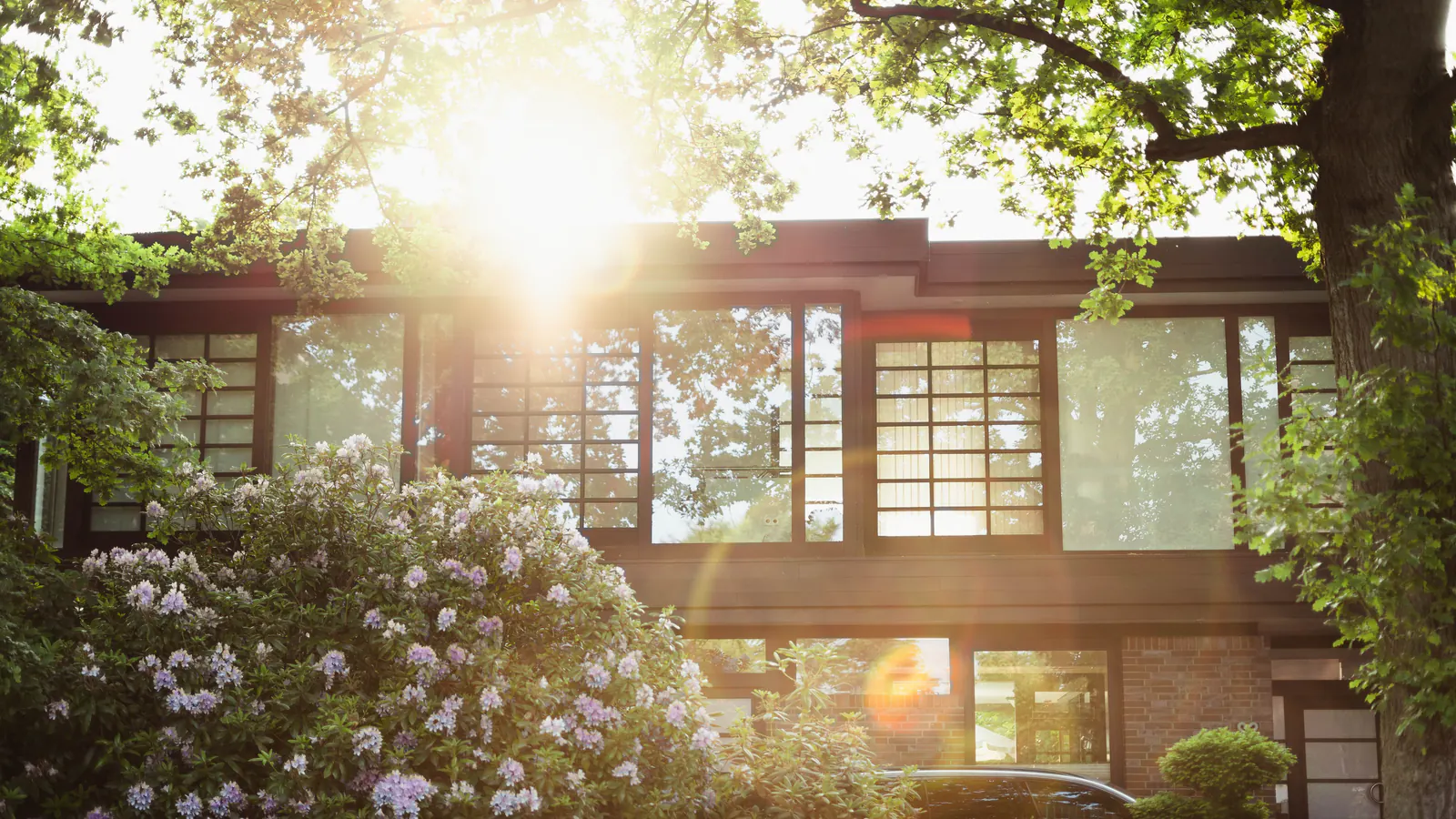
Joseph Eichler built 11,000 homes in California between 1949 and 1966, and roughly 2,700 of them sit on the Peninsula, concentrated in Palo Alto, Sunnyvale, and San Mateo. These mid-century modern icons have open floor plans, floor-to-ceiling glass, exposed post-and-beam construction and radiant heat floors, and they are notoriously challenging to paint.
Painting an Eichler means working with three conditions: radiant heat that stresses conventional paint, glass that adds glare and uneven UV fading, and exposed structure that shows every flaw. Here's what three decades of Eichler projects have taught us.
The Radiant Heat Challenge
Eichlers use hydronic radiant heat: hot water circulating through pipes in the concrete slab. The warmth is gentle and even, but walls near the floor stay consistently warmer than walls near the ceiling.
That differential makes conventional paint fail early. The warm lower wall moves differently from the cooler upper wall, stressing the paint film until it cracks, peels and loses adhesion.
The fix is primers and paints formulated for temperature-variable surfaces, with the flexibility and adhesion to absorb that movement. It's not about expensive paint; it's about the right paint.
Glass, Glare, and UV
South and west-facing glass walls throw intense glare, which makes color selection critical. A color that looks perfect on a chip can become blinding when light bounces off the glass onto it.
UV exposure through unshaded glass also accelerates fading. We've seen Eichler walls near large windows fade significantly in as little as 3 to 4 years while adjacent walls look fresh, and how fast it happens depends on exposure, surface prep, the product and maintenance. This is general guidance, not a McDermaid warranty or guarantee. The solution is color selection that accounts for both glare and UV exposure.
Eichler Color Wisdom
Bright whites that look crisp in traditional homes become glare bombs in Eichlers. Muted tones, warm neutrals and colors with some gray complement the architecture without eye strain.
Exposed Beams and Structural Elements
Post-and-beam construction leaves the structure on display. There is no trim or molding to hide imperfections, so every brush mark, drip and uneven edge shows.
That demands different prep and application:
- Sanding to higher grits: We typically sand exposed wood to 220 grit vs. 120 for standard trim
- Dust-free environment: Spraying beams requires meticulous masking and protection
- Multiple thin coats: Build finish gradually rather than applying heavy coats
- Specialized equipment: HVLP sprayers for controlled, even application
Period-Appropriate Color Palettes
Owners can choose any color, but we often recommend palettes that complement the architecture:
- Earth tones: Olive, sage, terracotta, ochre, colors that connect to the landscape
- Warm neutrals: Greige, taupe, warm gray, sophisticated without competing with the architecture
- Muted greens: Eichlers were designed to blend with California's natural environment
- Accent colors: Period-appropriate brights (mustard, teal, orange) for feature walls
We keep reference libraries of period palettes to help clients balance personal taste with architectural authenticity.
Exterior Considerations
Eichler exteriors are typically vertical redwood or cedar wood siding with decades of Peninsula weather on it. Flat roofs complicate drainage, and without overhangs the siding takes direct rain and sun.
Exterior painting requires:
- Oil-based primers: Essential for tannin bleed resistance on redwood and cedar
- UV-resistant topcoats: Premium exterior paints with enhanced UV stabilizers
- Careful caulking: Seal all joints to prevent water intrusion behind siding
- Color strategy: Lighter colors for south/west exposures to minimize heat absorption
Our Eichler Approach
Our Eichler protocol:
- Assessment: Evaluate radiant heat system, glass exposure, and existing conditions
- Color consultation: Recommend palettes that work with the architecture and lighting
- Product specification: Select paints formulated for Eichler-specific conditions
- Meticulous prep: Higher standards for exposed structural elements
- Precision application: Techniques that deliver flawless results on visible surfaces
Eichlers are a significant part of Peninsula architectural heritage, and painting them well means respecting their design intent.
"Eichler homes demand a completely different approach than a traditional Peninsula property, and mistakes here are expensive and visible."