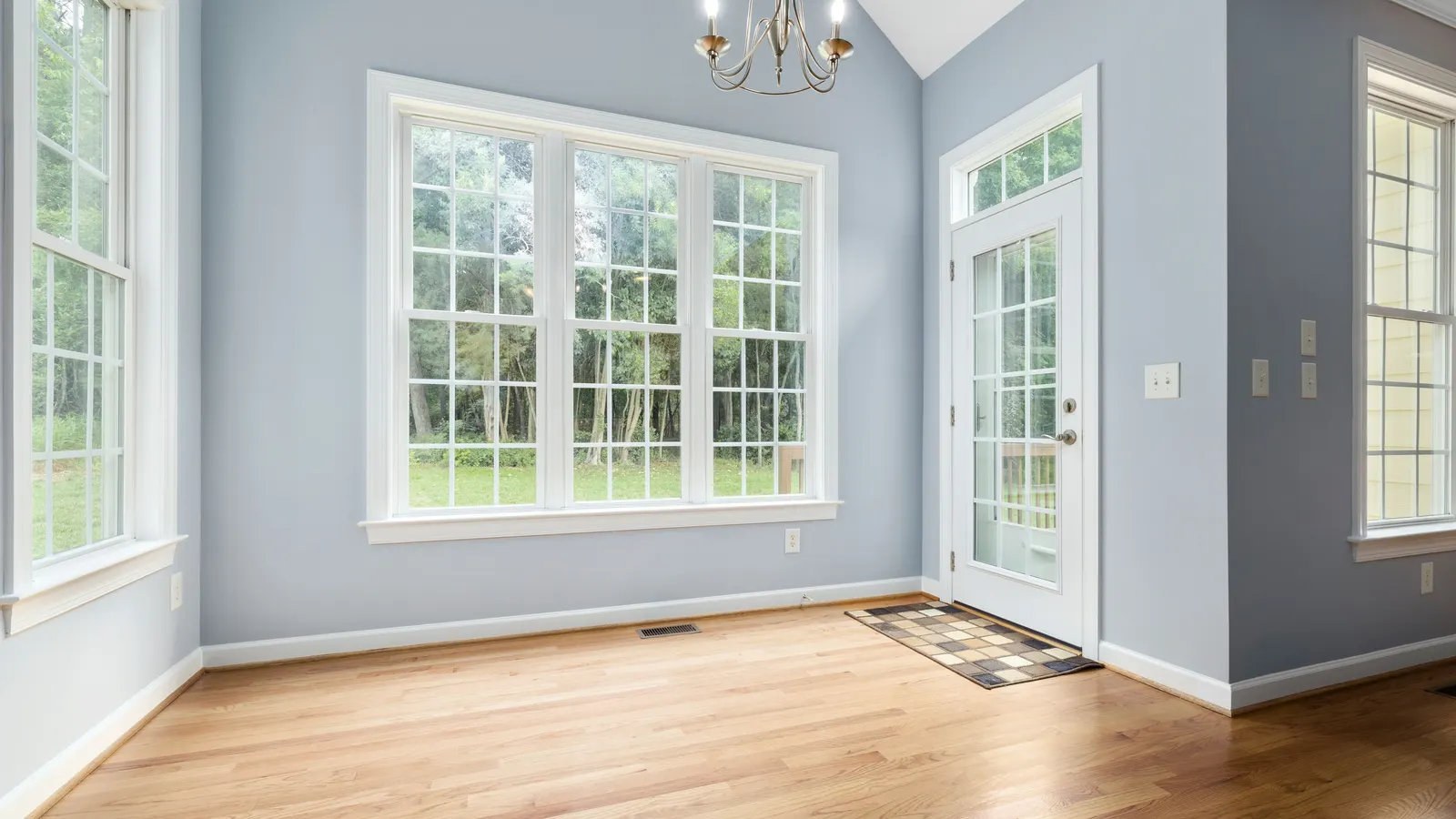
Almost everyone who has painted a room has seen it happen. A color looks right on the chip in the store, goes up on the living room wall and looks wrong. The same can in the next room looks different again. Why? The paint is the same in both rooms. The light isn’t.
There’s a second reason the chip fools you. A chip is small and usually seen under bright store lights. On a whole wall, light bounces around the room, and the color tends to look stronger.
One published number helps you see it coming. Light reflectance value, or LRV, is the share of light a color reflects, from 0 for black to 100 for white. The lower it is, the more the color depends on the light in the room.
| Color | Light reflectance value (LRV) |
|---|---|
| Cloud White | 85.05 |
| Edgecomb Gray | 63.09 |
| Revere Pewter | 55.05 |
| October Mist | 46.54 |
| Kendall Charcoal | 14.61 |
| Hale Navy | 8.36 |
Sources (6)
Sources: Benjamin Moore color pages for Cloud White OC-130, Edgecomb Gray HC-173, Revere Pewter HC-172, October Mist 1495, Kendall Charcoal HC-166 and Hale Navy HC-154, 2026.
Cloud White reflects about ten times as much light as Hale Navy. A dark color can look heavy in a dim hallway and rich in a bright room. LRV won’t tell you whether you’ll like a color. It tells you how much light the color needs. A high LRV isn’t a cure for a dark room, either. With little daylight, even a white can look gray.
Which way does the room face?
Window direction changes the light, so each room gets judged on its own. Farrow & Ball’s guide to how light affects colour says “Northern light tends to bring out the cooler tones within a colour.” South facing rooms can fill with warm light all day in fine weather. East facing rooms get the most morning sun, and west facing rooms are brighter in the afternoon. A gray that looks warm in a south facing living room can turn cold in a north facing bedroom.
That’s why one sample isn’t enough. Facing the window, a sample gets the most direct light. On the window wall it sits in shadow. In the darkest corner, or under lamps at night, you see the color at its deepest. Put samples in all three places.
Where the light comes from, and where samples go
Illustrative plan, not to scale
-
Northern light tends to bring out the cooler tones within a colour, says Farrow & Ball.
-
South facing rooms can be filled with warm light from dawn until dusk in fine weather.
-
In west facing rooms the light is cooler in the morning and brighter in the afternoon.
-
A sample on the wall facing the window takes the most direct light.
-
One on the window wall sits in its own shadow and reads darker.
-
One in the darkest corner shows the color at its deepest, and under lamps at night.
Winter light
Then there’s the season. Palo Alto gets 9 hours and 35 minutes of daylight in late December, against 14 hours and 45 minutes in late June.
| Date | Daylight (hours) |
|---|---|
| Mar 21 | 12.2 |
| Jun 21 | 14.8 |
| Sep 21 | 12.2 |
| Dec 21 | 9.6 |
Source
Source: U.S. Naval Observatory, Duration of Daylight Table for One Year, Palo Alto, 2026, converted from hours and minutes.
In the source list: 8
A color picked on a summer evening spends much of the winter under lamps. If you use a room mostly at night, judge it at night.
Change the bulbs first
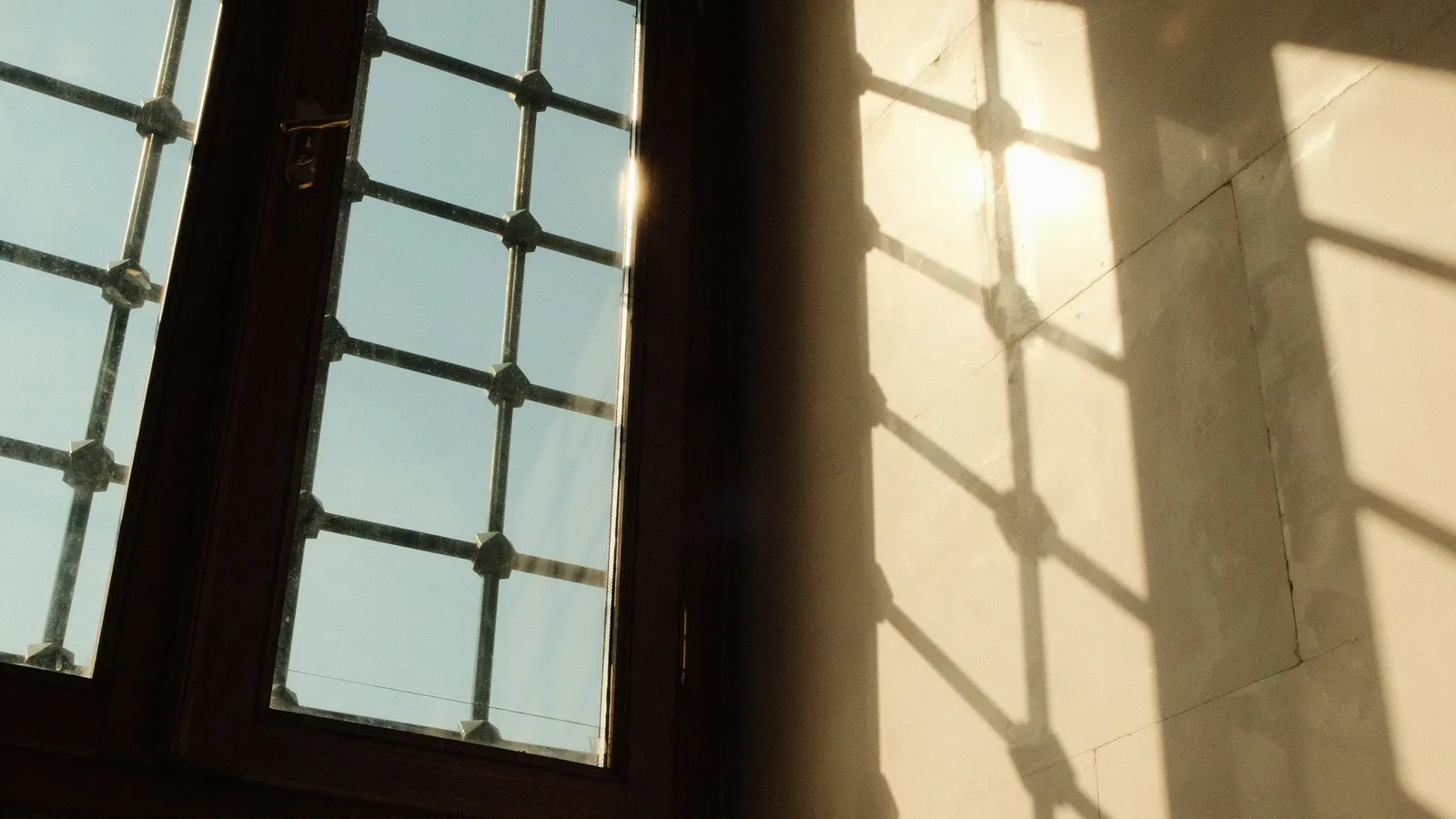
Bulbs have a color of their own, so settle them before you settle the paint. The Department of Energy’s lighting guide explains that bulbs with higher Kelvin (K) numbers look cooler, or bluer, and lower numbers look warmer. Halogen and incandescent bulbs make walls look warmer. Cool white bulbs make them look cooler.
Sheen plays a part as well. A glossier finish reflects more of whatever light is there, and our post on paint finishes goes into it.
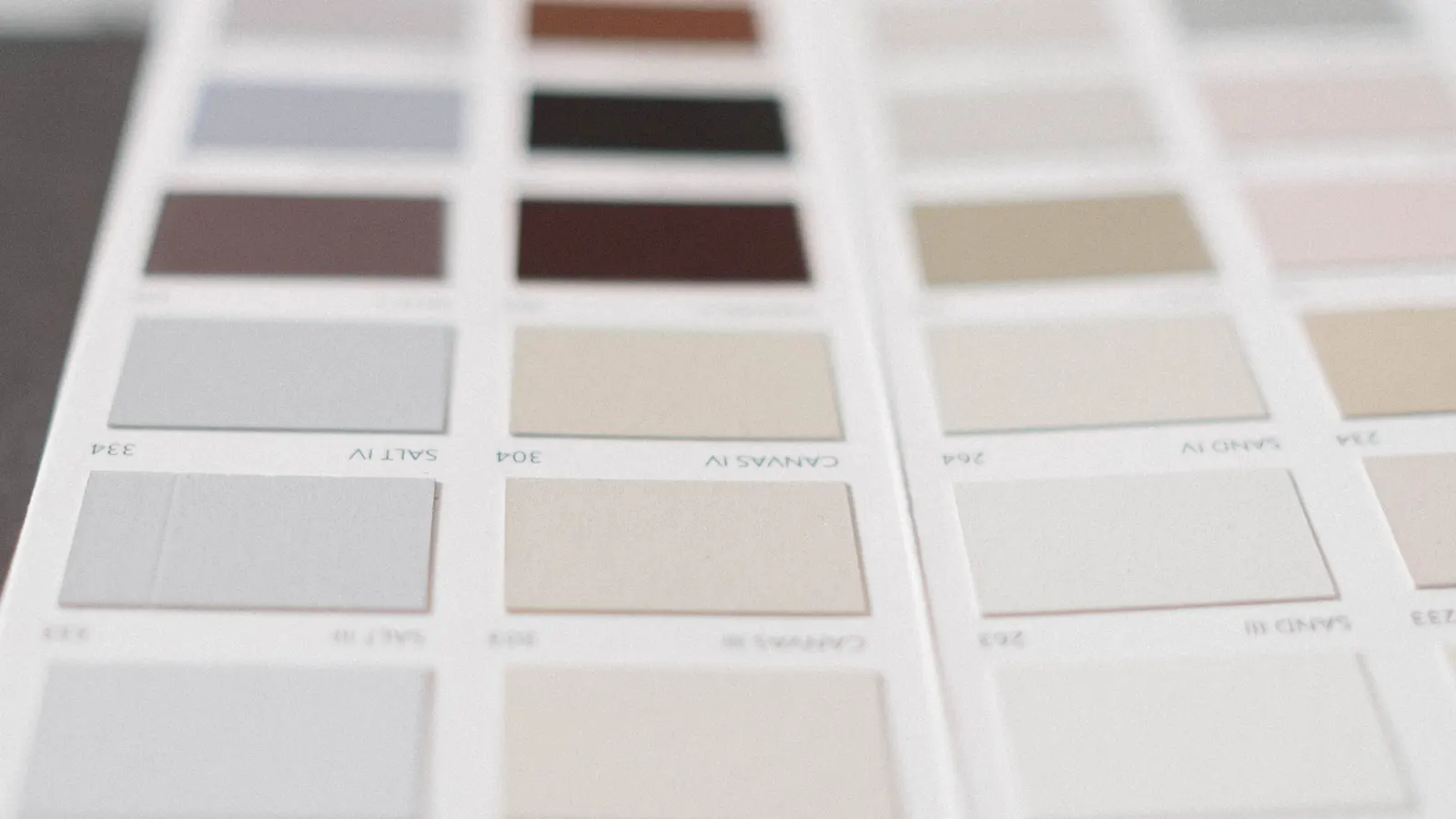
Testing color in your rooms
We test colors in your rooms, under your light. Color consultation comes with every painting project we do, at no extra charge.
- We start by talking about your style and looking at the light in each room.
- Large samples of the colors you’re considering go up in several rooms.
- We look at them at different times of day, the way you use each room.
- Before work starts, we confirm the palette and write it down.
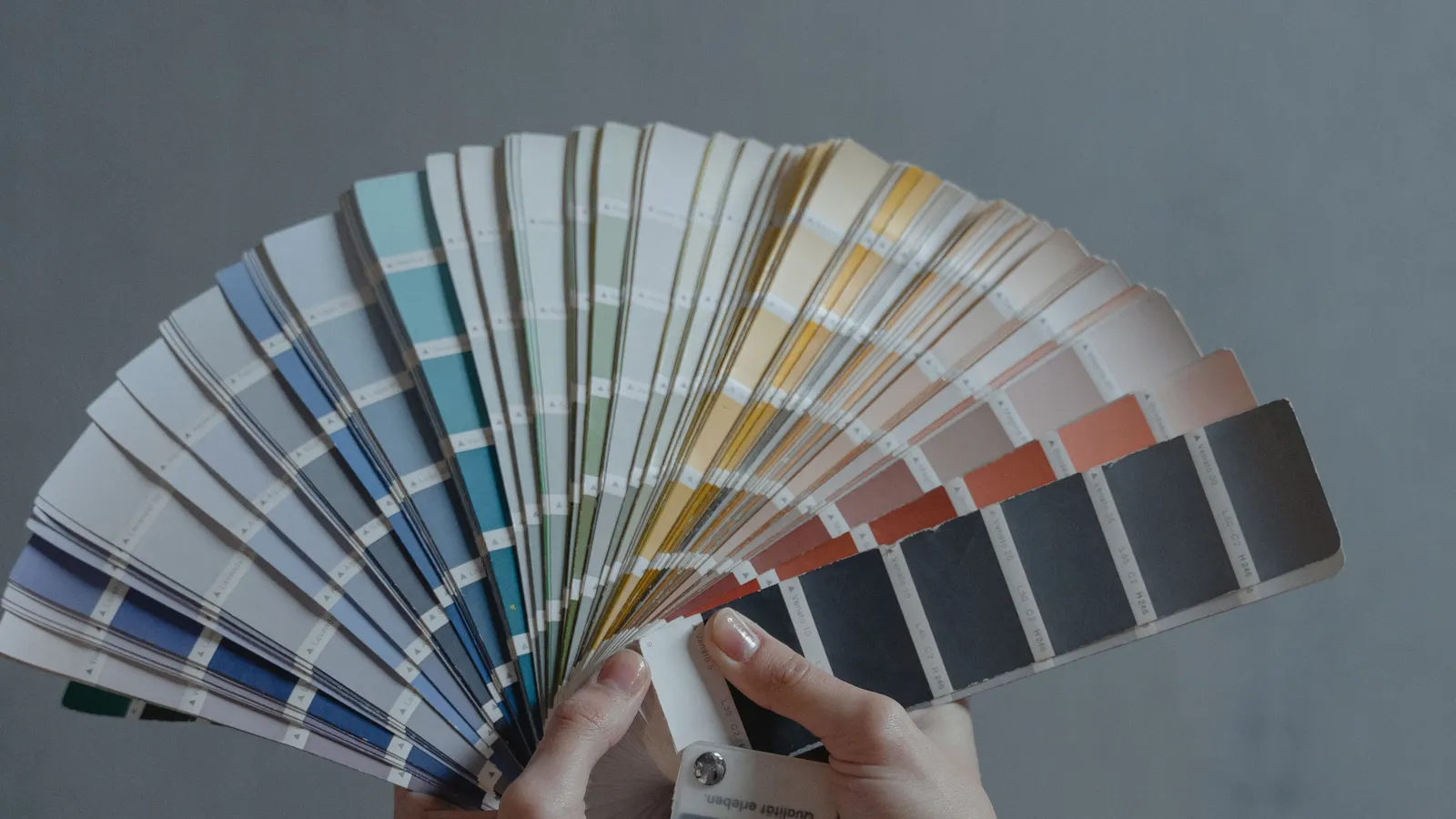
Don’t rush the third step. Seeing the samples at the hours you use the room saves the most repainting. Our post on how our color consultation works walks through each step.
Most houses have more white in them than any other color, and choosing one is Part 2, on choosing a white. If you’re planning to repaint, color consultation comes with the painting work on our interior painting projects. To get started, request an estimate or call us at (650) 961-7415.
Sources (9)
- Cloud White OC-130 benjaminmoore.com (https://www.benjaminmoore.com/en-us/paint-colors/color/oc-130/cloud-white) Back
- Edgecomb Gray HC-173 benjaminmoore.com (https://www.benjaminmoore.com/en-us/paint-colors/color/hc-173/edgecomb-gray) Back
- Revere Pewter HC-172 benjaminmoore.com (https://www.benjaminmoore.com/en-us/paint-colors/color/hc-172/revere-pewter) Back
- October Mist 1495 benjaminmoore.com (https://www.benjaminmoore.com/en-us/paint-colors/color/1495/october-mist) Back
- Kendall Charcoal HC-166 benjaminmoore.com (https://www.benjaminmoore.com/en-us/paint-colors/color/hc-166/kendall-charcoal) Back
- Hale Navy HC-154 benjaminmoore.com (https://www.benjaminmoore.com/en-us/paint-colors/color/hc-154/hale-navy) Back
- how light affects colour farrow-ball.com (https://www.farrow-ball.com/us/how-to-guide/how-light-affects-colour) Back
- U.S. Naval Observatory, Duration of Daylight Table for One Year, Palo Alto, 2026 aa.usno.navy.mil (https://aa.usno.navy.mil/calculated/durdaydark?year=2026&task=0&lat=37.4419&lon=-122.143&label=Palo%20Alto&tz=8.00&tz_sign=-1&submit=Get%20Data) Back
- lighting guide energy.gov (https://www.energy.gov/sites/default/files/2021-08/ES-EE%20Lighting_080921.pdf) Back