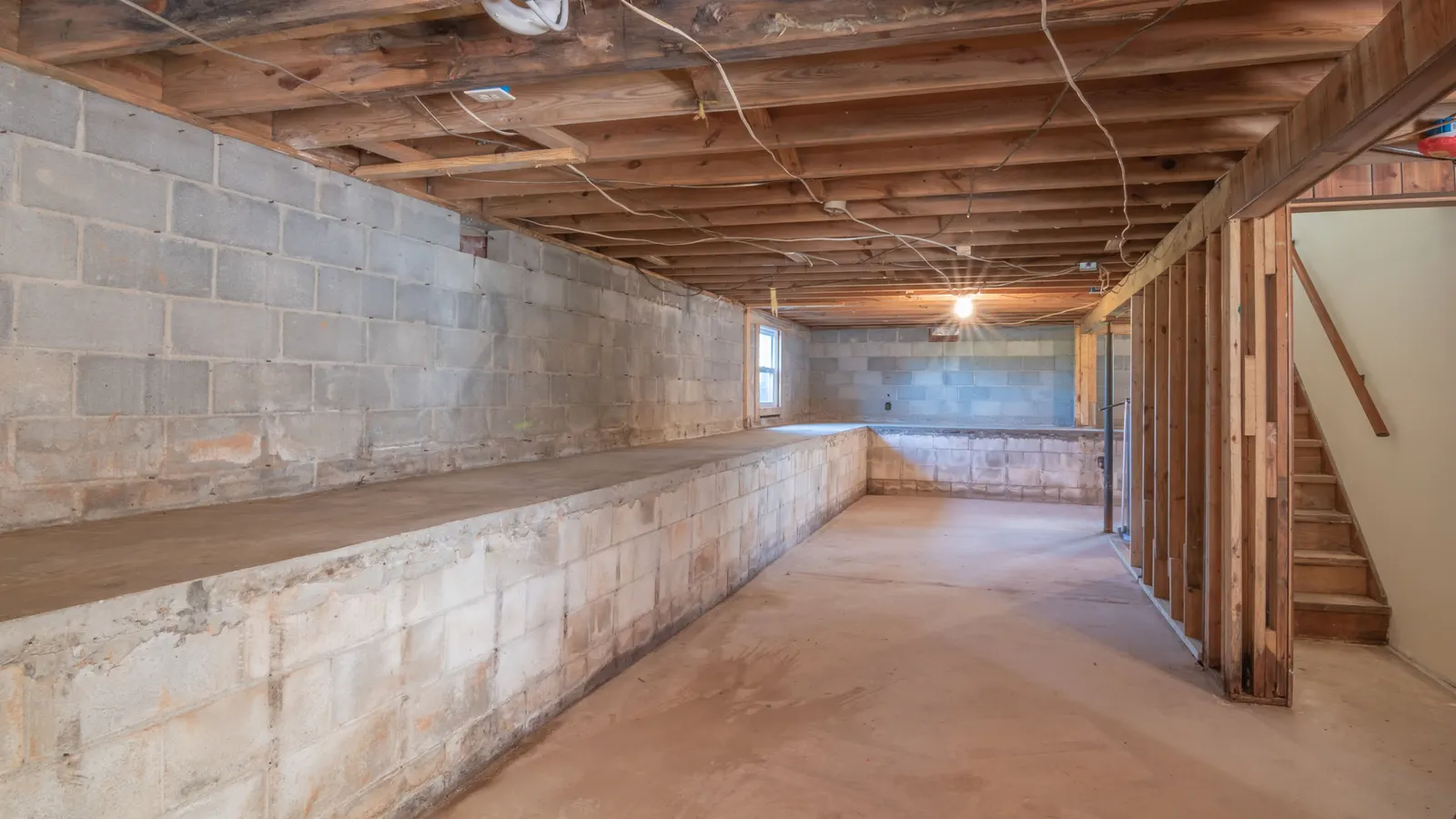
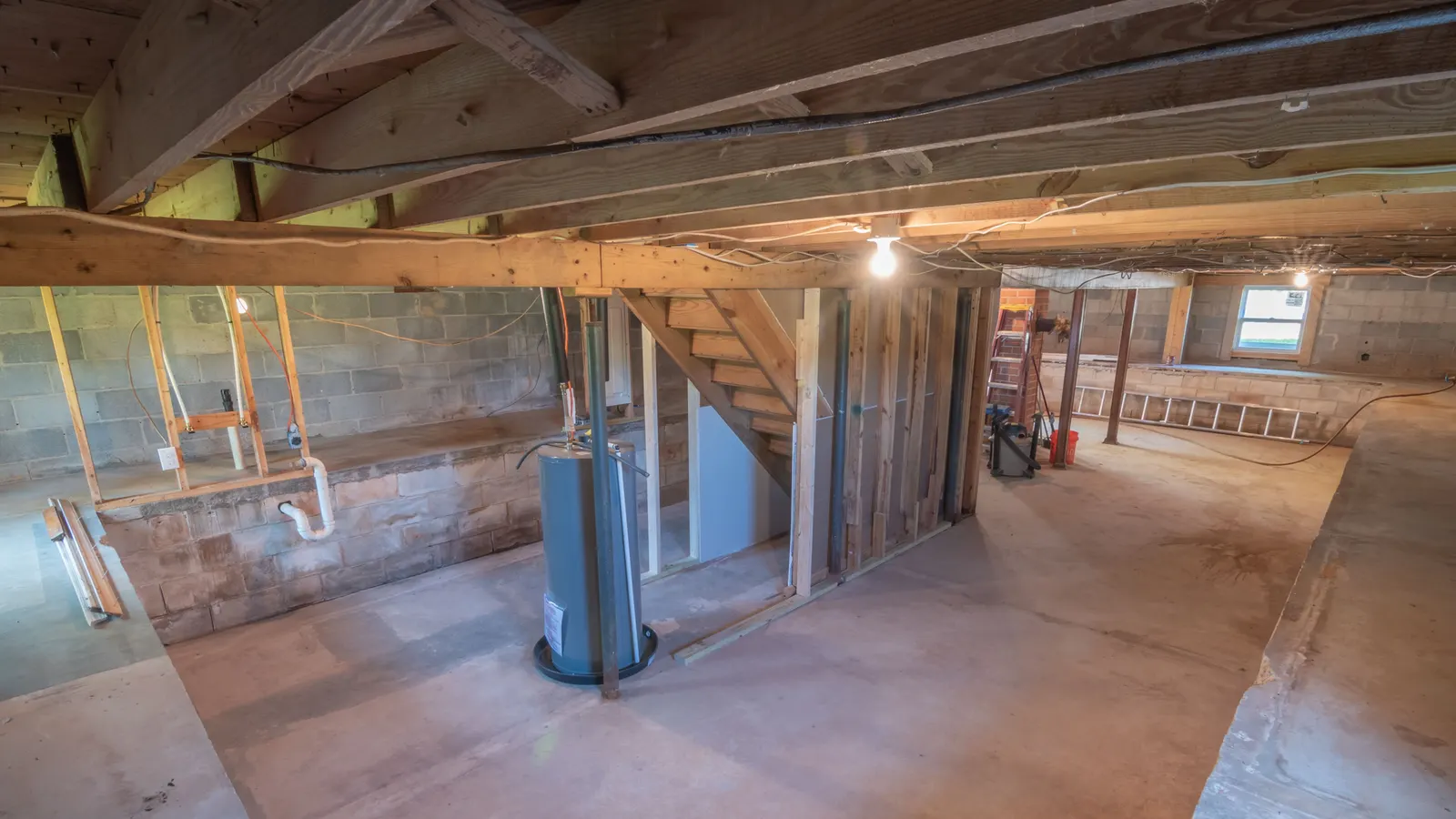
It shows up every winter in houses built over a crawlspace. A closet or a back bedroom smells musty in January and fine in August. The air under the floor is getting into the rooms, and it is carrying water with it.
How does the water get down there? Three ways, and they are worth taking in order, because the fix for each one is different.
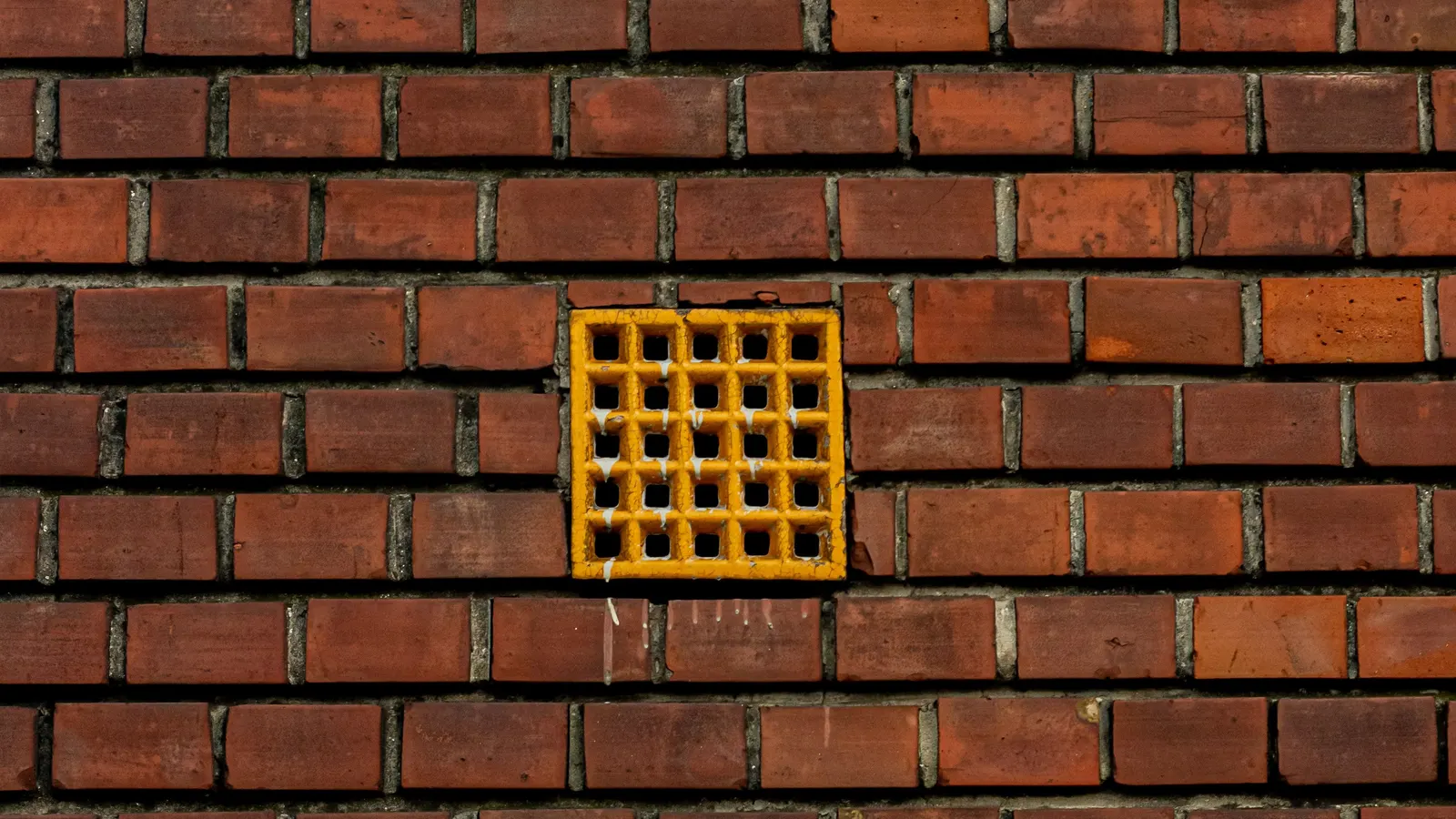
The building code’s answer for a crawlspace starts with air. Vents let the damp air out, and once the bare ground is covered, the code asks for far less vent area.
| Ground in the crawlspace | Floor area per square foot of vent (sq ft) |
|---|---|
| Bare soil | 150 |
| Covered with a Class I vapor retarder | 1500 |
First, the ground itself
Bare soil gives off water vapor all year, and a crawlspace holds it right under the floor. A Class I vapor retarder is a plastic sheet laid over the ground with the seams lapped. When it is torn, bunched up in a corner or missing, the ground is bare again.
The vents matter just as much. The code wants one within 3 feet of each outside corner, so air can move through the whole space. Vents blocked by soil, plantings or stored boxes stop doing that.
Second, rain from outside
A downspout that empties at the foundation, a gutter that overflows or a bed of soil sloping toward the house puts rainwater against the walls, and some of it comes through. A basement has the same problem with more wall in the ground. Drainage and grading are a civil engineer’s work. We help you find one, and we fix the gutters and downspouts that feed the problem. Our sump pump post covers what to do when water already collects below.
Third, the house’s own water
A slow leak at a supply line, a drain joint that weeps, a dryer or bath fan that vents under the floor instead of outside. These are easy to miss, because nobody goes down there. A musty smell that comes and goes with laundry day is a clue.
| Figure | What it means for you | Source |
|---|---|---|
| Keep indoor humidity below 60 percent, ideally between 30 and 50 percent | A humidity gauge in the crawlspace or basement tells you where you stand. | US EPA, A Brief Guide to Mold, Moisture and Your Home |
| 24 to 48 hours to dry out water damage to prevent mold | After a leak, wet insulation and wood come out or get dried that week, not that season. | US EPA, A Brief Guide to Mold, Moisture and Your Home |
| A vent within 3 feet of each outside corner of the crawlspace | Corners with no vent stay damp. We check the layout, not just the count. | 2022 California Residential Code, Section R408.2 |
| A floor access opening of at least 18 by 24 inches | If you can’t get in, nobody checks. A tight or broken access door gets fixed first. | 2022 California Residential Code, Section R408.4 |
Where the water under a floor comes from
-
01 The ground
Bare soil gives off water vapor all year. A Class I vapor retarder over the ground and clear vents at the corners.
-
02 Rain from outside
Downspouts that empty at the foundation and soil sloping toward the house. Gutters and downspouts fixed, drainage to a civil engineer.
-
03 The house’s own water
A slow pipe leak or a fan that vents under the floor. Leaks fixed by a licensed plumber, ducts run outside.
The work, in the order we do it
- We go under the floor with a light and write down what we find, with photos.
- Leaks get traced. A licensed plumber we bring in fixes the pipes, and a fan or dryer duct that ends under the floor gets run outside.
- Wet insulation and debris come out, and the vapor retarder gets laid or repaired.
- Vents get cleared and screened with metal mesh, and the access door is repaired or replaced.
- Wood that got wet is checked. Joists, posts or sills with rot go to an engineer before any repair.
Our basement and crawlspace page has the full scope. When you’re ready, request an estimate.
Sources (2)
- 2022 California Residential Code, Section R408.2 up.codes (https://up.codes/viewer/california/ca-residential-code-2022/chapter/4/foundations) Cited 1, 2, 3
- US EPA, A Brief Guide to Mold, Moisture and Your Home epa.gov (https://www.epa.gov/mold/brief-guide-mold-moisture-and-your-home) Cited 1, 2