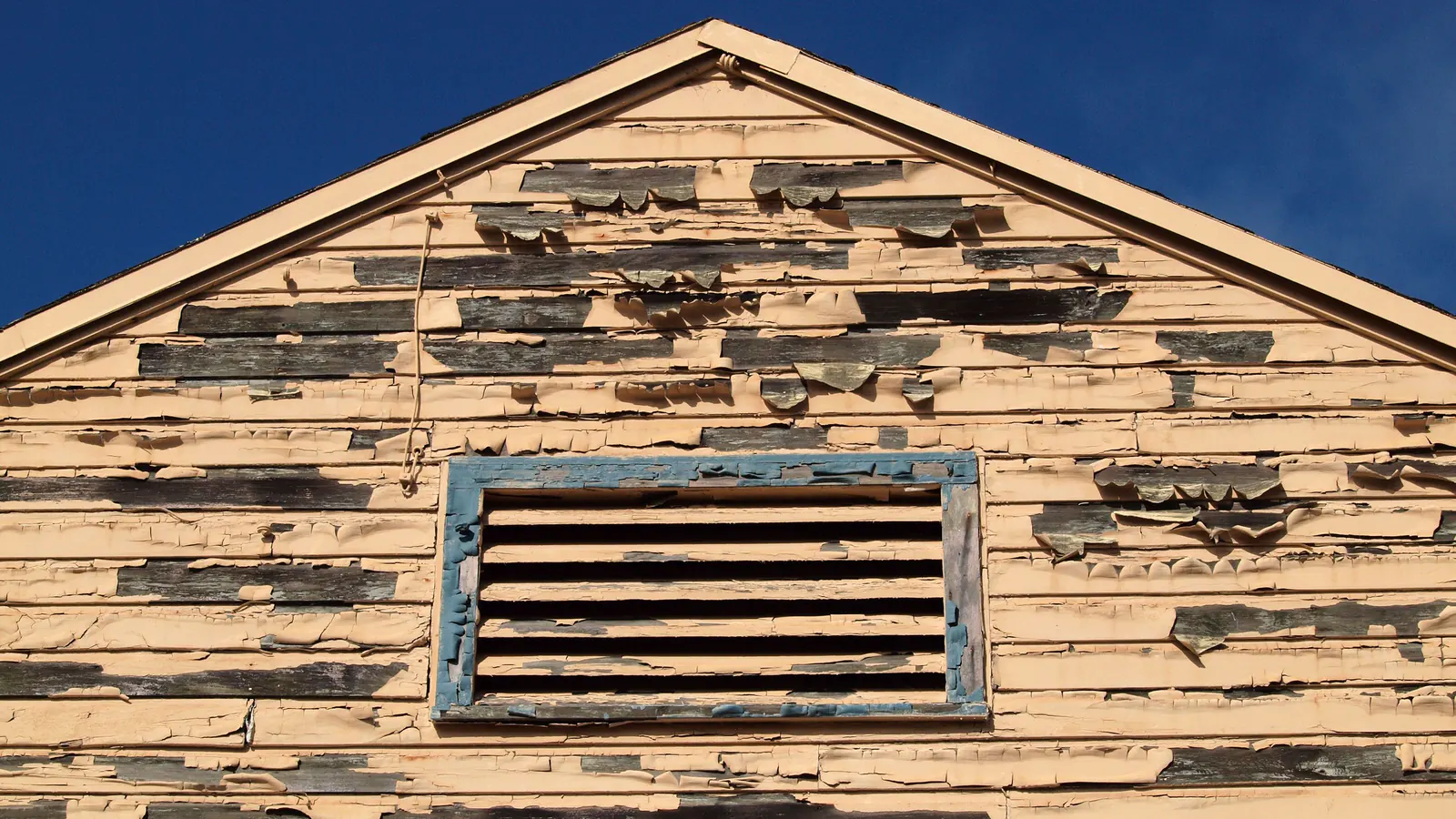
Every house has holes in it on purpose. Under the eaves of many older Peninsula homes there’s a small screened vent in each rafter bay, a louvered one high in each gable end and a few grilles low on the foundation where the crawlspace is. They let the attic and the crawlspace dry out. When a fire is burning upwind they stay open, and whichever vent faces the wind takes in the air and whatever the air is carrying.
Why worry about a vent when the fire is miles away? Because the embers come first. CAL FIRE says they can set a house alight up to a mile from the flames. One that gets through an old quarter-inch screen lands in an attic or a crawlspace that is dry, usually dusty, sometimes stacked with boxes, and empty of anyone who might notice. Vulcan Vents are built around that problem. They cost far more than a plain screened vent, and on a lot of houses fine metal mesh is where the money should go first. Which one a vent gets depends on where it sits and whether a building code governs the work.
Start with the price, because it shapes everything after it. These are listed prices for a single eave vent, the vent alone, from three sellers in October 2026.
| Vent | Listed price (US dollars) |
|---|---|
| Vulcan VE5522, 5.5 by 22 inch, Architectural Depot | 72.20 |
| Vulcan VE5522, 5.5 by 22 inch, Best Materials sale price | 59.99 |
| Plain galvanized eave vent with 1/8 inch mesh, 22 by 6 inch, Cooper’s True Value | 6.49 |
Sources (3)
Sources: Architectural Depot, VE5522 listing; Best Materials, Vulcan VE5522 listing; Cooper’s True Value, Construction Metals EV622 listing; all checked October 21, 2026.
Retail prices move, and none of these include labor. Still, the vent itself runs about ten times the price of a plain one. Multiply that by every vent on the house and the difference is real money. It’s fair to ask what it buys.
How embers get in
First, the screen is too coarse. Building codes ask for metal screen over vents to keep animals out, and the usual size is a quarter inch. An NFPA Firewise fact sheet built on IBHS research says embers pass through quarter-inch mesh and can light fine material like sawdust on the other side. Mesh at 1/8 inch cuts the size and number of embers that get through. It doesn’t stop all of them.
Second, the wind picks the vent. IBHS tests found that any vent the wind blows straight into works as an intake, whether it was built to let air in or out. A gable vent facing a canyon wind takes embers the way an eave vent takes air on a summer evening.
Third, what’s on the other side. Attics and crawlspaces are dry and hold things that catch easily: cardboard boxes, old clothes, the lint and leaves that collect behind a screen over the years. Clearing that out costs nothing and it belongs in the same job.
And last, flame. A screen is still an open hole when the eave itself is in flames, and hot gases go through it as easily as air does. That is the part of the problem mesh can’t answer, and it’s the part a Vulcan Vent is designed for.
How a Vulcan Vent is built
From the outside it looks like any other vent. The ICC Evaluation Service listing for the product describes what’s inside the steel frame. There’s a 1/8 inch wire cloth on the face, a core of aluminum honeycomb painted with an intumescent coating, and a woven stainless steel mesh behind that. The mesh is the ember screen, and Vulcan says it works every day, rain or shine. The honeycomb lets air pass through its cells until it gets hot.
A Vulcan Vent, outside to inside
-
01 The face
A steel frame with a 1/8 inch wire cloth, set into the opening like any other vent.
-
02 The honeycomb
Aluminum cells painted with an intumescent coating. Air passes through them until they get hot.
-
03 The ember mesh
Fine woven stainless steel on the inside face. It catches embers every day, whether or not a fire is near.
Vulcan says the coating starts to swell at about 450°F and is fully expanded at 500°F. When it swells it fills the cells and closes the vent. It closes once. A vent that has done its work in a fire gets replaced, and so, Vulcan points out, does most of what was around it.
What the test and the code say
The test that matters is ASTM E2886. It throws embers at a vent and then puts flame against it, and it watches a piece of cotton behind the vent. In the ICC listing for the Vulcan Vent, ESL-1300, the cotton smoldered in the ember test but never flamed, and nothing ignited during the flame test. The listing names the models and sizes it covers, so the one on your house should be on it.
The code is a separate question. Since January 1, 2026, the wildfire building rules that used to sit in Chapter 7A of the California Building Code are in the 2025 California Wildland-Urban Interface Code, Title 24, Part 7. Under its Section 504.10.1, vents in walls, eaves, soffits and foundations need to be flame and ember resistant vents listed by the State Fire Marshal, or vents tested to ASTM E2886 that pass all three of its conditions. Plain mesh between 1/16 and 1/8 inch is an option under Section 504.10.2, which covers ridge and dormer vents on a sloped roof. Your building department decides which of these rules apply to your project.
| Figure | What it means for you | Source |
|---|---|---|
| 1/16 to 1/8 inch noncombustible, corrosion resistant metal mesh over vents, in CAL FIRE’s home hardening advice | The starting point for any vent on any house. It cuts down the embers that get in. It isn’t meant to stop flame. | CAL FIRE, Ready for Wildfire, Hardening Your Home |
| 662°F is the most the unexposed side of a vent may reach in the ASTM E2886 flame test, under Section 504.10.1 of the 2025 California Wildland-Urban Interface Code | Where the code applies, wall, eave and foundation vents need a listed vent that passes this test. Mesh alone doesn’t qualify there. | 2025 California Wildland-Urban Interface Code, Section 504.10 |
| The coating starts to swell at about 450°F and is fully expanded at 500°F, per Vulcan | It closes the vent once. After a fire reaches it, the vent is replaced. | Vulcan Vents, FAQs |
| ICC listing ESL-1300 for the Vulcan Vent, under a continuous compliance program through July 2027 | The test results come with factory inspections behind them. Check that your model and size are on the list. | ICC Evaluation Service, Listing Report ESL-1300 |
Will new vents change what you pay for insurance? Your insurer decides coverage and pricing, and your agent is the person to ask whether vent work counts with them.
When mesh is the right call
On an existing house that no permit or code is touching, CAL FIRE’s advice starts with noncombustible, corrosion resistant metal mesh between 1/16 and 1/8 inch over every vent, and never fiberglass or plastic, which can melt. It then recommends listed flame and ember resistant vents as the step up. Finer mesh isn’t automatically better. The Firewise sheet notes that 1/16 inch mesh plugs with blown debris and gets painted over more easily than 1/8 inch.
Our view is plain. Every vent on a house in fire country should have 1/8 inch metal mesh at the least, and that work is cheap. The listed vents earn their price where a vent faces open land or brush, where it sits low beside plants, a fence or a deck, and wherever the code calls for them. A house with a clean attic and good mesh is in better shape than one with expensive vents and a crawlspace full of cardboard.
Installing them, vent by vent
Vulcan Vents come in the same shapes as ordinary vents, so most of the work is taking the old one out and setting the new one in the same opening. Vulcan’s own FAQ says any licensed contractor can install them with ordinary carpentry. What changes is the detail around the edges.
Eave vents sit between the rafters in the frieze blocking. The 5.5 by 22 inch size fits rafters on 24 inch centers, per Vulcan’s table, and the other sizes match other spacings. Soffit vents go in the flat underside of a boxed eave, as rectangles or as a continuous strip. Gable vents are the big louvered ones high on the end walls. On an older house where that louver is part of the trim, Vulcan sells the honeycomb and mesh as a retrofit insert that goes in behind the existing opening, and the trim can stay. Foundation and crawlspace vents sit low in the wall, close to the soil, mulch and leaves that collect against a house. Our basement and crawlspace page covers what else goes on down there.
Vulcan requires a bead of intumescent fire caulk behind the nailing flange, which closes the gap between the vent and the siding where an ember could slip through. The vents are made for passive airflow. They aren’t meant for dryer vents or powered fans, where the fine mesh would catch debris it was never built to hold. Near the coast, Vulcan advises against galvanized steel within 5 miles of the ocean and suggests stainless steel, copper or a coated finish instead.
Then there’s airflow. Every vent has a net free vent area, the open area the air actually gets through, and an attic needs enough of it to stay dry. Vulcan’s vents have no baffles, and its spec sheet gives a bigger free area than a baffled vent of the same size.
| Vent | Net free vent area (square inches) |
|---|---|
| Vulcan VE5522, honeycomb and mesh | 75 |
| BrandGuard UE2051-EF, baffles and mesh | 36.5 |
Sources (2)
Sources: Vulcan Vents, eave vent table; BrandGuard Vents, UE2051-EF spec sheet; both checked October 21, 2026.
Both are makers’ own figures, and each maker says its vent was tested to ASTM E2886. The point for a homeowner is simpler. Swapping vents one for one without adding up the free area can choke an attic that was breathing fine, and a damp attic brings its own trouble. We add up what the old vents gave and what the new ones give before anything is ordered. Our attic repair and upkeep page covers the rest of what an attic needs.
Keeping them working
Lint and leaves packed against a vent block the air and give an ember something to land on. Once a year, look at each one from outside. Brush off cobwebs, lint and leaves, and check that the caulk around the flange is still whole. Paint is the easy mistake. Vulcan says the vents can be painted as long as no paint closes the mesh, the honeycomb or the face. On a repaint we mask them, or paint them by brush.
Vents are one part of the house
Vents come after the first five feet. Bark mulch against the foundation, needles in the gutter and leaves under the deck put fuel right against the house, and clearing them costs little. Our post on embers and the first five feet goes through that ground, and Part 2 moves on to the walls and the deck. Vents fit into a wildfire mitigation plan as one line among several, after the yard and before the bigger jobs. These steps can reduce the risk an ember finds a way in. None of them takes it away.
If you’d like the vents on your house looked at and priced, request an estimate.
Sources (11)
- CAL FIRE says readyforwildfire.org (https://readyforwildfire.org/prepare-for-wildfire/hardening-your-home/) Cited 1, 2
- Architectural Depot, VE5522 listing architecturaldepot.com (https://www.architecturaldepot.com/VE5522.html) Back
- Best Materials, Vulcan VE5522 listing bestmaterials.com (https://www.bestmaterials.com/detail.aspx?ID=17223) Back
- Cooper’s True Value, Construction Metals EV622 listing cooperstruevalue.com (https://cooperstruevalue.com/p/galvanized-steel-eave-vent-793653206416-272509) Back
- NFPA Firewise fact sheet built on IBHS research tfsweb.tamu.edu (https://tfsweb.tamu.edu/wp-content/uploads/2025/01/FirewiseFactSheetsAtticandCrawlSpace_wLogo.pdf) Back
- ICC Evaluation Service listing icc-es.org (https://icc-es.org/wp-content/uploads/report-directory/ESL-1300.pdf) Cited 1, 2
- Vulcan says vulcanvents.com (https://vulcanvents.com/faqs/) Cited 1, 2, 3
- Vulcan says vulcanvents.com (https://vulcanvents.com/how-it-works/) Back
- 2025 California Wildland-Urban Interface Code up.codes (https://up.codes/viewer/california/ca-wuic-2025/chapter/5/special-building-construction-regulations) Cited 1, 2
- per Vulcan’s table vulcanvents.com (https://vulcanvents.com/vents/eave-vents/) Cited 1, 2, 3
- BrandGuard Vents, UE2051-EF spec sheet hvacquick.com (https://hvacquick.com/catalog_files/BrandGuard_UE2051-EF_Specifications.pdf) Back