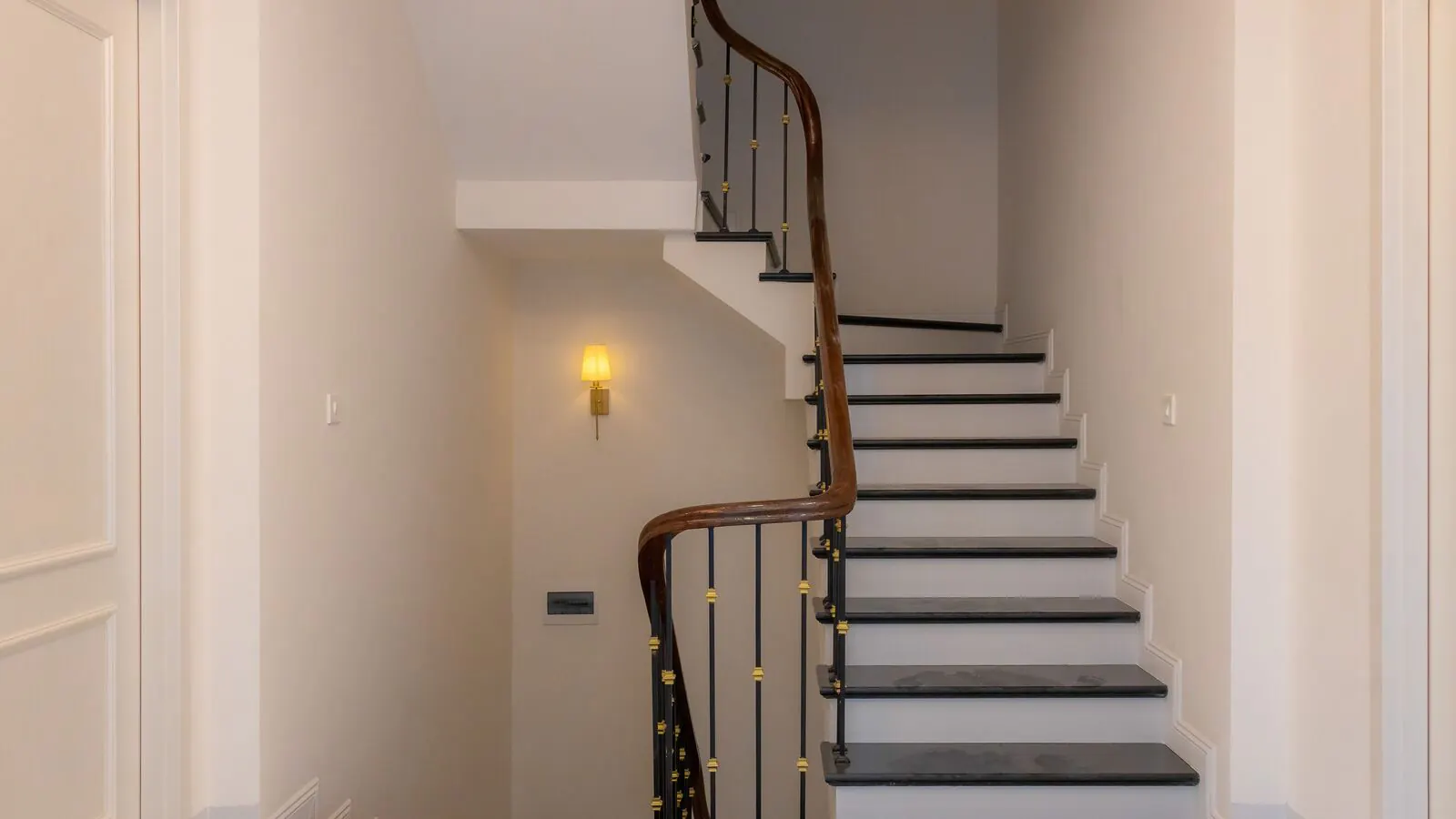
Look at the wall beside any well-used staircase. There’s a smudged band where shoulders and bags brush past, knuckle marks behind the rail, and scuffs along the risers.
The kitchen and the bathroom wear from steam and water. The living room, the halls and the stairs wear from people, and the finish on each part has to take that and still wipe clean. Why does the wear land in the same places on every stair? The building code puts it there.
| Part of the stair | Code limit (inches) |
|---|---|
| Riser, highest | 7.75 |
| Tread, shallowest | 10 |
| Handrail, lowest | 34 |
| Handrail, highest | 38 |
| Stair width, narrowest | 36 |
| Landing guard, lowest | 42 |
Source
Source: California Residential Code 2025 (Title 24, Part 2.5), sections R318.7, R320 and R321, via UpCodes.
In the source list: 1
Hands slide along the rail between 34 and 38 inches up. Shoes scuff risers no more than 7¾ inches tall. Everyone who passes brushes the wall beside a stair at least 36 inches wide. We finish a stair hall part by part for that reason.
A stair hall, part by part
Illustrative drawing, not to scale
-
The most-touched finish in the house. Painted or kept as wood, it needs a finish that can take hands every day.
-
Usually painted to match the rest of the trim, in a waterborne alkyd such as Benjamin Moore Advance or FPE Hollandlac.
-
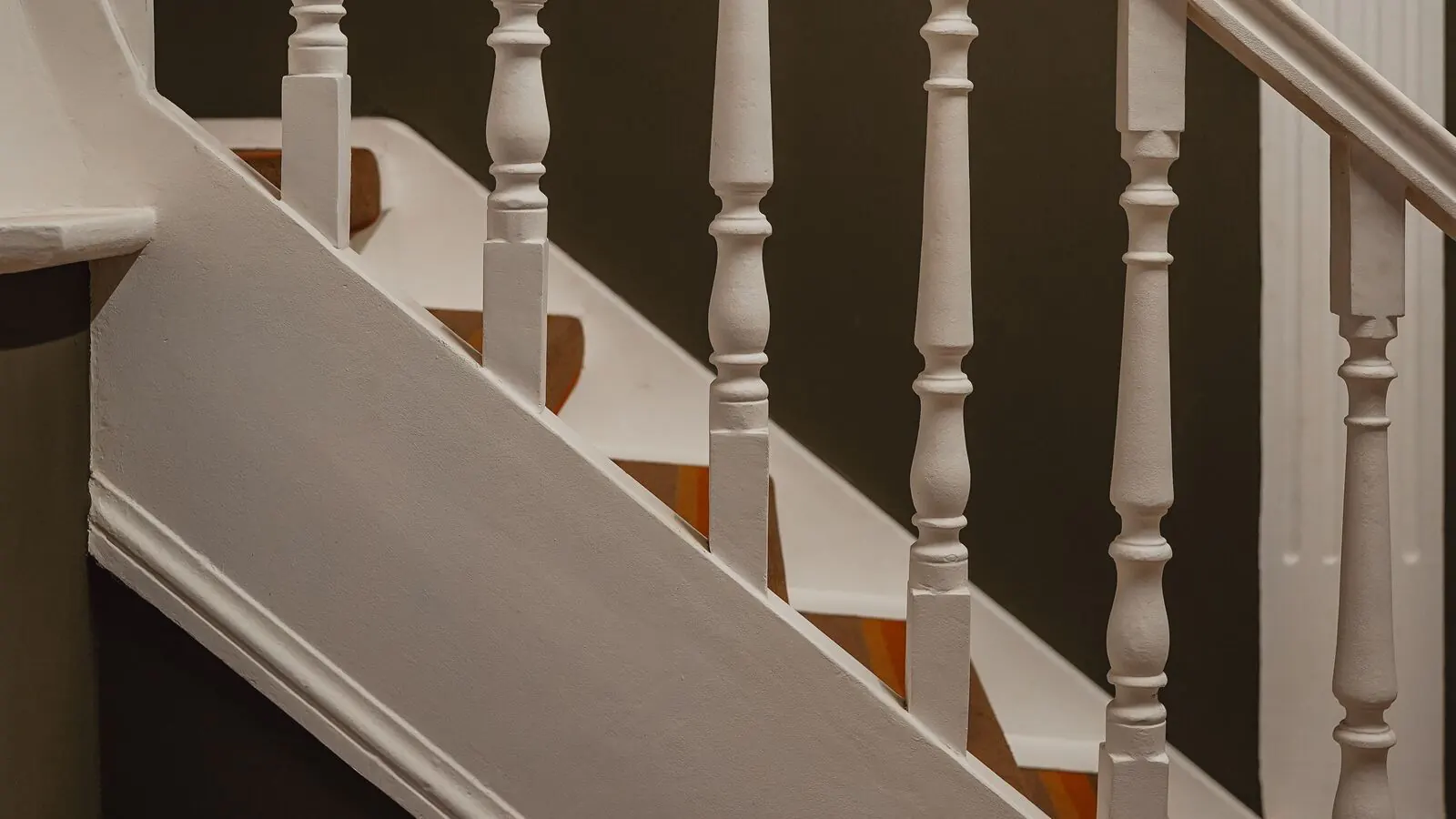
Balusters and the stringer are usually painted to match the rest of the trim.
-
Tread refinishing is part of our carpentry work on stairs. The tread takes the foot traffic.
-
A painted riser under a wood tread is a common pairing, because the tread takes the foot traffic and the riser takes the scuffs.
-
Leveled first, to Level 5 where the wall needs it, then two finish coats minimum. The code leaves at least 1½ inches between the wall and a rail beside it.
-
Light from a landing window crosses it at a low angle, so we level it like the walls and usually finish it flatter than them.
The stair itself
A stair gets walked on and held, and it takes harder finishes than the walls around it. Our carpentry crew replaces railings, upgrades balusters and refinishes treads, and does the finishing too.
The handrail gets touched more than any other finish in the house. Painted or wood, it needs a hard enamel or a clear coat. The balusters (the upright posts) and the stringer (the board along the side) usually match the trim. A painted riser under a wood tread is a common pairing. The tread takes the foot traffic and the riser takes the scuffs.
Painted woodwork gets a water-based alkyd enamel such as Benjamin Moore Advance, or Fine Paints of Europe Hollandlac, a Dutch oil-based enamel. We’re a Fine Paints of Europe Master Certified contractor, and FPE Hollandlac Brilliant 98 is what we specify for painted built-ins.
Walls people brush past
The wall beside a stair gets knuckles and shoulders, often in strong window light.
| Figure | What it means for you | Source |
|---|---|---|
| At least 1½ inches of space between a wall and the handrail beside it | That gap is narrow for a brush and well used by knuckles, so the wall behind a rail needs the same finish as the open wall. | California Residential Code 2025, section R320.4, via UpCodes |
| Level 5 drywall finish for paints with sheen and for severe lighting | Stair halls often have a tall window that rakes light down a long wall. A wall that gets a wipeable sheen in that light needs the smoothest level of drywall finish under it. | GA-214, Recommended Levels of Gypsum Board Finish, via Walls & Ceilings |
On our interior painting jobs the furniture gets covered and the floors masked before anything else. We level the walls and ceilings to Level 5 (a skim coat over the whole wall) where it’s needed, prime where the topcoat needs it, and put on at least two finish coats. Then we walk the room with you and touch up on the spot.
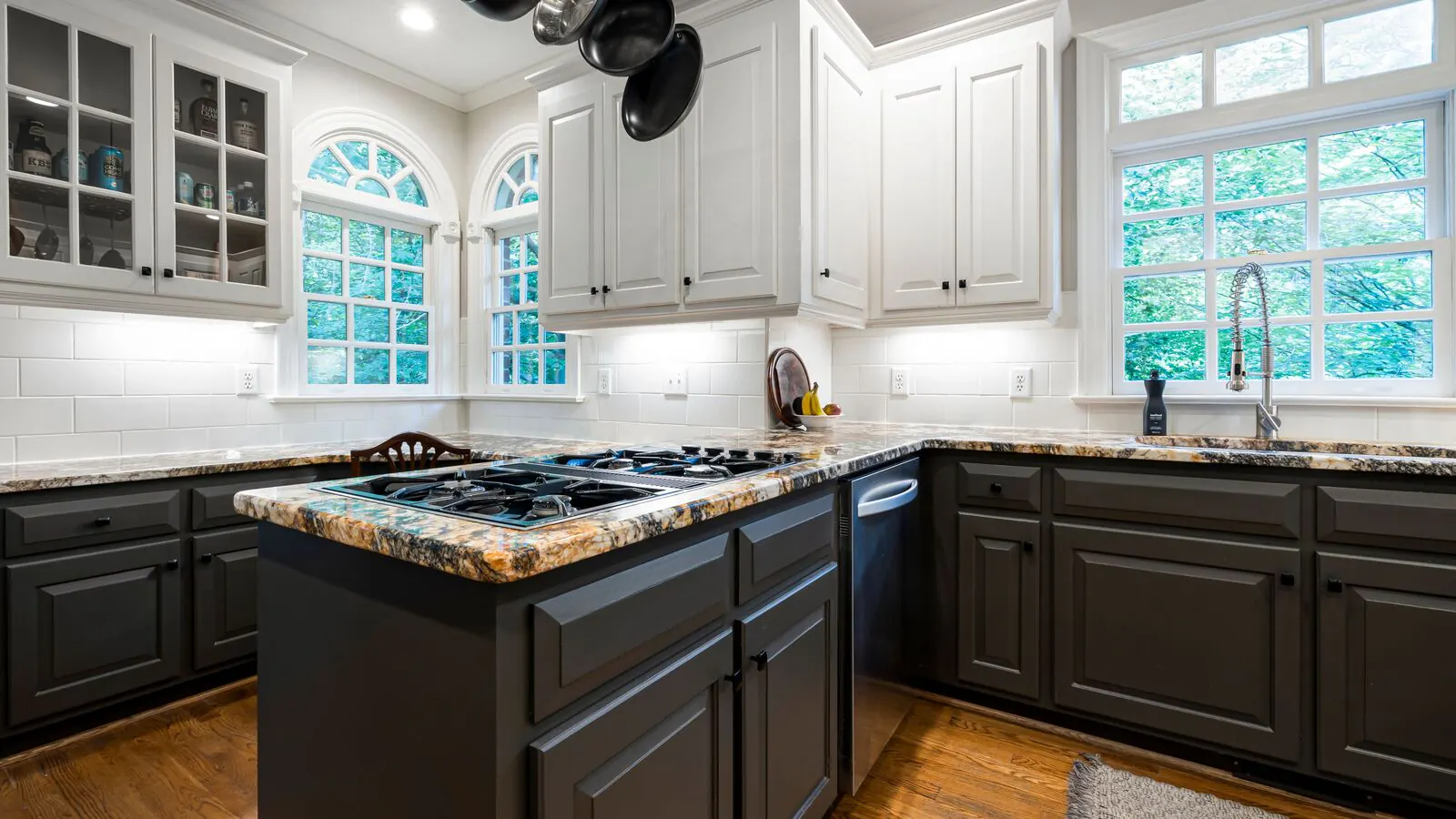
As general guidance, walls that get brushed do better with a little sheen. Flat paint marks more easily and is harder to wipe. Our paint finish guide covers the trade-off. The crown, baseboards, casings and wainscoting take the same enamel as the stair, and that ties the hall to the rooms off it.
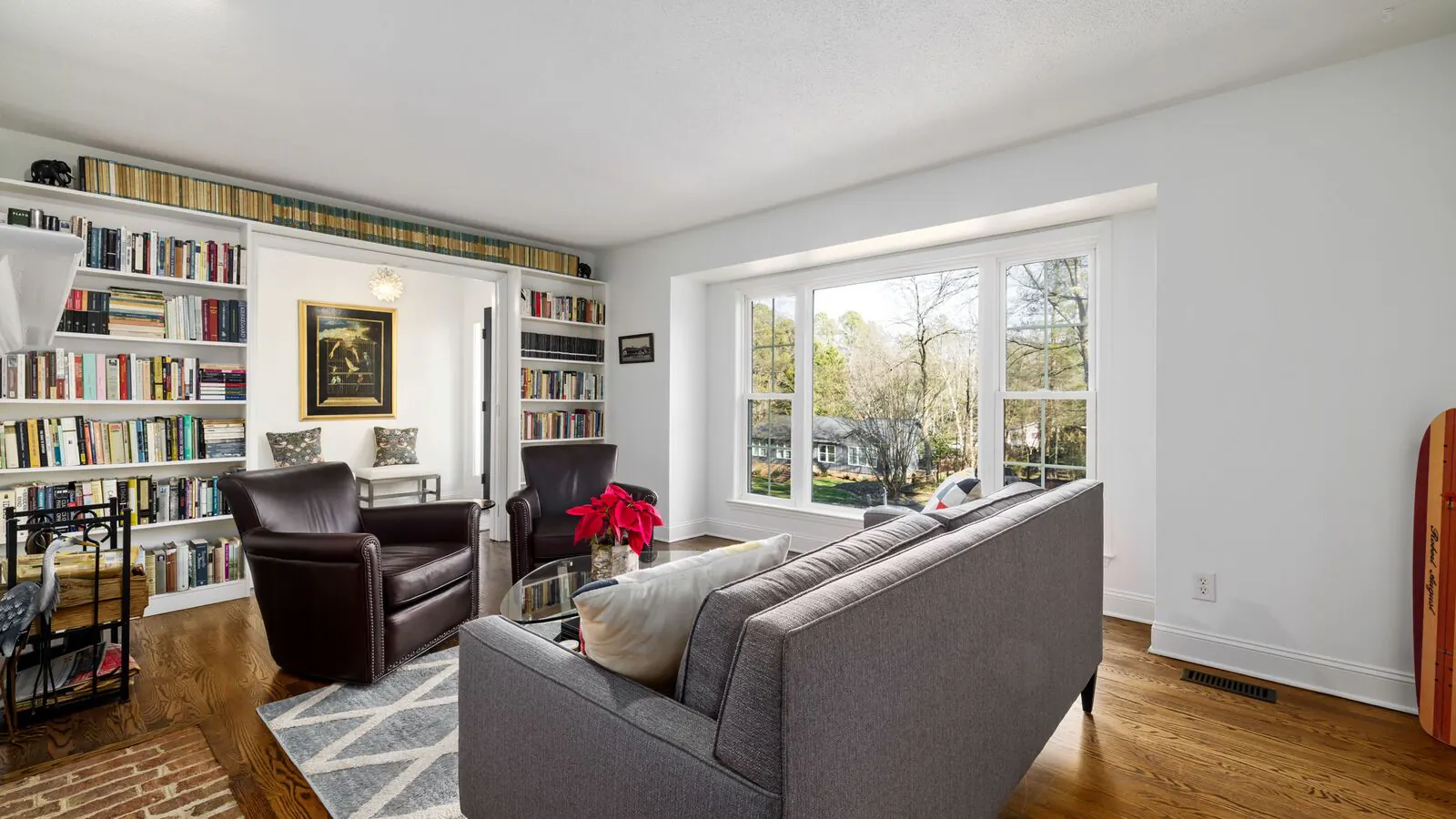
Tall ceilings show every joint
Light from a landing window crosses a tall stair hall ceiling at a low angle and shows every joint. We level it like the walls and usually finish it flatter.
When we build built-ins, window seats, coffered ceilings or paneled walls, the same crew does the carpentry and the finishing. Our post on how we build and finish a painted built-in follows one through.
Should the handrail be painted or left as wood?
Either works, as long as the rail gets a hard finish. Color consultation comes with our painting work, and you can look at samples of both in your own hall.
Can we use the stair while it’s being painted?
It depends on the finish. Oil enamels harden slowly. Fine Paints of Europe gives Hollandlac Brilliant 14 to 21 days to cure fully, and a fresh rail needs a light hand for those weeks.
Can you change the railing or the stair itself?
Our carpentry covers railing replacement, baluster upgrades and tread refinishing. Anything load-bearing goes to an appropriately licensed contractor, and we coordinate the finish around it.
That ends the series. If you came in on the stairs, it starts in the kitchen. When you’re ready, request an estimate or call us at (650) 961-7415.
Sources (2)
- California Residential Code 2025 (Title 24, Part 2.5), sections R318.7, R320 and R321, via UpCodes up.codes (https://up.codes/viewer/california/ca-residential-code-2025/chapter/3/building-planning) Cited 1, 2
- GA-214, Recommended Levels of Gypsum Board Finish, via Walls & Ceilings wconline.com (https://www.wconline.com/articles/89568-recommended-levels-of-finish-revised-and-expanded) Back