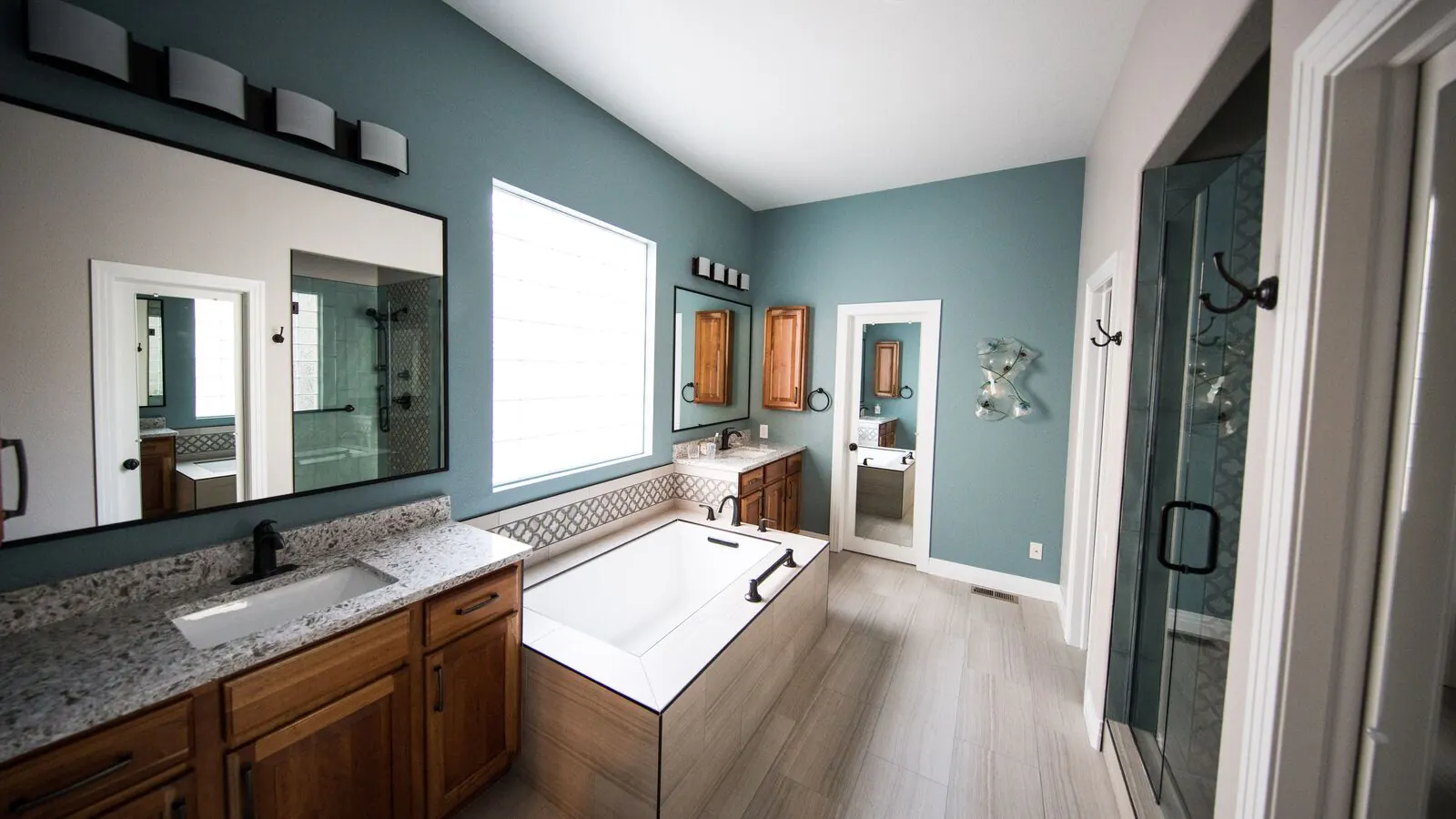
The ceiling over the shower gets a fresh coat, and by the next winter it’s peeling or spotted again.
Why? The new paint went over the same problem. Most peeling in a bathroom comes from steam that never leaves the room, or from water that gets into a wall, and a fresh coat does nothing about either one. A kitchen has one hard-working strip of painted wall (Part 1 covers it). In a bathroom, the whole room works that hard. The kind of paint and how dry the room gets matter more than the color.
Color still matters, and white still leads.
| Wall color | Shower walls (%) | Other walls (%) |
|---|---|---|
| White | 41 | 27 |
| Off-white | 17 | 21 |
| Gray | 11 | 13 |
Source
Source: Houzz, 2024 U.S. Houzz Bathroom Trends Study, a survey of 1,247 Houzz users fielded June 27 to July 30, 2024, published January 15, 2025.
In the source list: 1
White was the top bathroom wall color in every Houzz study from 2016 to 2023. Gray fell from 38% of renovating homeowners in 2017 to 20% in 2023. In the National Kitchen & Bath Association’s 2026 Bath Trends survey of nearly 700 industry professionals, 96% named neutrals as the most popular bath colors, with off-white at 58% and sage leading the greens at 64%, as reported by PHCP Pros.
Shower walls are almost always tile. The paint starts where the tile stops.
A bathroom in wet and dry zones
Illustrative elevation, not to scale
-
Steam rises and the ceiling takes the most of it. The EPA’s advice is to run the bathroom fan or open the window when showering.
-
The shower is tile over a waterproofing membrane, to TCNA methods with the Schluter system. Paint starts where the tile stops.
-
Where tile meets paint, a clean caulk line closes the joint so water can’t run behind the finish.
-
Repaired and leveled first, stain-block primer where it’s needed, then two finish coats minimum in a finish with some sheen.
-
Trim and the door take an enamel, because they get handled and splashed more than the walls.
-
Doors sprayed off site in conversion varnish or FPE Aquanamel, then reinstalled and adjusted.
Moisture first
The EPA’s advice on moisture in the home covers most of what a bathroom needs.
| Figure | What it means for you | Source |
|---|---|---|
| Keep indoor humidity below 60 percent, ideally between 30 and 50 percent | The EPA’s advice is to run the bathroom fan or open the window when showering. A room that dries out between showers is easier on the paint. | US EPA, A Brief Guide to Mold, Moisture and Your Home |
| Dry wet materials within 24 to 48 hours and in most cases mold will not grow | A slow leak at a vanity or a failed caulk line is worth fixing before we paint, since the EPA also warns that paint applied over moldy surfaces is likely to peel. | US EPA, A Brief Guide to Mold, Moisture and Your Home |
If the ceiling over your shower is peeling or spotted, we find out why before we paint. The EPA says to clean and dry moldy surfaces, and not to paint or caulk over them. A leak, or a fan that doesn’t vent, goes to licensed plumbing, electrical and HVAC subcontractors.
Surface by surface
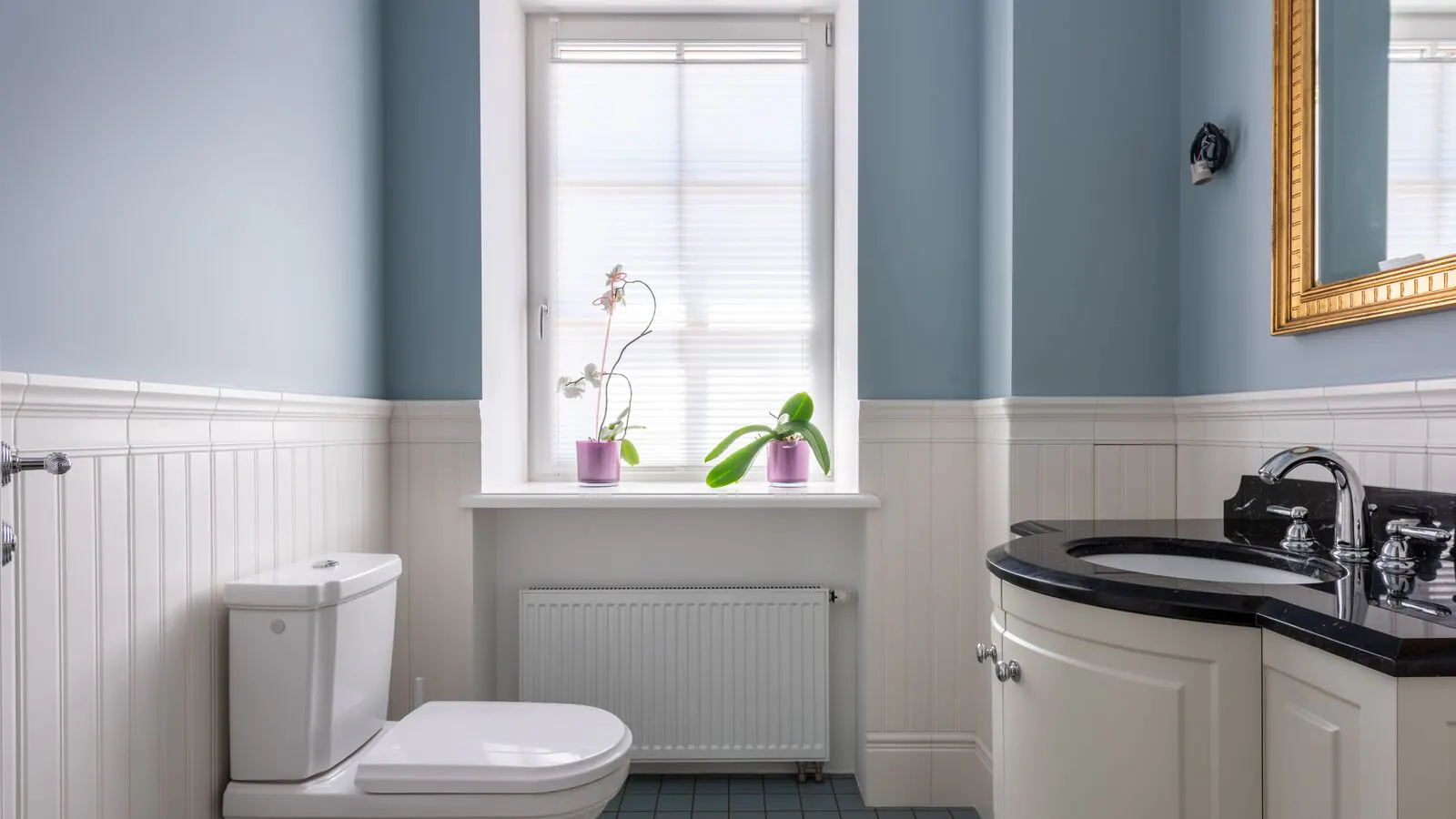
The shower is tile over a waterproofing membrane, installed to TCNA (Tile Council of North America) methods with the Schluter system. Our post on how we run a bathroom remodel shows it layer by layer.
The walls and ceiling get repaired, leveled and primed, with stain-block primer over old water marks, then at least two finish coats. The general guidance for bathroom walls and ceilings is a finish with some sheen, because it sheds moisture and wipes clean better than flat paint. We’re a Fine Paints of Europe Master Certified contractor, and FPE coatings resist moisture in a bathroom.
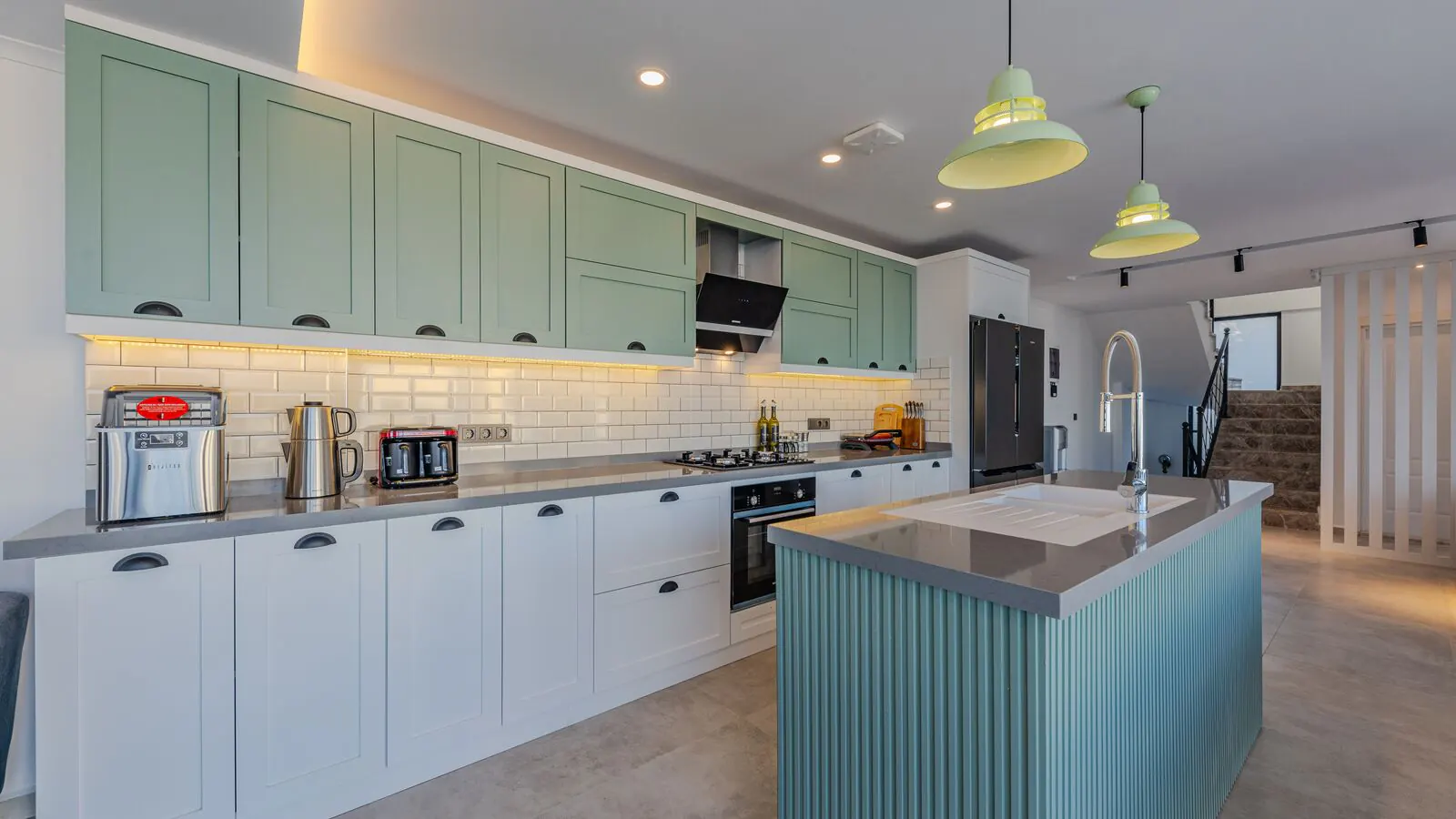
The trim and the door take an enamel, because they get handled and splashed the most. That reasoning carries out into the halls and up the stairs in Part 3. A clean caulk line where the tile meets the paint keeps water from running behind the finish.
Vanities have gone the way of kitchen cabinets. Houzz found wood vanities, at 26%, have overtaken white, at 22%, and the NKBA survey had wood-faced vanities at 62% against 53% for painted. For a painted vanity, our cabinet refinishing sprays the doors off site in conversion varnish or FPE Aquanamel, finishes that hold up in a wet room that gets used every day.
A bathroom repaint runs in four steps.
- Consultation. We talk through color with you, walk the scope and send a written proposal.
- Prep. The floors get masked and the room covered, then the surfaces are patched and sanded, to Level 5 where required.
- Primer. An adhesion or stain-block primer goes on wherever the topcoat needs the help.
- Finish coats. At least two, then a final walkthrough with touch-ups on the spot.
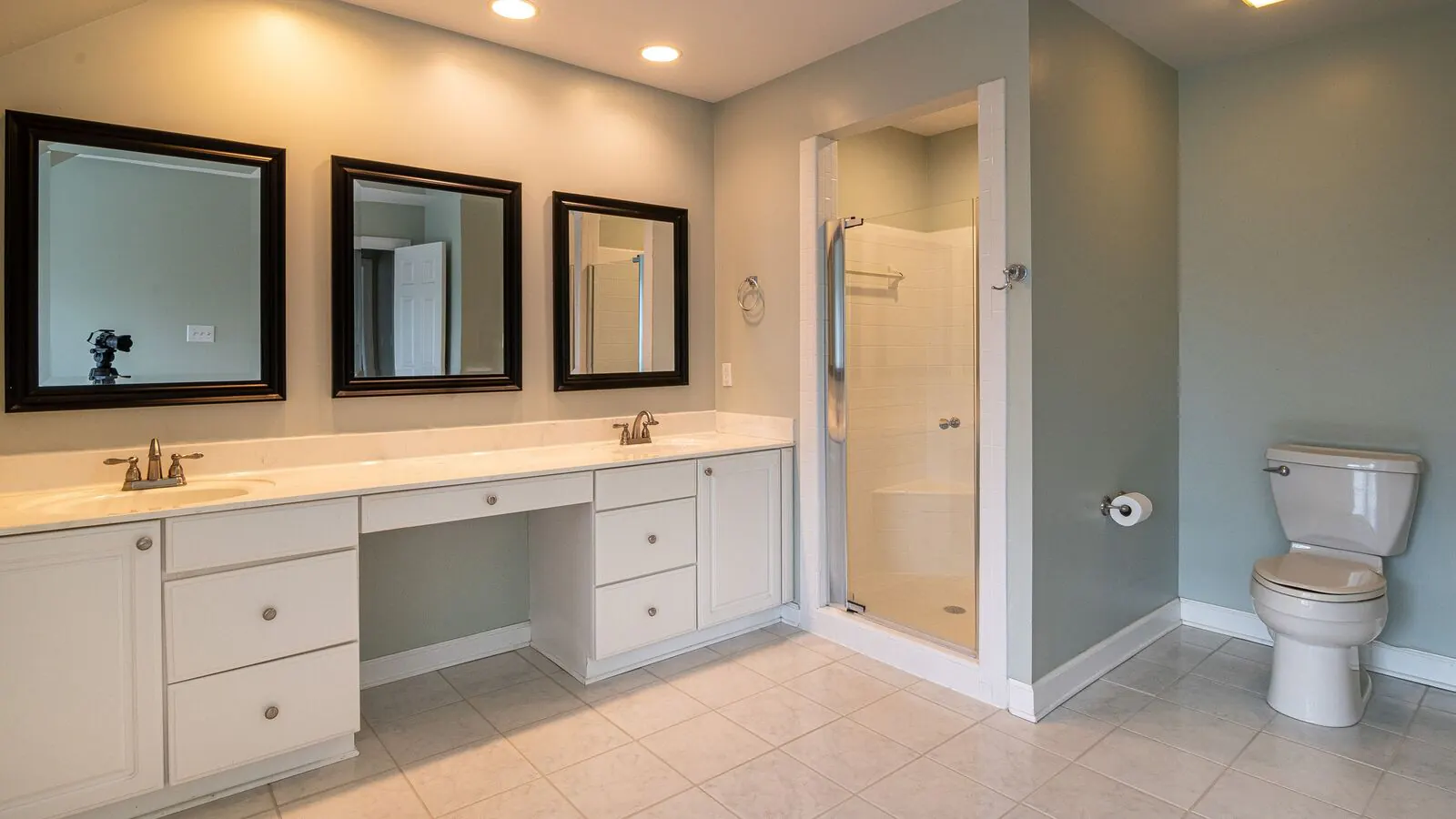
Do I need special bathroom paint?
You need a coating made for a damp room, on a clean, dry, sound surface, in a room that vents. We specify it for each surface before work starts. Our interior painting page has more.
Can you refinish the vanity instead of replacing it?
Often, if the box is sound. We check it on the walkthrough. If you want more than a new finish, our kitchen and bath remodels cover the whole room.
Next, the living spaces and the stair hall. If your bathroom ceiling is peeling again, request an estimate or call us at (650) 961-7415.
Sources (3)
- Houzz, 2024 U.S. Houzz Bathroom Trends Study pro.houzz.com (https://pro.houzz.com/pro-learn/blog/whats-in-for-bathrooms-right-now) Back
- as reported by PHCP Pros phcppros.com (https://www.phcppros.com/articles/22470-nkba-kbis-releases-annual-2026-bath-trends-report) Back
- US EPA, A Brief Guide to Mold, Moisture and Your Home epa.gov (https://www.epa.gov/mold/brief-guide-mold-moisture-and-your-home) Cited 1, 2