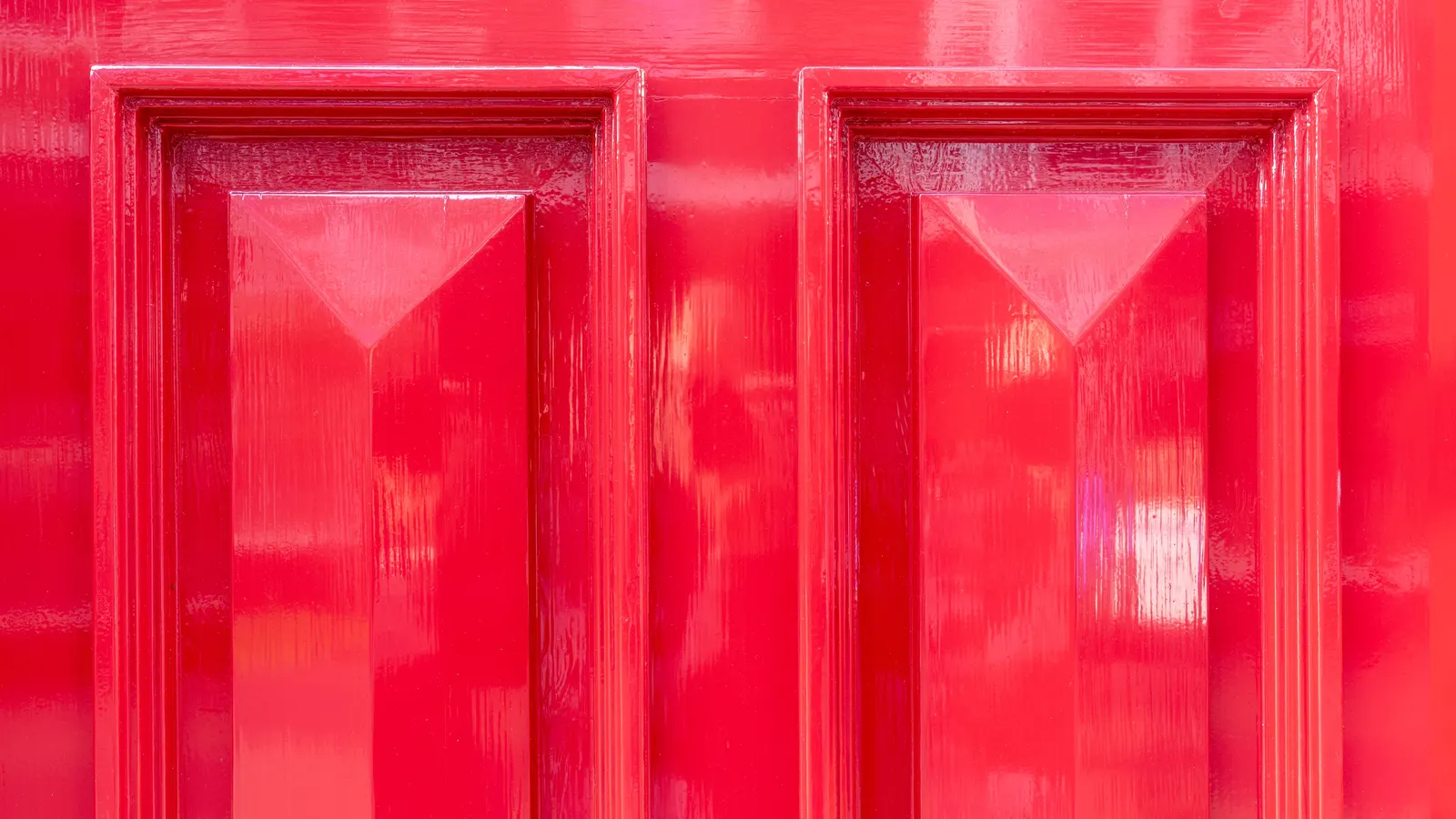
A gloss front door is a slow job. Each coat of enamel needs the night before the next one goes on, and weeks pass before the finish reaches full hardness. Trim, doors and paneling get touched, bumped and seen up close, so they get a harder, glossier finish than the walls, and that finish takes time. Plan for a door or a run of trim to take several days, and for gentle use in the first few weeks.
The figures below are for one high-gloss enamel we use.
| Figure | What it means for you | Source |
|---|---|---|
| 16 hours before Hollandlac Brilliant 98 can be recoated, after 4 to 6 hours to dry dust free | Each coat of an oil enamel needs the night before the next one goes on, so a door or a run of trim is a job of several days. | Fine Paints of Europe, Hollandlac Brilliant 98 product page |
| 21 days for Hollandlac Brilliant 98 to reach its maximum hardness, per the maker | New enamel on doors and trim is handled gently for the first few weeks, before it goes into heavy use. | Fine Paints of Europe, Hollandlac Brilliant 98 product page |
| Level 5 is the drywall finish the Gypsum Association recommends under paints with sheen or gloss | Where a painted wall panel or the wall above a wainscot gets an enamel sheen, the drywall needs the full skim coat too. | Walls & Ceilings, Recommended Levels of Finish (GA-214), 2015 |
Why so much care? Gloss shows everything underneath it, so the result depends mostly on the prep. A deep color like Fine Paints of Europe’s 2026 Color of the Year, Drama Queen Black, shown in Hollandlac Brilliant 98, shows a dent, a ridge or an open joint that a flat finish would hide.
Wainscot, casing and the coats on them
Illustrative section, not to scale
-
Where the wall above a wainscot gets an enamel sheen, the drywall needs the full skim coat too: Level 5, as the Gypsum Association recommends under paints with sheen or gloss.
-
Wainscoting runs along the lower part of a wall and is capped with a rail.
-
It can be raised panels, flat panels framed by molding, or beadboard. Inside corners and joints are where a thick coat pools, so trim is painted in thin coats.
-
Trim, doors and paneling are the parts of a room people touch, bump and look at up close, so they get a harder finish than the walls.
-
A system-specific primer for adhesion and an even topcoat. Under FPE that means FPE’s matched primers, never sealers like Shellac, BIN or Kilz.
-
Thin, even coats with a light 220-grit sanding between coats in a dust-free space, then full cure time before heavy use.
What we finish, and build
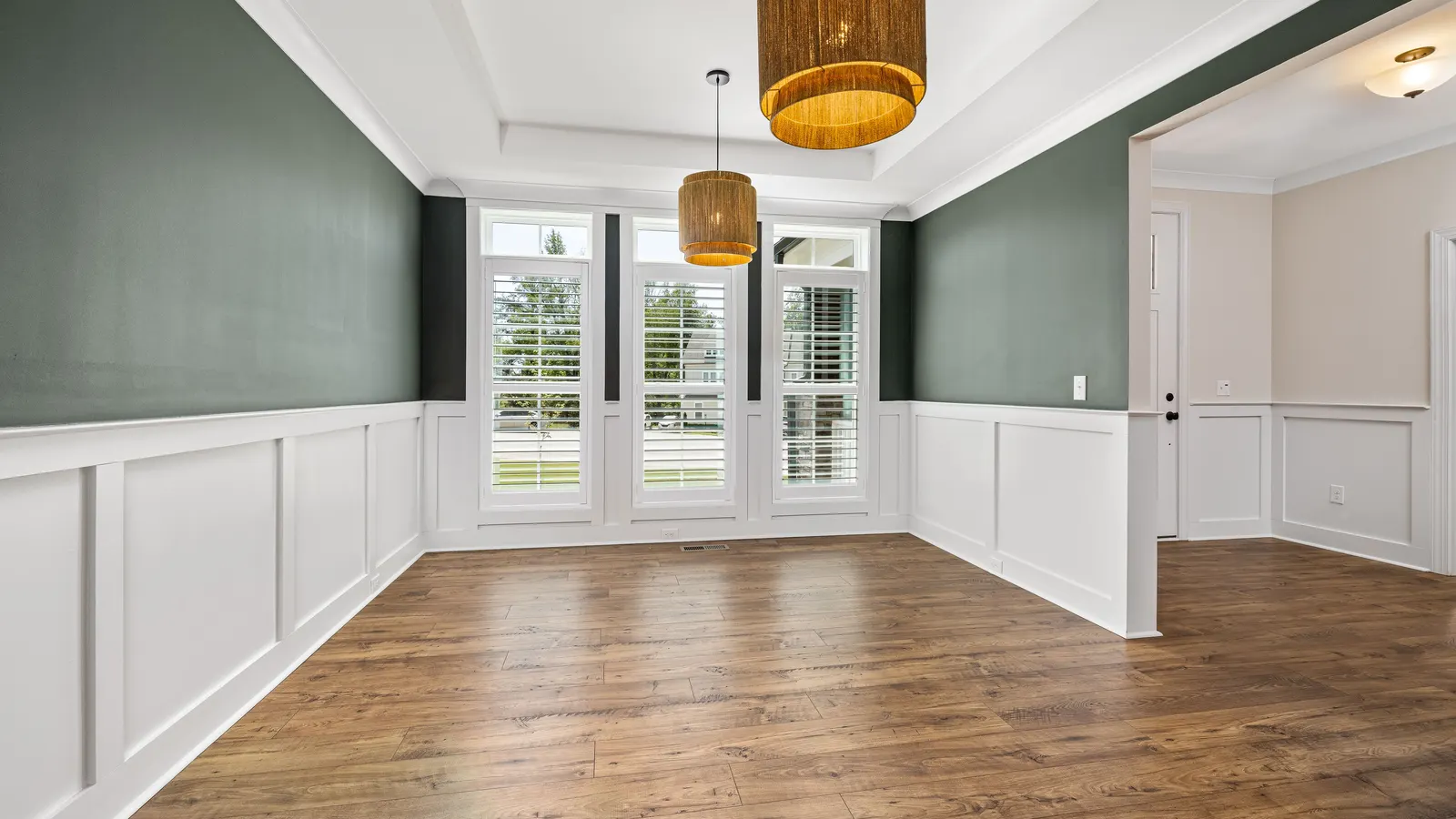
On our interior painting work we finish crown molding, baseboards, doors, casings and paneling. We also finish custom millwork like wainscoting (paneling on the lower wall, capped with a rail), board-and-batten, shiplap, coffered ceilings, built-in bookcases and window seats. Our carpentry team builds a lot of it, including the blocking behind it, and our painters finish what it builds. Our post on building and finishing a painted built-in walks through one job.
All of these have corners and joints where a thick coat pools or a dry brush leaves a mark. That’s why trim gets thin coats.
The enamels
Our fine finish work uses four coating systems on trim and millwork, chosen for the surface and the look you want. Conversion varnish is a sprayed, industry-standard cabinet and millwork finish. Benjamin Moore Advance is a waterborne alkyd that gets close to spray quality from a brush. Fine Paints of Europe Hollandlac is a Dutch oil-based enamel and our top-tier finish, mirror-like in its Brilliant version, and we specify it for painted built-ins. FPE ECO Waterborne gives the look of an oil paint with water cleanup, in Brilliant and Satin.
Shop pieces and parts taken off the wall can be sprayed, FPE on millwork included. Hollandlac on doors and trim in place is brushed in thin coats with natural bristle, because FPE warns that a roller leaves a slight stipple on high-profile areas.
Finishing trim and millwork
- We check each surface and choose its coating system.
- Repairs, filling and sanding come next, with Level 5 on any drywall that will carry sheen.
- The primer is matched to the system. Under FPE that means FPE’s own primers, never sealers like Shellac, BIN or Kilz.
- Shop pieces are sprayed and oil enamels are brushed with natural bristle, in thin coats lightly sanded with 220 grit between them, in a dust-free space.
- Hollandlac then cures for 14 to 21 days before heavy use.

Why does a gloss door take so long? Each coat of Hollandlac needs about 16 hours before the next, and the maker gives it 21 days to reach full hardness. Rushing either step is how a good coat gets dented or printed.

Is high-gloss trim right for your house?
Gloss shows off molding, looks deep and wipes clean. It also shows every flaw, takes days of coats and weeks of curing, and is harder to touch up than satin. In a busy house, satin or semi-gloss trim is a fair middle ground.
Trim usually goes satin, semi-gloss or gloss, which are MPI Levels 4 to 6, and high gloss is Level 7. Part 1 has the full table, and we sample the sheens with you before deciding.

The walls get their turn in Part 3, on Venetian plaster and specialty finishes. If your trim or doors are due, request an estimate or call us at (650) 961-7415.
Sources (3)
- Fine Paints of Europe, Hollandlac Brilliant 98 product page finepaintsofeurope.com (https://finepaintsofeurope.com/product/hollandlac-brilliant/) Cited 1, 2
- Walls & Ceilings, Recommended Levels of Finish (GA-214), 2015 wconline.com (https://www.wconline.com/articles/89568-recommended-levels-of-finish-revised-and-expanded) Back
- Drama Queen Black finepaintsofeurope.com (https://finepaintsofeurope.com/the-2026-color-of-the-year-drama-queen-black/) Back